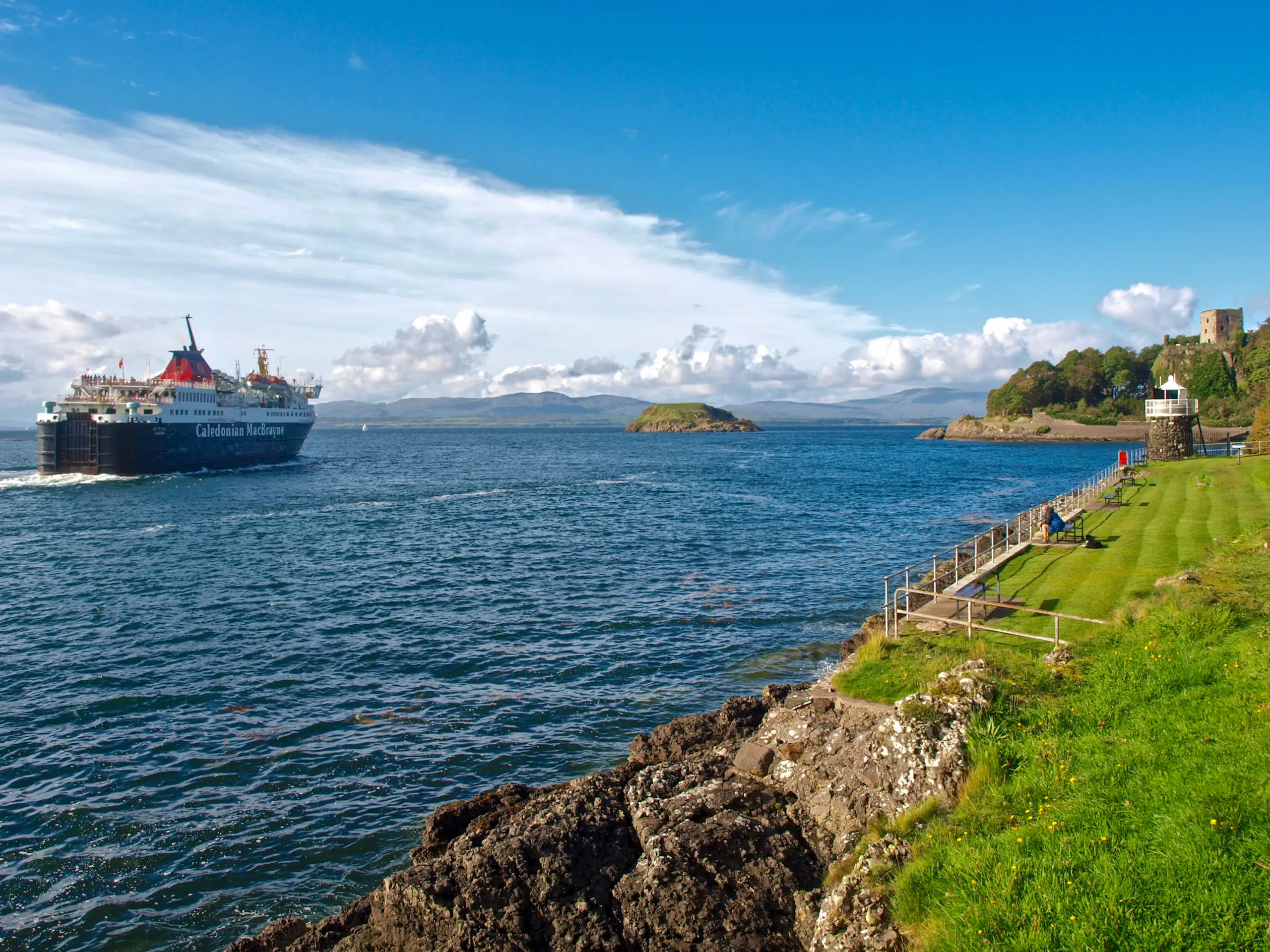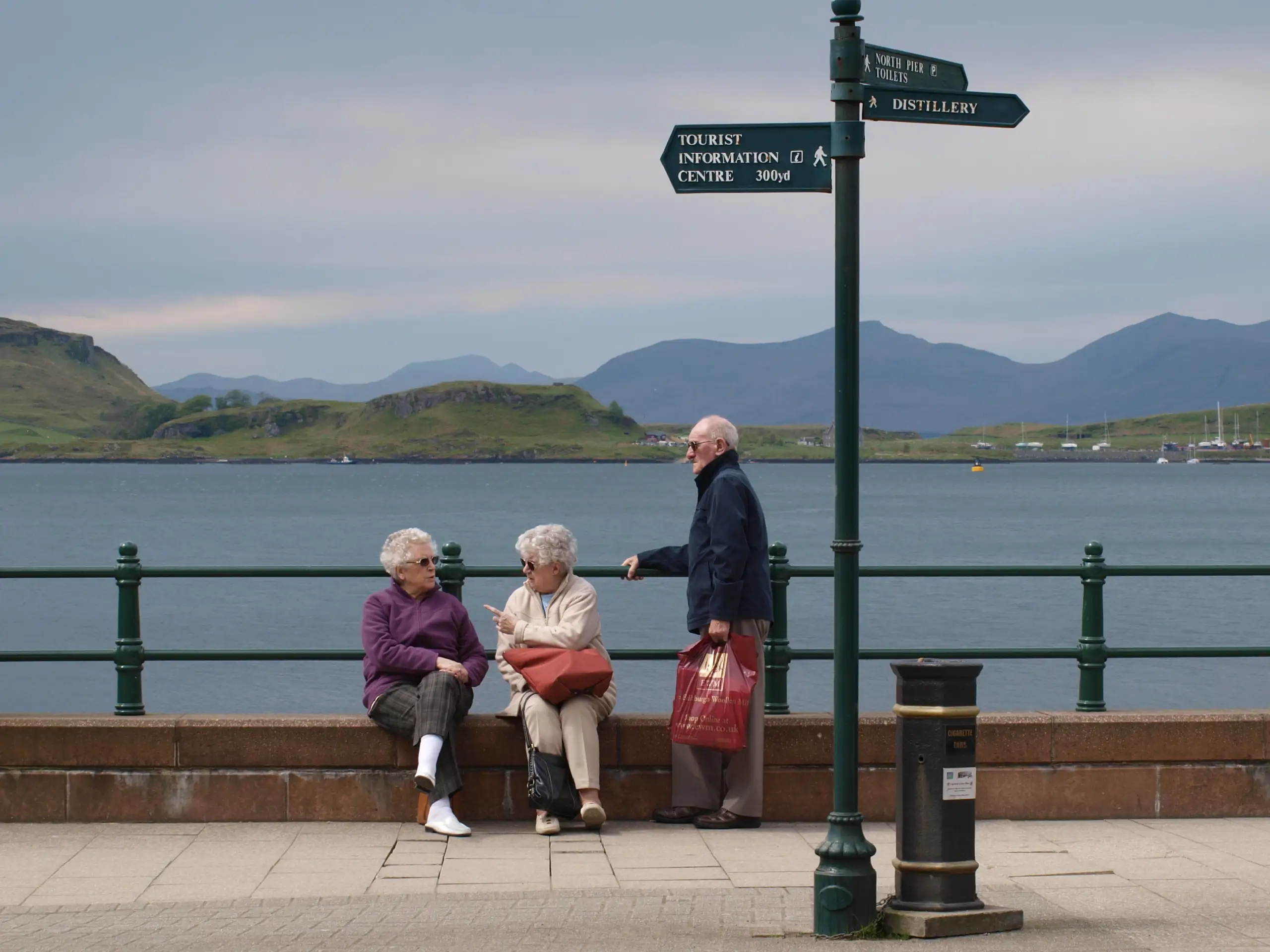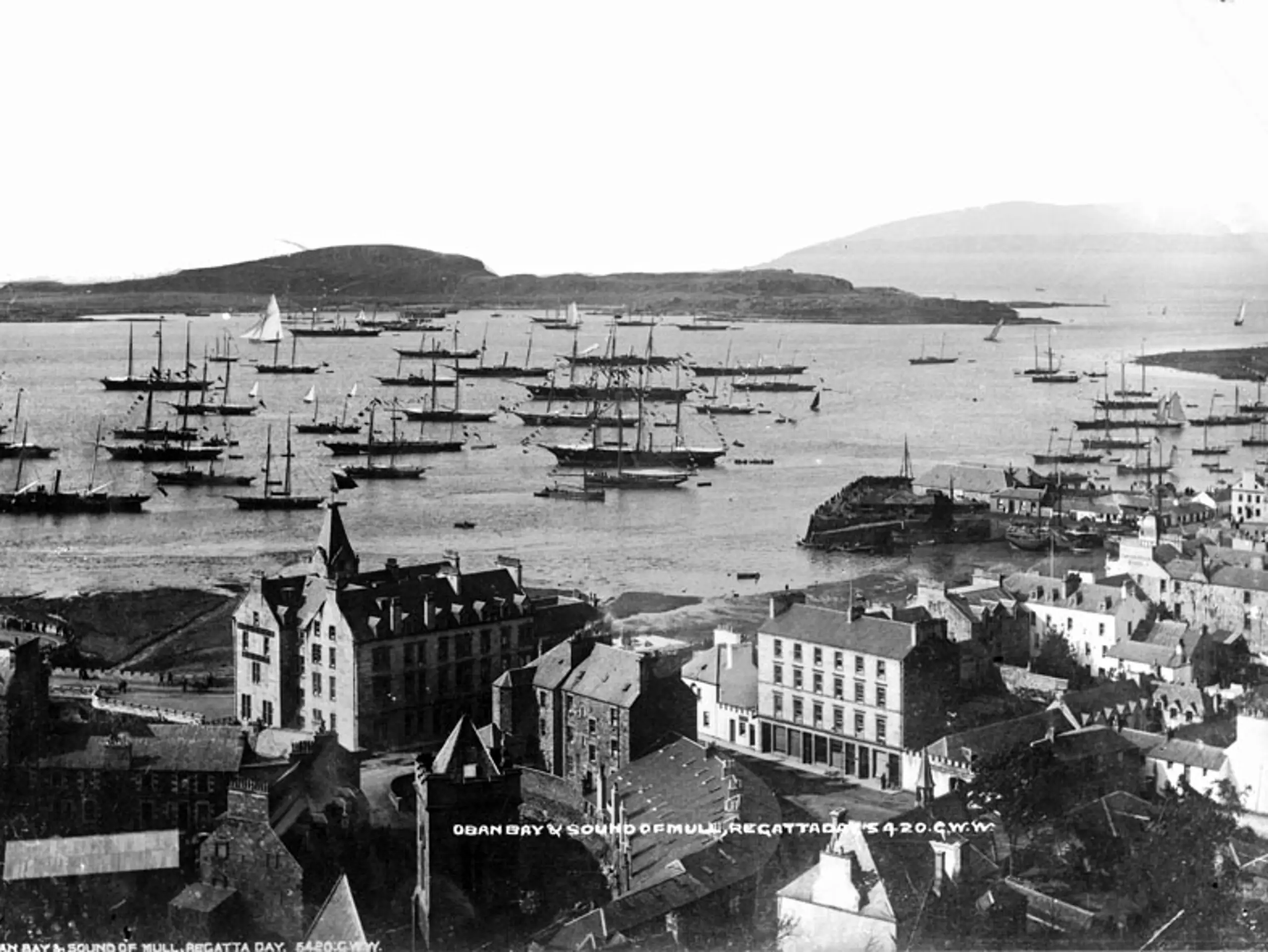
I personally like the brassy breeziness of Oban. It is very much a holiday town, as it has been since the early 19th century when the roads were almost impassable, but regular steamboats plied their trade from Glasgow. Of course now it is an important ferry terminal with the feel of people coming and going to both the Inner and Outer Hebrides. Indeed, back in 1865 Alexander Smith remarked that: "The tourist no more thinks of spending a week in Oban than he thinks of spending a week in a railway station. When he arrives his first question is after a bedroom; his second, as to the hour at which the steamer from the south is expected" (A Summer in Skye, Volume 1. Alexander Smith, Alexander Strahan, London, 1865). The railway arrived in 1880 making the town even more popular.
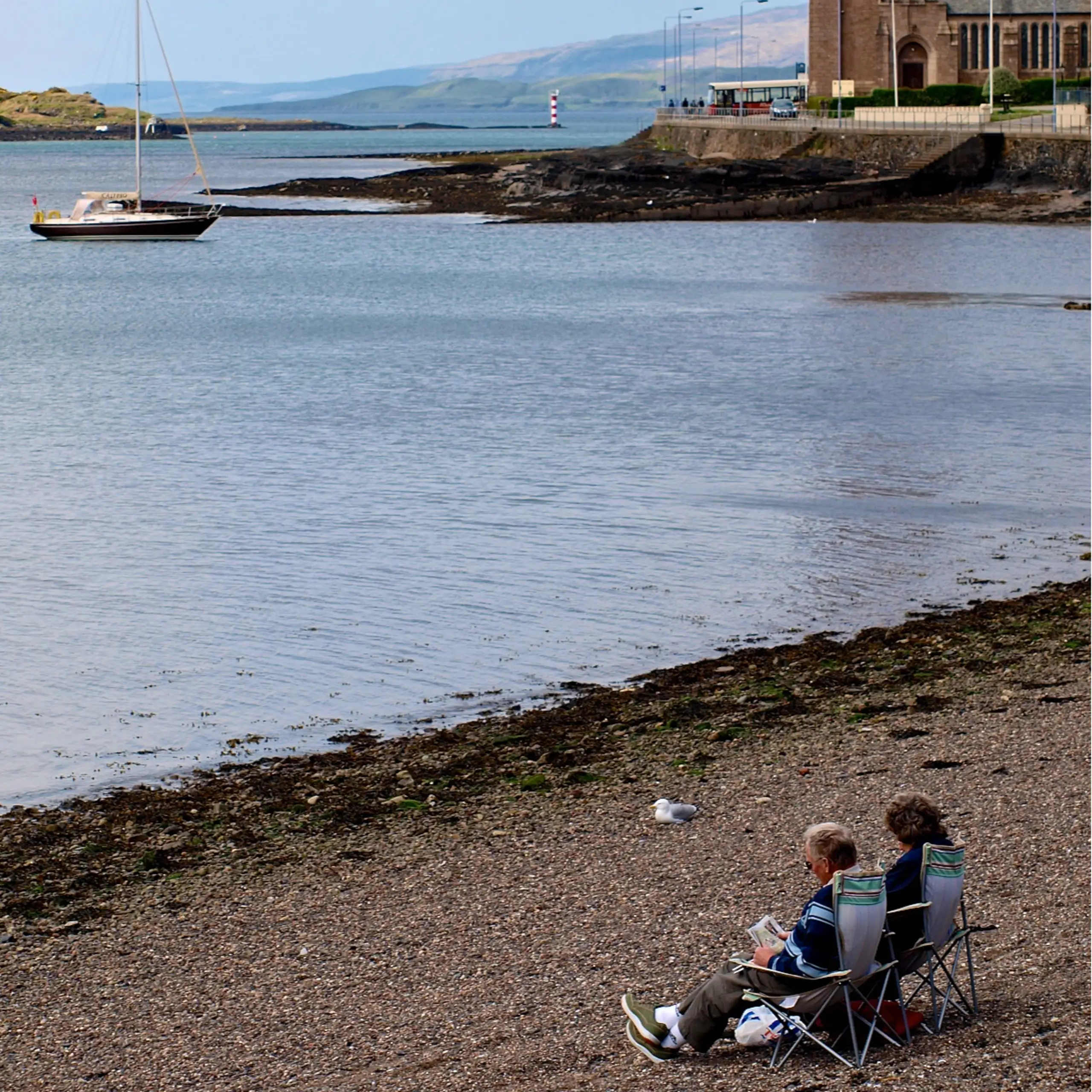
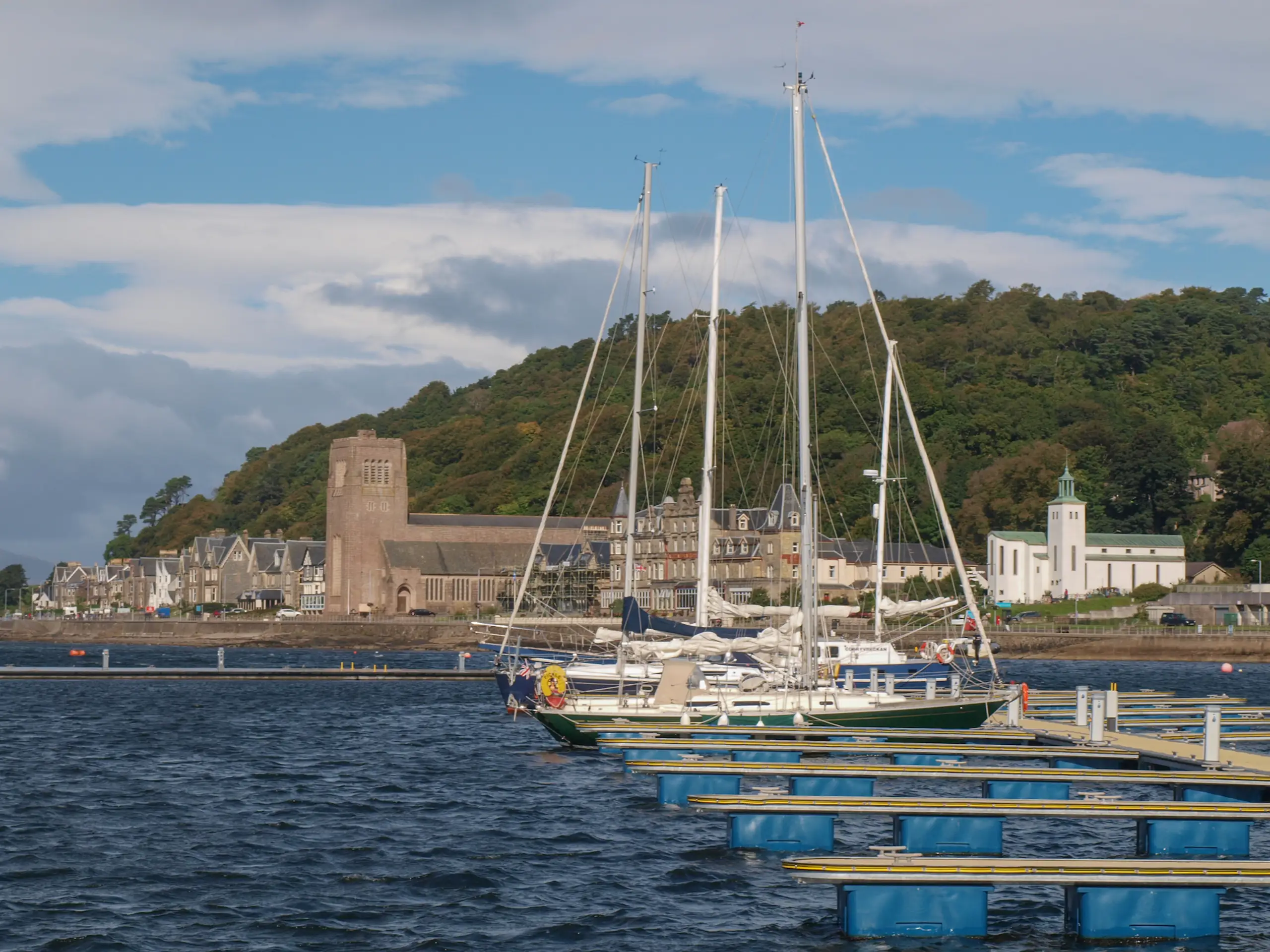
Since the North Pier pontoons appeared in 2017, it has become much more yacht friendly than it had been for years. There is now quite an informative harbour website. However, I would not want to be on those pontoons in a south-westerly gale, they are not exactly cheap, and you can feel as though you are in a bit of a goldfish bowl. Personally, I prefer the visitor moorings with a loading pontoon which are near the Oban Sailing Club, but maybe they are a bit far from the station and shops for the more sluggish members of the crew — 15 minutes walk into town for all your provisions at Tesco, Lidl, Aldi or Marks and Spencer which are clustered together to the south of the Railway Station. These moorings are good, but not all that sheltered in a blow. At the moment, I don't think there is anything to stop you anchoring off the Corran Esplanade, but here the problem is wash from the CalMac ferries which dominate the bay, and it is not easy finding a good spot. I can sympathise with CC Lynam who back in 1904 lamented "Oh, why oh why do I ever stay a night on the Oban side?" (The Log of the ‘Blue Dragon’ 1892-1904. C C Lynam, AH Bullen, London, 1907). In those days he had the options of anchoring over in Ardantrive bay long before there were any pontoons or mooring charges, or off the 'Brandystone' which is now full of private moorings near the Oban Sailing Club. You might prefer to base yourself at Kerrera Marina (ph 01631 565333) across Oban Bay. However that does require the inconvenience of a water taxi to get across to the town.
Oban is a good place for shops. There is a butcher, Watt and Son fishmongers on the railway pier, outdoor shops, galleries for arts and crafts, Highland Fasteners tool shop on Stevenson St, Screwfix in Mill Lane, as well as the supermarkets. And there is Caley Chandlery on the railway Pier. It is after all the second biggest town on the west coast after Fort William. It is also handy for meeting crew off the train or bus, and catching up on civilisation. Unfortunately, Oban has form in self destruction — those of us old enough to remember the airy, glass-roofed late 19th century railway station will not forgive its replacement in the 1980s with such boring modern buildings. Tobermory is an alternative for provisioning, after all it is likely to be on your way to or from Oban.
There are some very good restaurants in Oban. My own favourite is The Waterfront Fishouse Restaurant (ph 01631 567415) on the Railway pier. Really excellent for robustly cooked fish. "From pier to the pan as fast as we can" is their slogan. The menu is simple and fairly brief, and the food is brilliant. Roy Stalker has been head chef since 1999. It may be in a very unpromising looking building, up some stairs in what was once the Mission to Seafarers, but there are great views across the north entrance of Oban Bay. So book a table by the window overlooking the pier and watch the Isle of Mull Ferry come and go while you eat. But be careful, it can get very busy and noisy on some evenings, and they don't take children in the evening. Ee-Usk on the North Pier (ph 01631 565666) is a more upmarket fish restaurant (again, no children in the evening). Next door is the more family-orientated (but noisy) Piazza with excellent pizzas, not too big, and good for kids (it was a bit disappointing in 2026). They will do any pizza as calzone which gets you some salad too, at the same price (ph 01631 563 628). From both restaurants the views over the bay and of the ferries are great (mind you the architecture on the North Pier is legolandish, best seen from the inside out). Coast is another good restaurant, but suffers by having rather dull decor and no view of the sea (ph 01631 569900). Again no children in the evening. The Manor House Hotel is the attractive Georgian building by the visitor moorings, for a slightly formal and more expensive candle-lit dinner (ph 01631 566429). Their bar is open to non-residents (I think). The lovely view of the bay is somewhat constricted by some unsympathetic modern houses on one side, and by the much more attractive buildings of the Northern Lighthouse Board on the other.
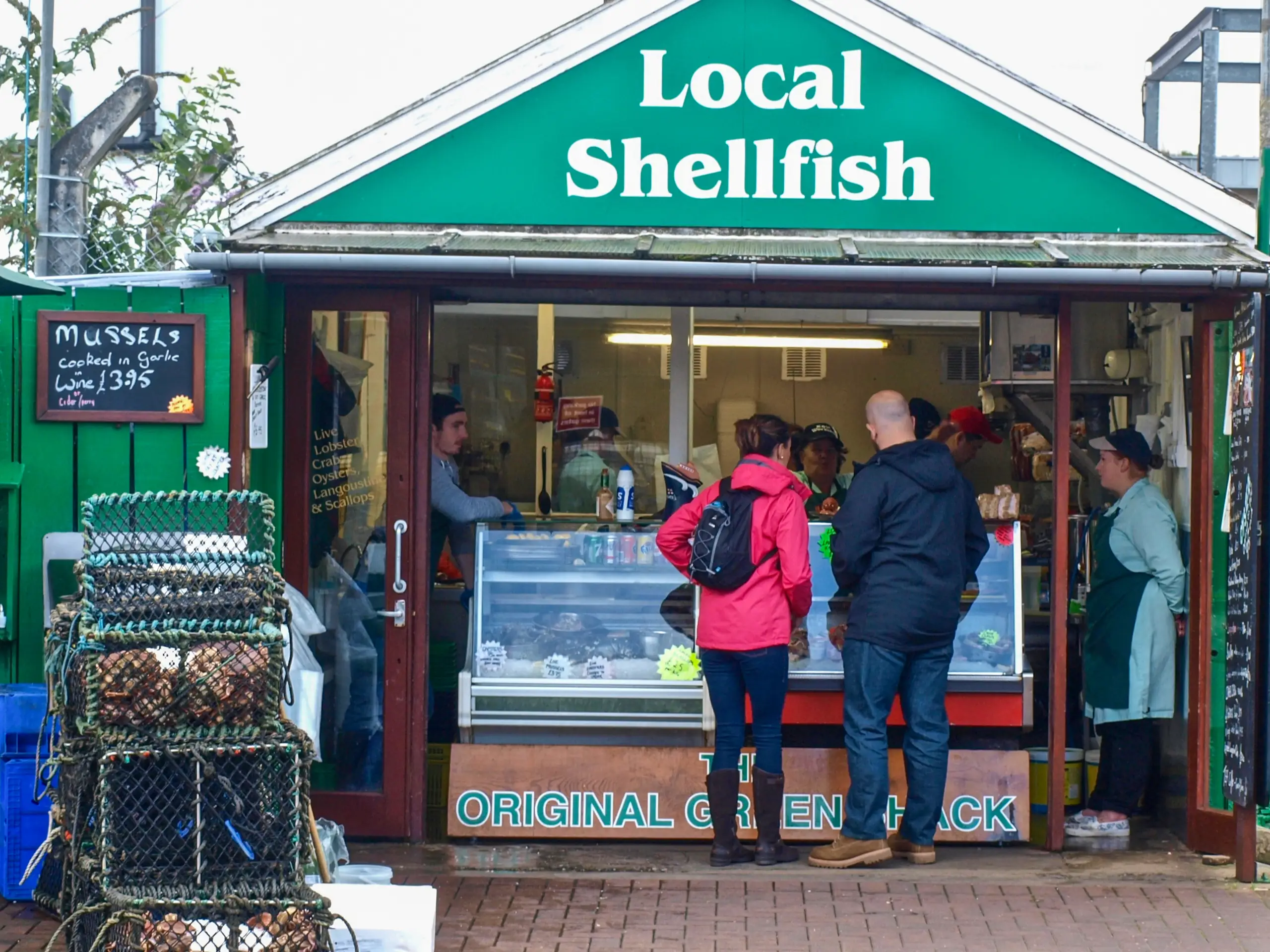
For a delicious seafood sandwich you can do no better than the so-called 'Green hut' on the railway pier — also known as the shack — just by where the CalMac ferries berth (opened in 1990 by legendary Oban character John Ogden who died in 2023). There is a separate and more recent operation opposite the station entrance. For coffee and a bun there is, among many, many other and often over-crowded in the summer cafés, Julie's opposite the distillery (the building was for sale in 2024 but in 2026 everything seemed fine). And somewhat slimmed down, the Oban Chocolate Company along the esplanade. In 2014 Costa Coffee opened near the station with the usual rhetoric about employing local people (and the usual really boring decor and furniture). You have been here hundreds of times already, in airports and shopping malls. Let's hope they don't force out the local cafés.
The War and Peace Museum (ph 01631 570007) opened in 1995, and at times has teetered on the brink of insolvency. However, it is now more secure and worth a visit — Oban was surprisingly important in the 2nd World War, mostly as a base for antisubmarine flying boats (the museum features war rather more than peace). Many of the volunteer staff seem to be ex-servicemen, and they are always keen to yarn about the old days — and very informative they are too, much better and of course more interactive than one of those audio machines that museums now give you to talk you round their exhibits. As volunteers they do come free, at least for as long as they remain standing (in the meantime someone should be and probably is recording their stories).
The Atlantis Leisure Centre has good facilities for the family on a wet day. There is an adult 25- metre pool which is a bit cold (and has a flume), a toddlers' pool which is a bit warm, a bouldering cube, a soft play area, tennis, squash, Badminton, table tennis, basket ball, a gym and of course a café (ph 01631 566800).
There was once also a cinema for a wet day — the Phoenix. It too had risen from the ashes after it burnt down in the 1950s, closed in 2010, but in 2012 it reopened as a community-owned arts venue. In 2013 a second screen was added. Terrific. Use it. But too late. In 2024 it had to reduce its opening times to save money. And then it closed, laid off its staff, was sold, and will never rise again, at least not as a cinema. So very sad.
The Corran Halls host various groups and acts, and there is the Skipinnish Ceilidh House which may offer something more than tartanry of an evening — I don't know.
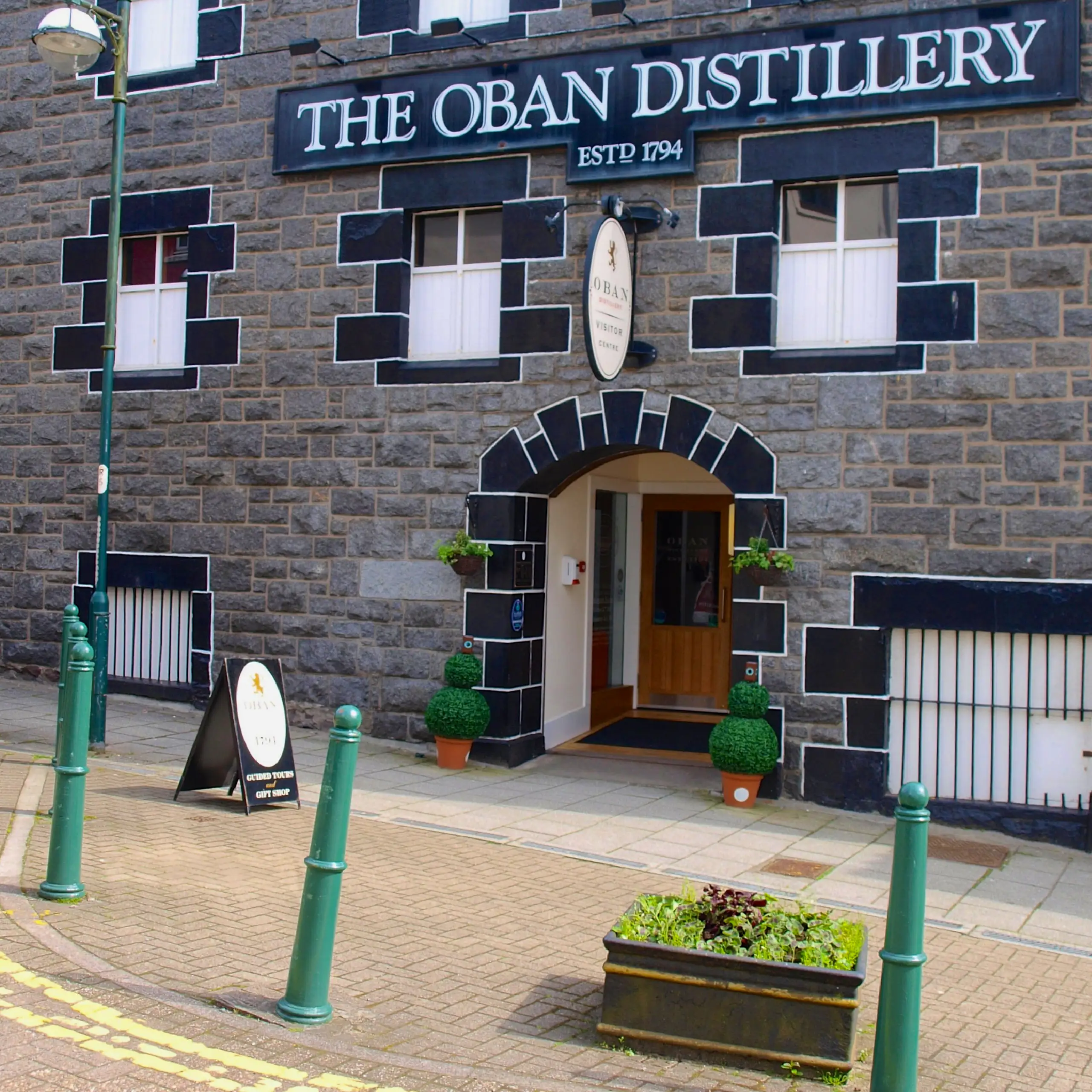
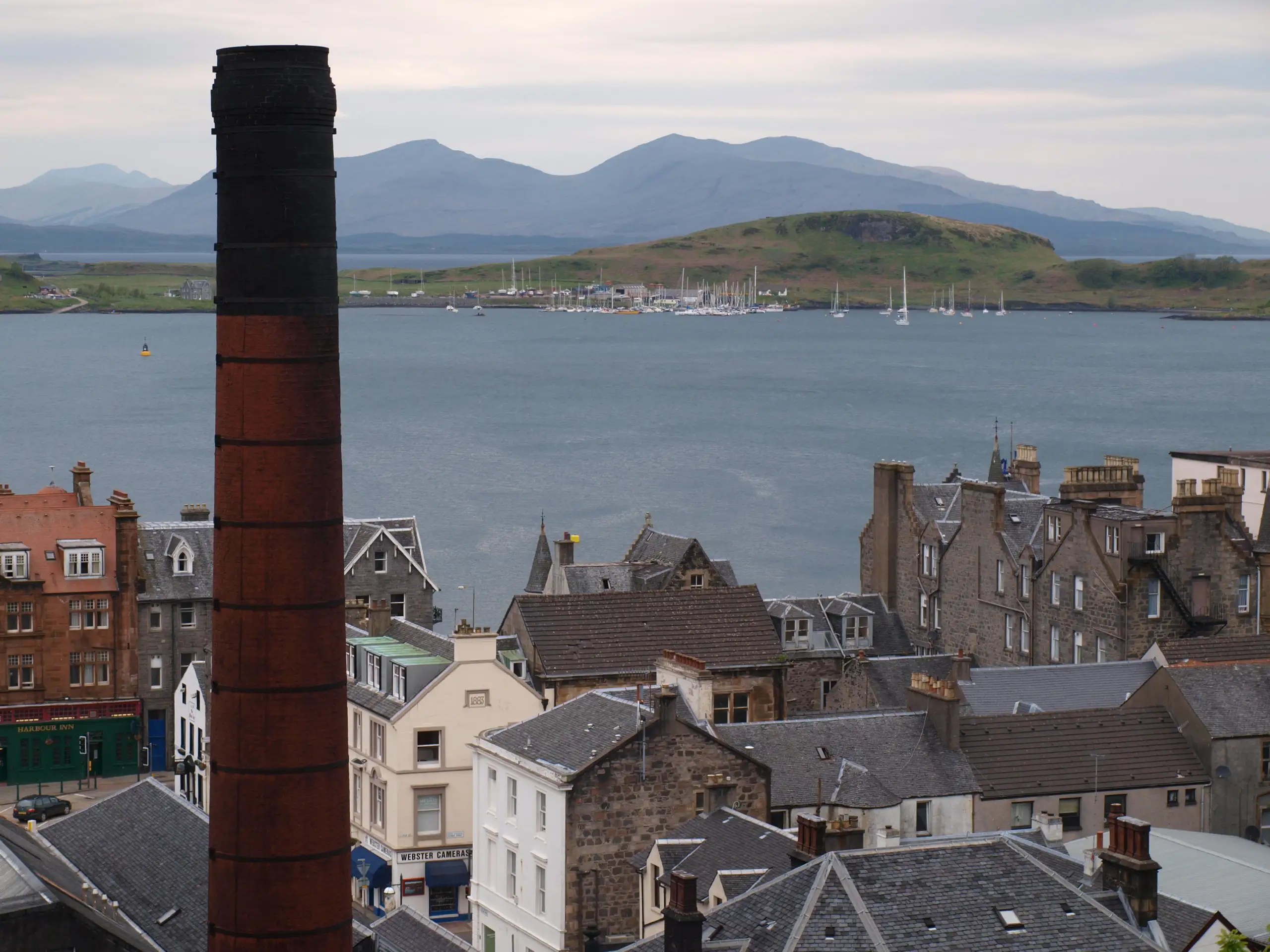
The Oban distillery is right in the middle of town and takes up a surprising amount of space behind the main street. It is not wildly interesting architecturally. It does tours, of course.
Rather surprisingly Oban has two cathedrals. Not Church of Scotland of course, no bishops. The most impressive is the Giles Gilbert-Scott designed Roman Catholic cathedral on the Corran Esplanade. Not surprisingly it has the look of a power station because he had also designed Battersea and South Bank Power Stations in London. Less impressive, squashed in a semi-detached rather scruffy building, the Victorian Episcopalian Cathedral on George St has a nice interior.
It's hard to find a really decent pub, at least where you can get good real ale in comfortable and congenial surroundings without TV screens and feeling threatened. Not bad is The Lorne in Stevenson St, across the main road from Tesco (ph 01631 570020). The bar is rather nice, and they do have Caledonian ales. The Cuan Mór restaurant and bar overlooking the bay is more of a restaurant than what I would call a proper pub, and it’s rather noisy (ph 01631 565078). If you can cope with the cavernous Corryvreckan by the ferry terminal, they at least have a selection of real ales (a typical Wetherspoon's). In 2017 and again in 2022 it was awarded the platinum Loo of the Year award — worth a thought if caught short. But the best, I think for me, is the fairly recently reopened — after many derelict years — Oban Inn circa 1790 just behind the North Pier, right next to the new pontoons (01631 567441). Cosy, old tables, dark wooden benches, traditional, real ale, good food, harbour views from the upper bar, and music.
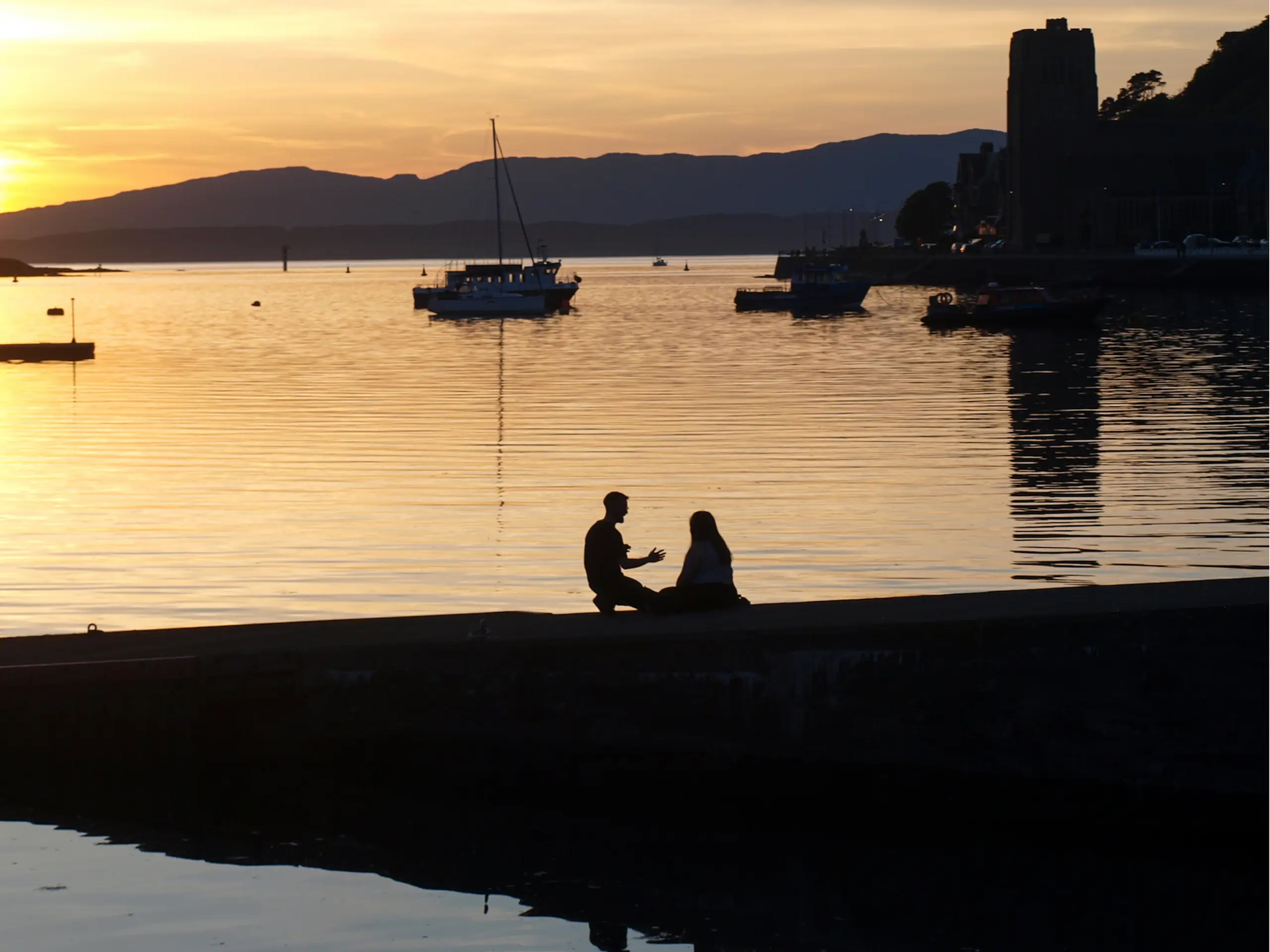
The late 19th century Colosseum-like 94-arch McCaig's Tower is the most obvious feature from the sea, Oban’s signature really. It is built of granite from the Bonawe quarry on Loch Etive. Its originator and funder and designer, John Stuart McCaig a banker, born on Lismore, died in 1902 before it was completed. It has been left as it was then, best seen from afar, although close up it is rather tidier than it once was, with good views across the bay, no litter and nice shrubs. There are steps up to it from the end of the road by the Skipinnish Ceilidh House. McCaig must have been some sort of pre-Keynsian because it is said that in part his idea was to provide work for local stonemasons in the winter. However, CC Lynam visited "the strange new round building" in 1896 and thought he had built it "in memory of himself" (The Log of the ‘Blue Dragon’ 1892-1904. C C Lynam, AH Bullen, London, 1907). Which is indeed true because in his will he instructed that there were to be statues of himself, his five brothers, four sisters, and his parents. But this never happened.
What almost everyone misses is both obscure and weird. Up on the hill overlooking the town about a quarter of a mile south of McCaig's Tower, buried, lost and entangled in mature woodland, invisible unless you are more or less on top of it, Oban's secret — the remains of the huge 137-bedroom Scots Baronial style Hydropathic Hotel (or Sanatorium). It was started with great enthusiasm, but poor financial planning, in 1881 and nearly completed before the money ran out and the whole place left to fall to pieces and rot (one wonders if the same story and fate will befall HS2). This could have been another 'Hydro' like Crieff or Perth Hydros. Unlike McCaig's Tower there are no tourists to be seen. If this was looked after by Historic Environment Scotland it would be closed to the public for fear of falling masonry, it really is that ruined. It is not easy to find so you need to use the OS map. There is a path heading south up from from Rockfield Road near its junction with Ardconnel Road.
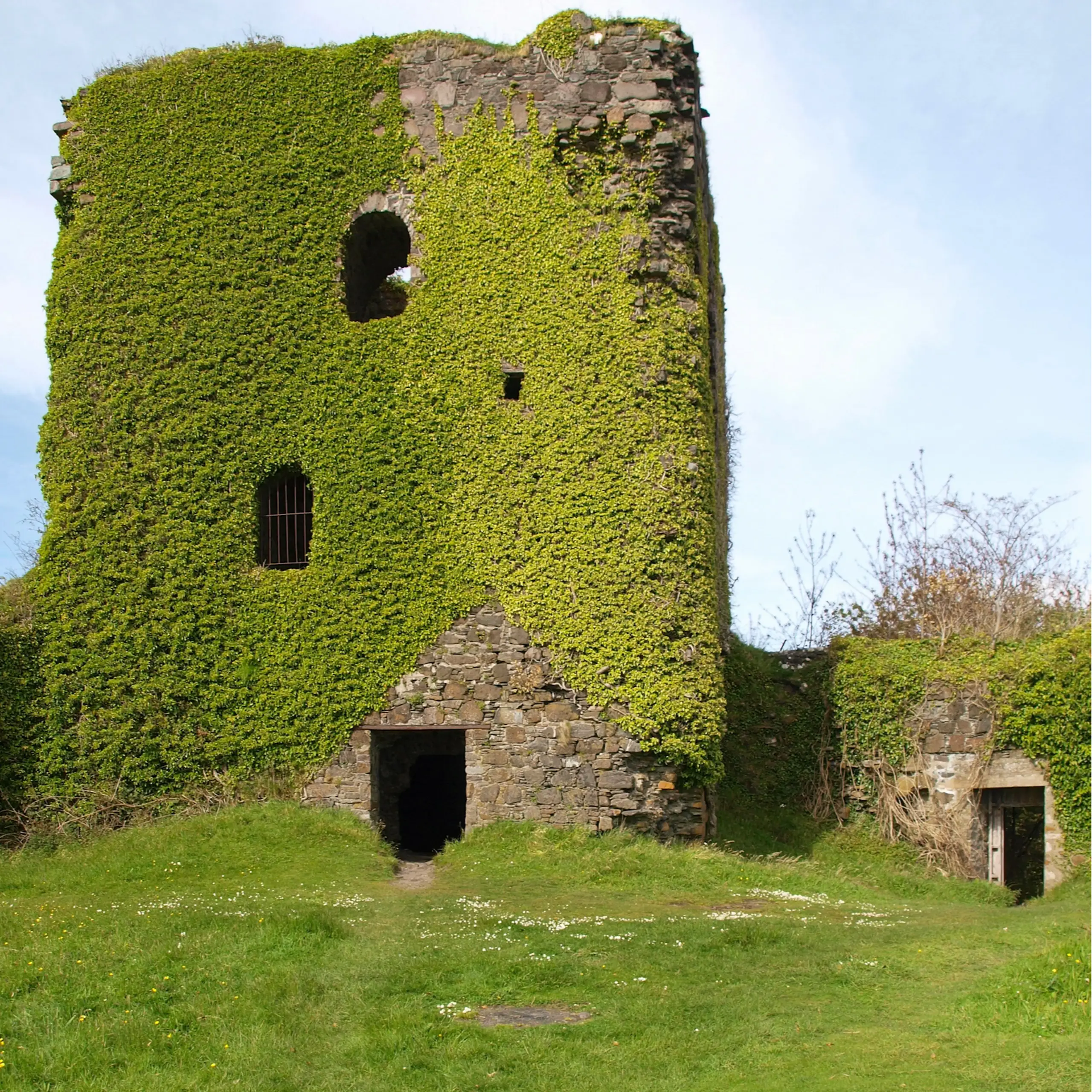
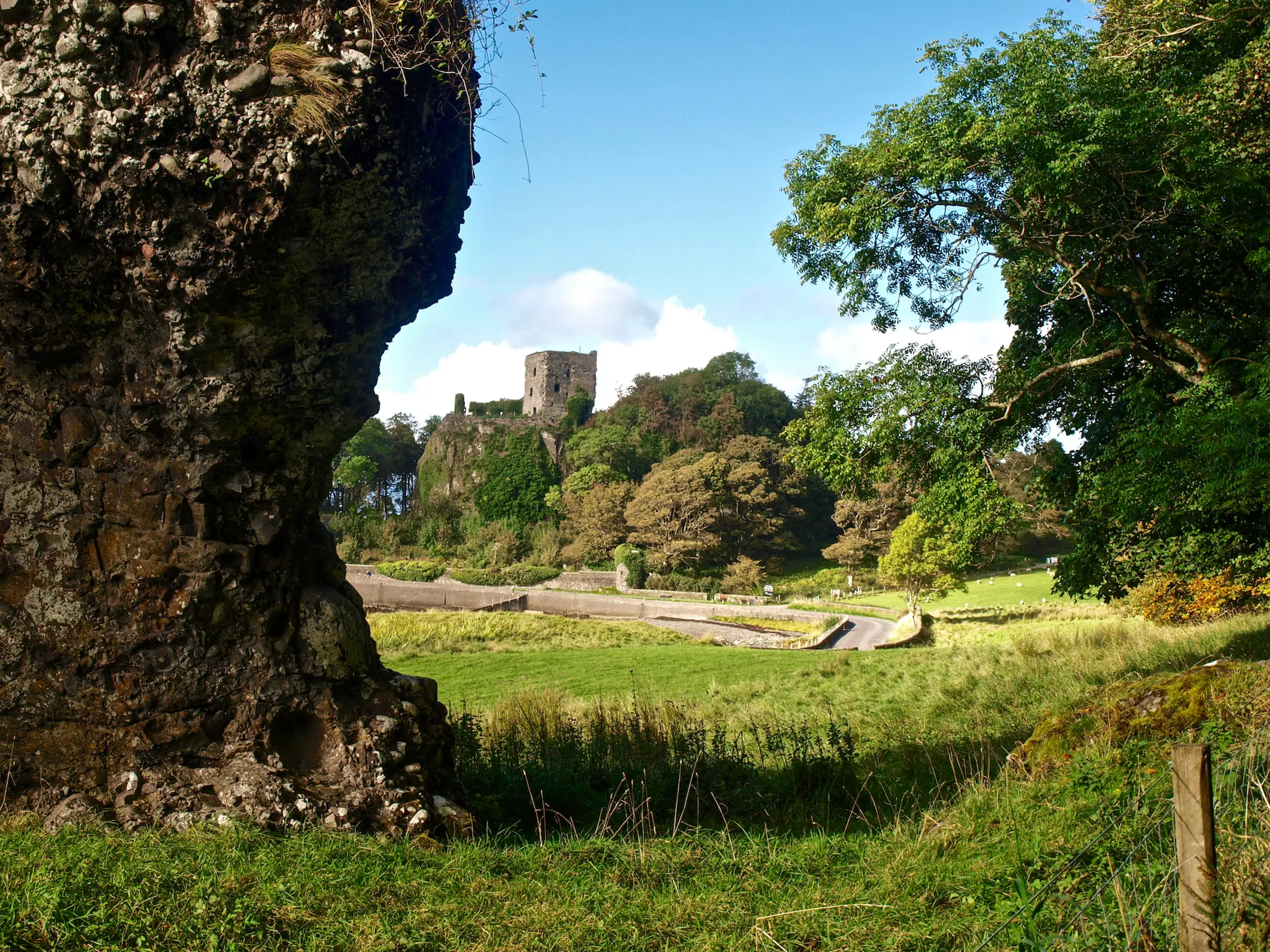
You can walk to the less ivy-covered than it once was, atmospheric and rather spooky ruin of Dunollie Castle on a 7th century site in lovely woods, just at the north entrance to the bay. Actually without the ivy it looks more naked than spooky. 'Pevsner' got it just right as usual "Ravaged by time, crag and castle alike struggle to resist the green grasp of parasitic vegetation." (The Buildings of Scotland, Argyll and Bute. Frank Arneil Walker, Penguin Books, London, 1992). Most of the ruin dates from the 15th and 16th centuries. It was abandoned in the 18th century. The interior is now open again after stabilisation in 2013-6, which graciously avoided disturbing the European cave spiders which apparently live in the castle walls. There are good views from the courtyard (and now from a second-floor viewing platform), over the bay just as Jules Verne described in The Green Ray first published in 1882: "Nothing could have been more lovely than the panorama formed by the indentation of the bay of Oban, the wild appearance of Kerrera, the isles scattered in the Hebridean sea and the large Isle of Mull, whose rocky western coasts receive the first onslaught from the storms arising from the western Atlantic" (The Green Ray. Jules Verne, Luath Press, Edinburgh, 2009).
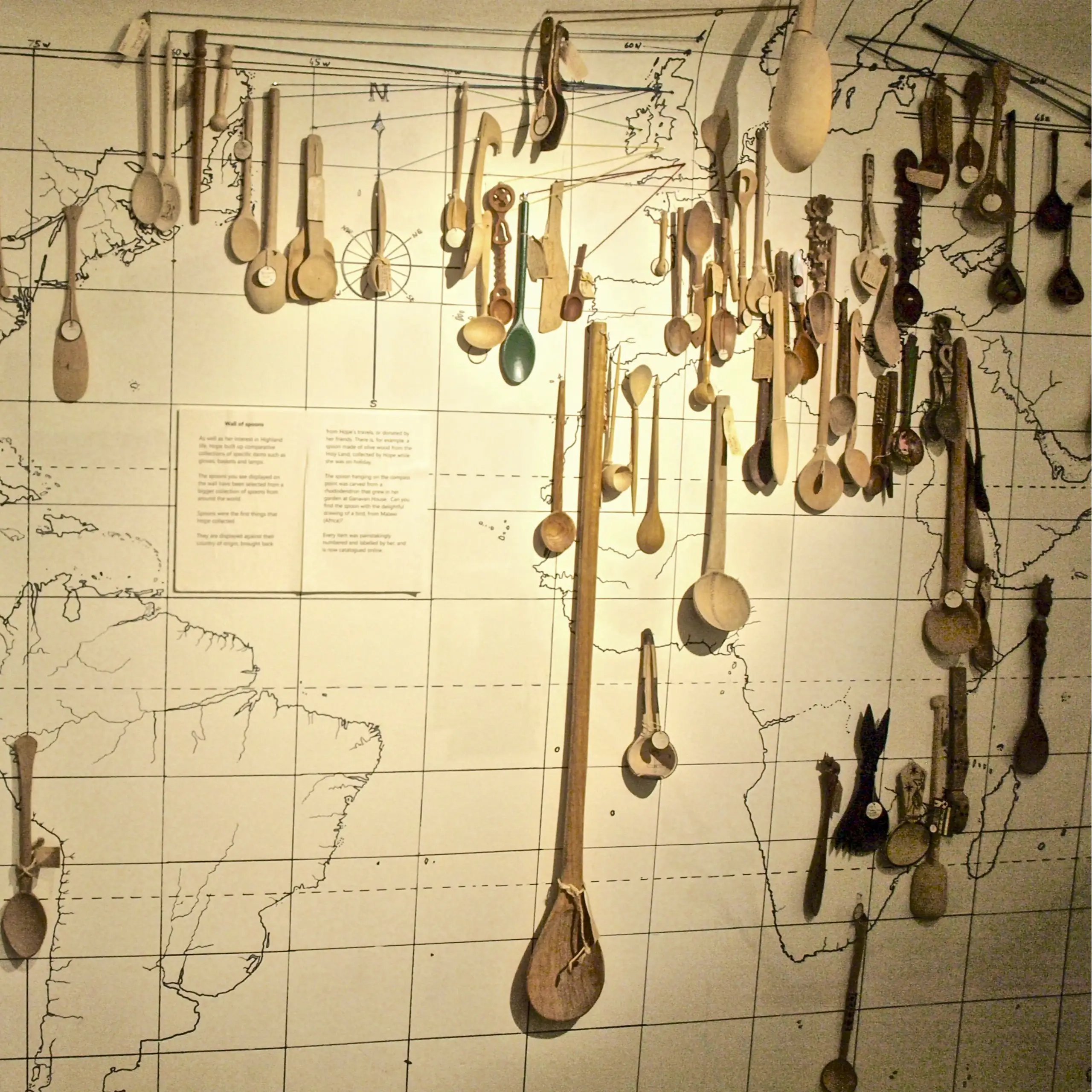
The museum in Dunollie House is next door to the castle, opened in 2011. It is small but growing, and has a café. It majors on domestic life in a laird's big house, with some MacDougall family history thrown in and a wonderfully eccentric collection of domestic this and that from the late Hope MacDougall (check out the international wooden spoons!). Started in the 17th century, the T-plan north range was built in 1745, and the main parts of the house were added in the 19th century. In 2013 a six-metre high dome made from willow, along with a seven-metre high tower, was planted. The idea is that it all takes root, flowers, and grows — and grows. Which it is. The lovely deciduous woods behind the house have been leased by the MacDougall family to the Woodland Trust for 99 years at a peppercorn rent.
There was no town of Oban when John Knox visited in 1786, but he realised its potential: "Oban is formed by nature, and by a combination of favourable circumstances, for being a principal harbour, a place of trade, a central mart for the South Highlands, and the numerous islands that lie in its vicinity" (A Tour through the Highlands of Scotland and the Hebride Isles in 1786. John Knox, James Thin, Edinburgh, 1975). As it is now and, like much of the Highlands, it became a fashionable 19th century holiday destination, egged on by visits from Boswell and Johnson, Wordsworth, Mendelssohn, JMW Turner and Sir Water Scott. So much so that in 1896 Frank Cowper wrote: "Now we are once more in the presence of beauty and fashion, or the world, the flesh and the devil, as the Catechism neatly puts it". I am not sure this is still the case but then he added, "No one stops here, at least not for more than a few days. It's whole season is one of panting, restless bustle. Everyone comes here to go somewhere else" (Sailing Tours: The Yachtsman's Guide to the Cruising Waters of the English and Adjacent Coasts, Part V, The West Coasts of Scotland, the Orkneys, and the west coast of the North sea. Frank Cowper, Upcott Gill, London, 1896). Henry Reynolds felt much the same in 1895: "The town is prettily situated. Rank and fashion were so much to the fore that we could not but be somewhat conscious of the shortcomings of our garb, even when the capabilities of our restricted wardrobes were utilised to their full extent. The only drawback to the place is the great depth of its waters” (Coastwise—Cross-seas, the Tribulations and Triumphs of a Casual Cruiser. Henry Reynolds, J D Potter, London, 1921). But there is no pleasing everyone — a couple of decades later, Claud Worth, the London ophthalmologist and sailor, complained that "... the approaches to Oban have been given such a superfluity of beacons and buoys that there are none left for any other part of the west coast of Scotland" (Yacht Cruising. 3rd Edition, Claud Worth, J D Potter, London, 1926). And in 1932 Heckstall Smith wrote that although Oban "has few attractions as a town, it is a most wonderful centre from which to radiate into the finest parts of the Highlands, both inland and by sea as far as the Hebrid Isles" (Isle, Ben and Loch, from the Clyde to Skye. S Heckstall Smith, Edward Arnold, London, 1932). I would say much the same today. Finally, in 2010, Shane Spall — wife of actor Timothy — in her lovely two books about their seagoing barge trip round the UK wrote of Oban as "a small compact place with handsome seafront shops selling postcards, tartan scarves, kilts, haggis, shortbread, umbrellas, pocket mackintoshes and miniature bottles of single malt whisky; not in every shop, just most of them. The others sold ice cream" (The Voyages of the Princess Matilda, and The Princess Matilda Comes Home. Shane Spall, Ebury Press, London, 2013). These days there are crowds of aimlessly wandering visitors uncertain what to do other than take photos with their phones, but do go and see for yourself and enjoy!