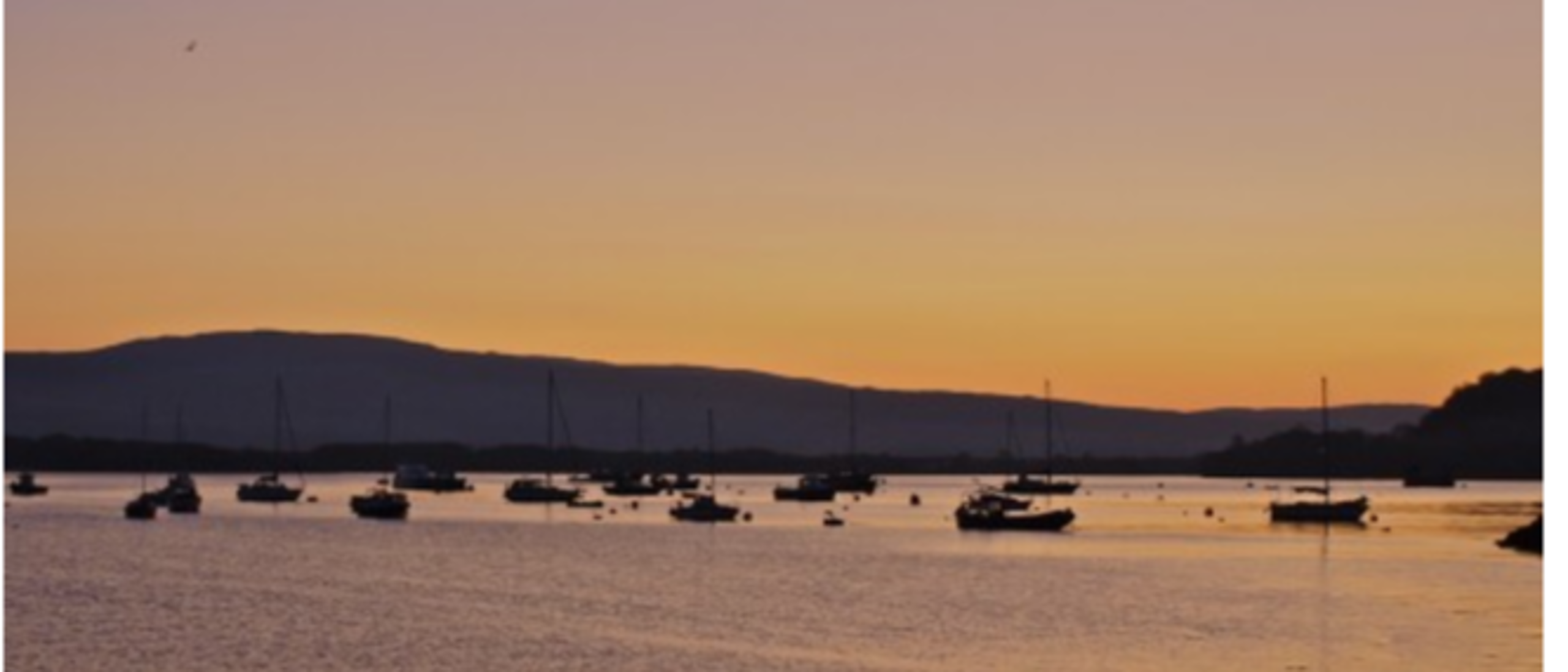
“I've sailed the seven seas and travelled every way but there's nowhere near so beautiful as Tobermory Bay” (anon).
Ah, the fleshpots of Tobermory! Undoubtedly the prettiest village — or town — on the West Coast. Not to be missed. It has almost everything, particularly after a stormy day off Ardnamurchan: pubs, hotels, restaurants, showers, laundry, distillery, shops, walks, water, diesel, just hanging around. But it can be hellish crowded at the height of the season (but not nearly as hellish as The Solent, a 'yachting slum' according to Jonathan Raban in 'Coasting', Vintage Books, New York, 1987).
Tobermory was toiling with Balamory fever in the early 2000s, inundated during the summer school holidays with families whose young children wanted to see all the sights from the popular BBC Scotland TV programme. That was fine up to a point, but it was not the real Tobermory until they all went back to Oban on the ferry. I am told they didn't bring much to the economy because they just came for the day, looked at the sights, ate their picnic lunch, and went away. Even now there are still the last remains of Balamory fever to be seen in the shops selling colouring-in books and such like. The series was brought back in 2026, but whether it can recreate the same following remains to be seen.
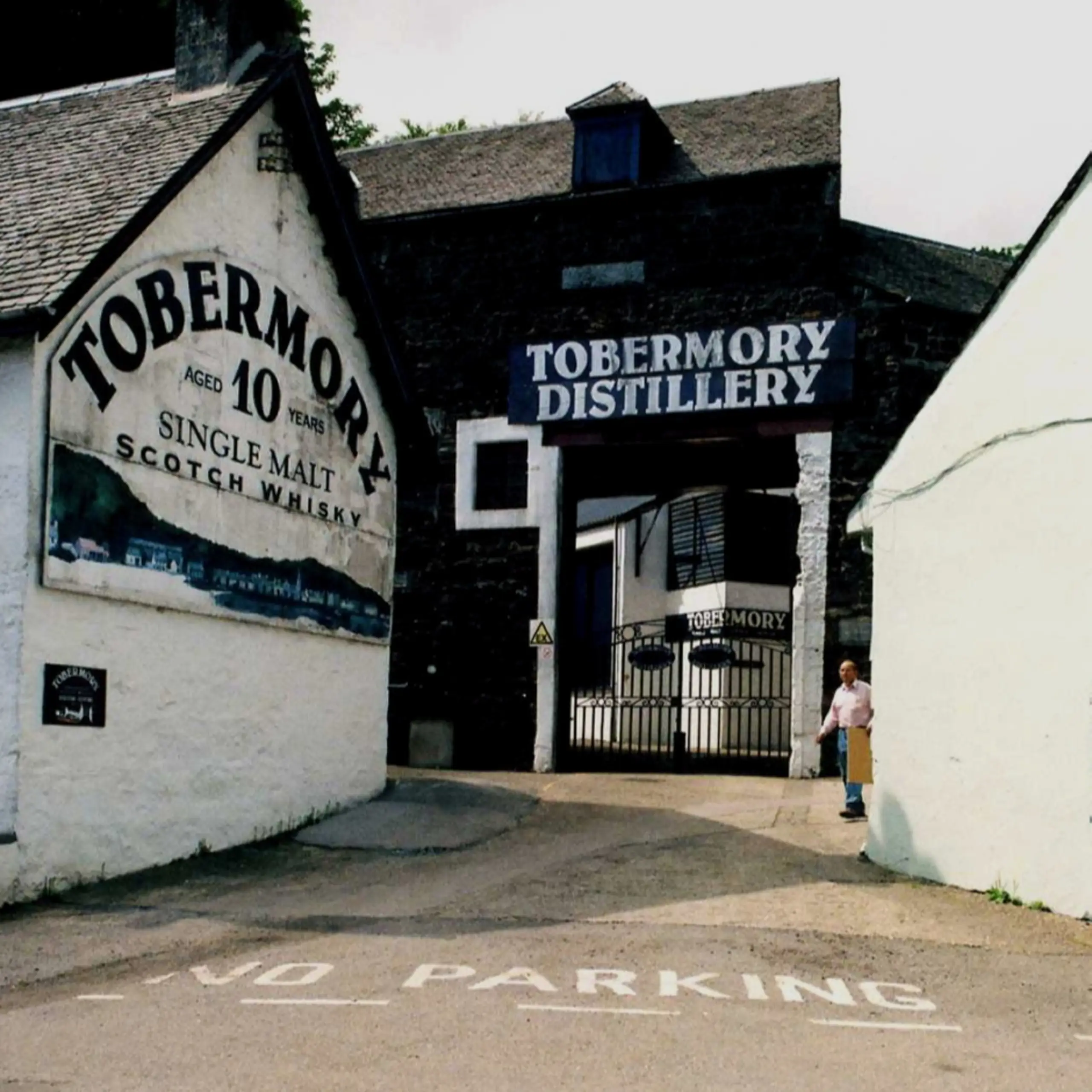
Right above the pontoons you will find, to my eyes if not to those of many others, a less than attractive modern building (Taigh Solais) looking like a pastiche cross between a lighthouse and a church. However, inside you will discover excellent toilets and showers, a laundry, but no longer the small aquarium which was closed in 2024 and is unlikely to reopen any time soon. It contained lots of interesting stuff, including the skeleton of Elvis. The staff were charming, and for kids there was a touch-pool where they could handle marine creepy-crawlies, crabs and the like. It boasted Europe's first catch and release aquarium where local fish (36 varieties) and other sea creatures were caught and returned to the sea after four weeks. The jellyfish tank, the movie, and particularly the topographical display made of shifting sand and clever computing were musts. Sad its all gone. Now it has been replaced with the Seafare Chandlery, somewhat expanded in its new position (ph 01688 302876). Next is quite a nicely designed new in 2026 building with one of those Highland shops which seems to sell everything from shortbread to anoraks. Then MacGochan's pub right in the path of visiting yachtsmen for beer (real ale too) and grub (ph 01688 302350). It was relaunched in 2012, then in 2020 restored after a fire, and is much more cosy than it once was. And it is big on live music. After that comes the garage which can fix boat engines, and then you can't miss the Tobermory Ledaig distillery. There are tours, of course, and a shop. It was founded in 1798, right at the beginning of Tobermory as a town, but the present buildings date from 1822. The rather magnificent bond warehouse across the road, now flats, is late 18th or early 19th century. The small building opposite the distillery on the shore was once a Baptist chapel, built in 1862, now selling Himalayan stuff.
As you walk along the main street you will find the Isle of Mull Ice Cream parlour in the (whisper it) converted public toilets. Try the whisky and marmalade flavour. Proper ice cream. Delicious. Then on the old (fishermen's) pier (completed in 1814 by Telford), you will find the Tobermory chip van which is well-renowned with its Les Routiers designation. It is run by Jeanette Gallagher and Jane MacLean, both fishermen's wives. The nearby 1905 town clock provides a good place to sit eating your fish and chips. It was commissioned by the intrepid explorer and writer Isabella Bird, and designed by Charles Whymper, brother of the famous mountaineer (and has a charming chime on the hour). You will find the Hebridean Whale and Dolphin Trust along the main street, to browse in and report your exciting sightings, if any.
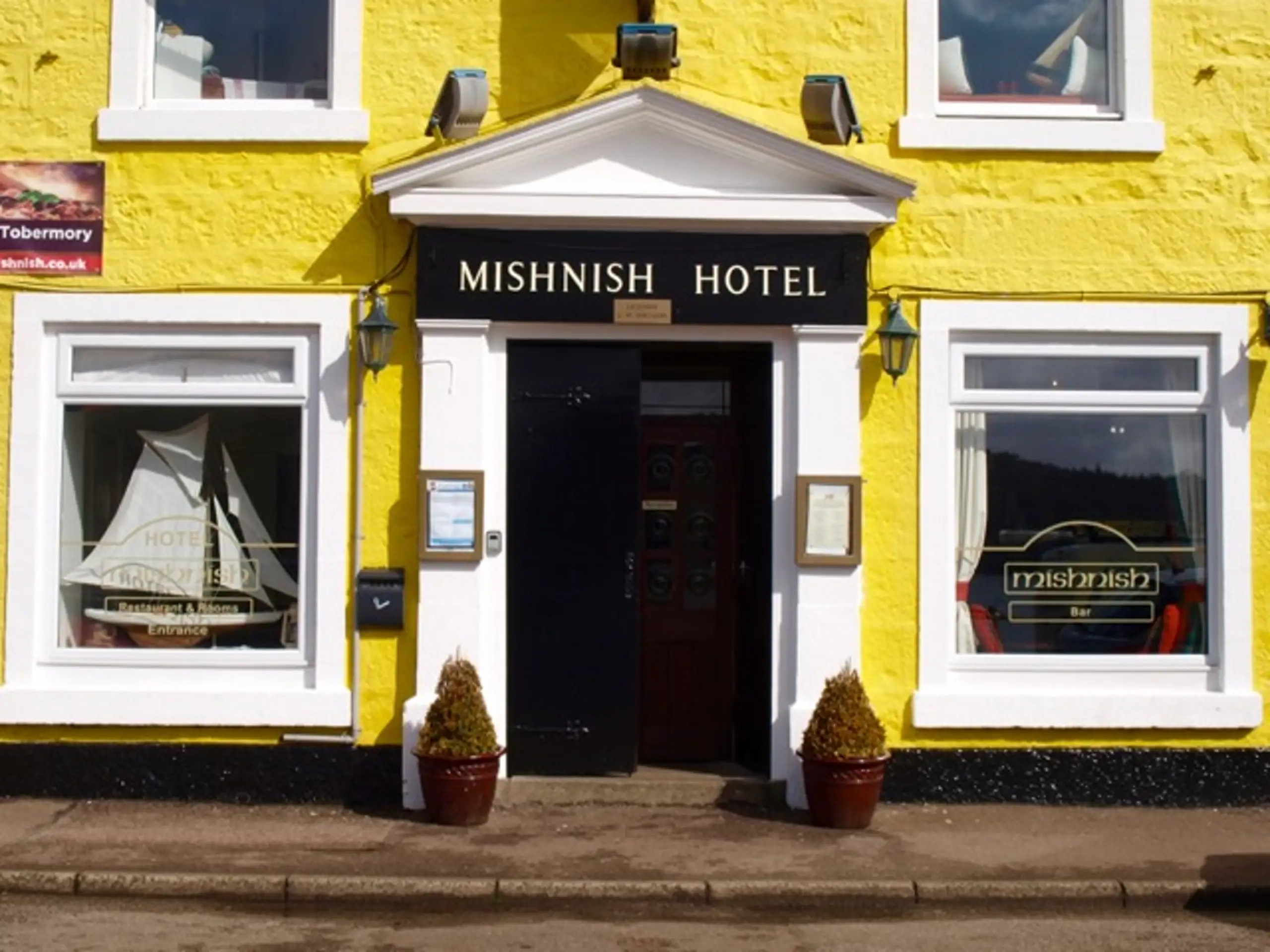
Moving further along the main street, my own favourite pub is the bright yellow-painted Mishnish (where live music can be found some nights) provided you don't mind playing at being a sardine with yachties (in yellow wellies, no in Dubarries these days), scuba divers (small and round with their origin blazoned onto their bulging T-shirts), and the local youth. This place has real atmosphere with walls adorned with flags and photographs, a pool table and cosy cubicles (for kissing I am told) if you can get a seat in one. There are a couple of real ales, including the 'local' Mishnish Ale (which is good but I believe is brewed by Belhaven). And the pub grub is good too. There is a seafood restaurant and oyster bar (ph 01688 302 500) and also a separate upmarket restaurant in the same Mishnish building, An Cala Ciùin, if you have £125 to spare for their 14-course tasting menu (ph 01680 309106).
For afternoon tea, combined with a stunning view across the bay, the late 19th century Western Isles Hotel should be the place to go (ph 01688 302012). However, it went through a very bad patch when the conservatory was made over, and the comfortable couches thrown out. It changed hands in 2009, and again in 2014, and things may have looked up but I haven't been back since. Still mourning those couches.
The Galleon Bistro is up a turning off the main street (ph 01688 301117). Reviews are very good but it is for sale in 2026 so things could change.
At the end of the main street you will find Café Fish on the first floor of the flash 1930s Artdeco ferry terminal building on the new(er) mid-19th century ferry pier. It is brilliant for seafood (and desserts), really nice and I think the best place to eat (at reasonable expense) in Tobermory (ph 01688 301253). However, it is small, has two sittings for dinner, can be extremely busy and difficult to get a table, so book really early and you will not regret it. I believe they also do take-aways. I like their strapline: "The only things frozen are our fishermen". But, a big but, in 2018 it was up for sale for £500,000 which could have been very bad news. However, it still seems to be in the same very capable hands of Jane Gill and Liz McGougan.
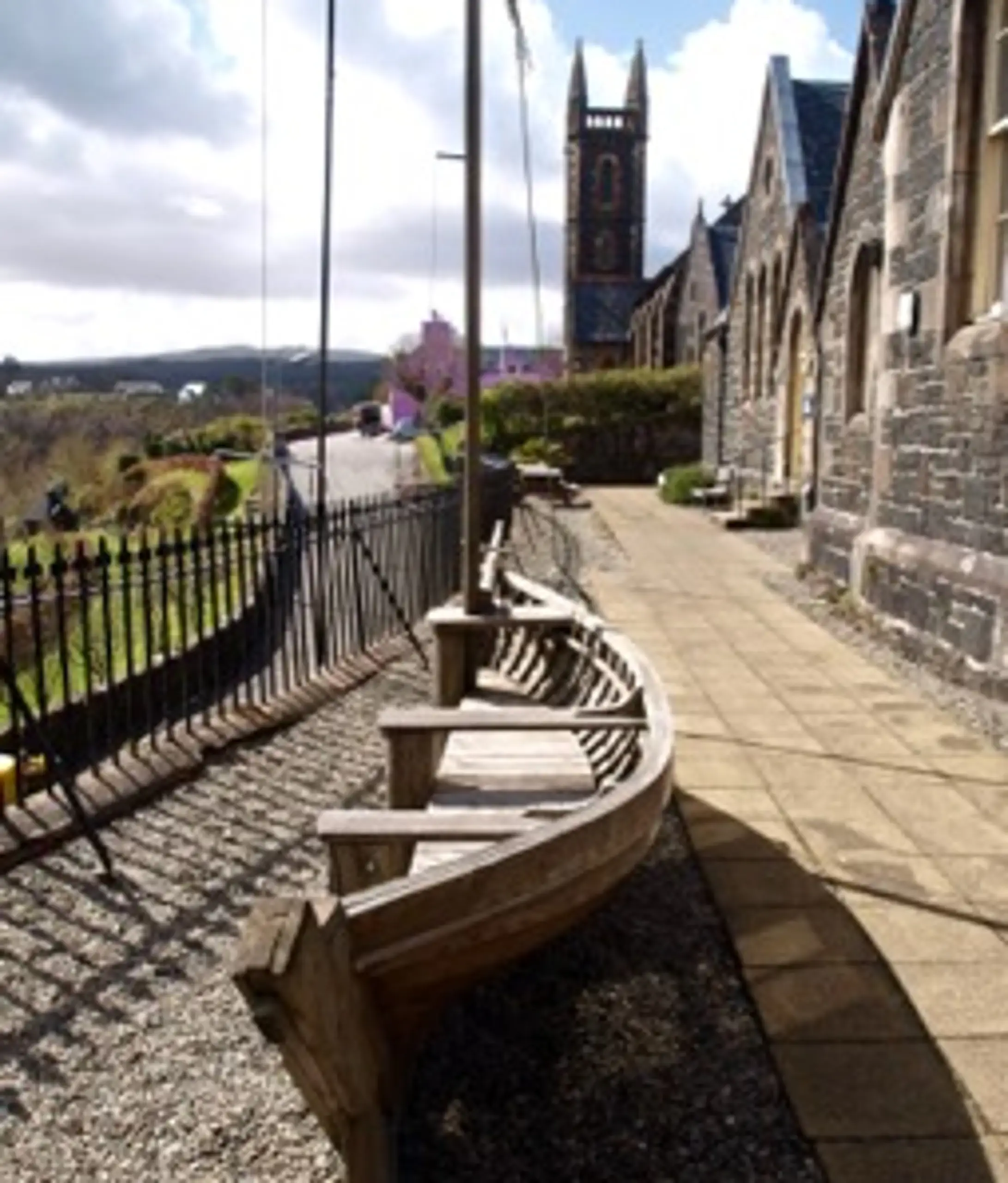
Move on up the hill to An Tobar, the arts venue and excellent café. It is definitely worth a visit, but normally closes at 5pm. It is in a converted primary school on Argyll Terrace above the main street with great views and outside tables, one of which has been created to look like one half of a small wooden boat (ph 01688 302211). There are all sorts of activities here — music, art classes, a gallery and so on. The Mull Theatre is part of the An Tobar organisation and is an absolute must, described under Aros Bay.
Back on the main street, do look at the Mull museum which had its origins not so long ago in 1972. It is small, charming and interesting. Show your children the tawse to remind them what it was like in the (good?) old days. The tawse — if you don't know — is a strip of leather to beat naughty children over the palm of the hand, in front of the class, only outlawed as late as 1987 (I was merely beaten across the buttocks with a gym shoe or cane at my school). There is even an infant-sized tawse on display as well as the grown-up variety. And check out the story of the Neptune, the Canadian sailing ship which landed up off Ardnamurchan instead of Newfoundland in 1930. Have a look at the bits of a crashed Dakota aeroplane. Brood on the map of shipwrecks round Mull. Check out the ‘Terror of Tobermory' although the display was not there in 2026. Further along the street, the old church now houses a café and a small art gallery.
You can get more-or-less everything you might need in Tobermory. My own favourite shop is 'Tackle and Books'. What an eccentric and yet happy conjunction of small boys eyeing up the spinners on one side and the serious traveller browsing around the fine collection of Scottish and other books on the other. Irresistible, last time I came out with three books. "Just the sort of customer we like" remarked the boss. Then there is Tobermory Chocolates for a pricey indulgence (handmade apparently) and excellent ice cream. Brown's established in 1830 is a monument to another age — ironmongery and booze, all tastefully displayed in their shop window. And managed by the fifth generation of the same family. The Co-op supermarket is good (apart from the crowded aisles and long queues, although there will be an additional and bigger version opening on the edge of the town), and the Tobermory Bakery for rolls and patisseries (get your breakfast croissants here before setting sail but phone to make sure it is open — 01688 302225). The Tobermory Fish Company wins awards and has a retail outlet up the hill out of town next to the Mull Pottery. Once there was a butcher (which also sold fish) but they closed in 2009, very sad. But then a new independent grocery and deli appeared with a very yummy-looking Facebook page — Tobermory Stores. Indeed, there is not much you can't get hereabouts which would otherwise require a visit to Oban.
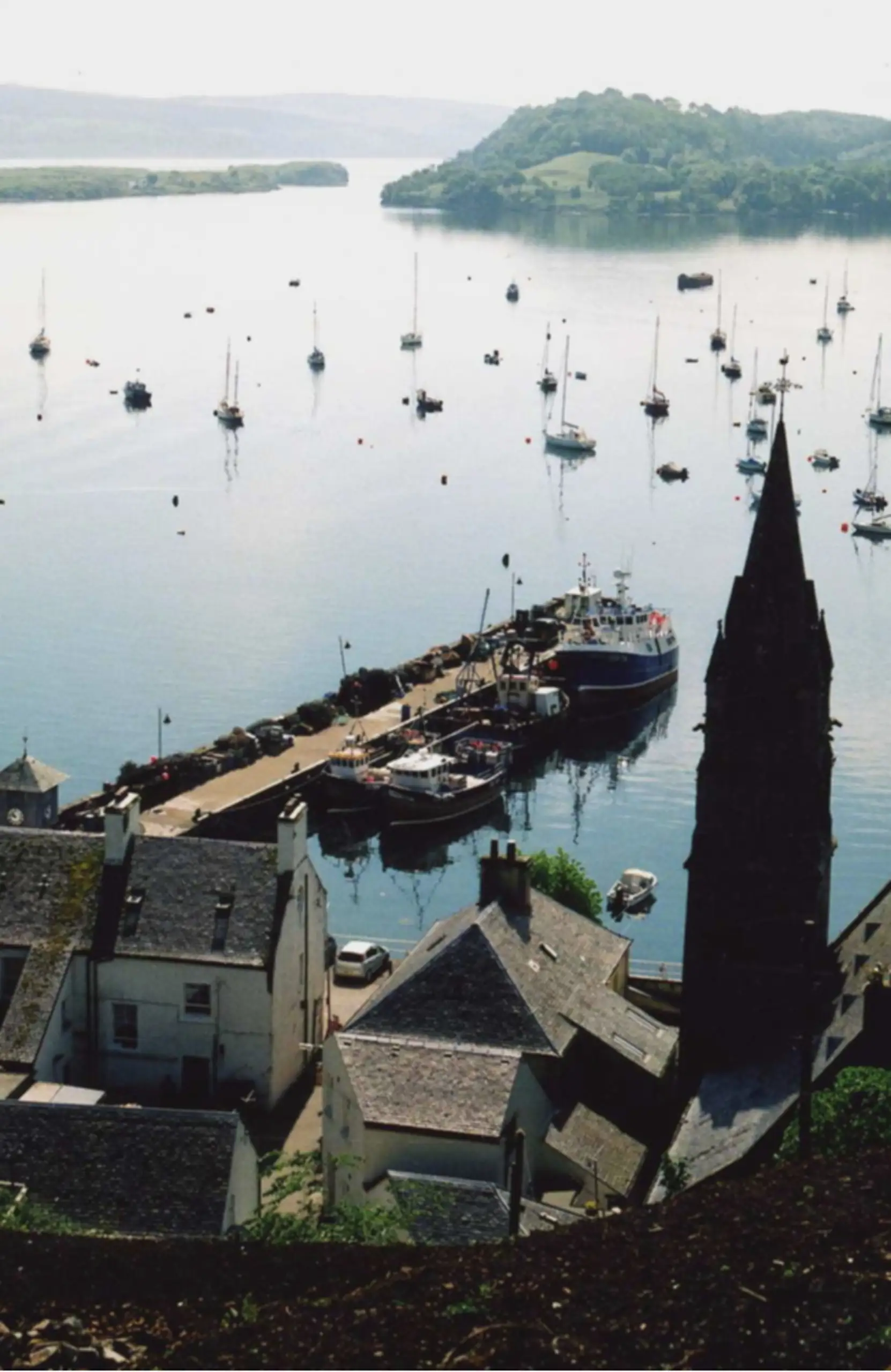
You should certainly not miss a stroll around the upper village, particularly along Argyll Terrace with its neat terraced houses separated by the road from their gardens. The view down onto the bay with the bobbing boats on moorings is exquisite. If you only like to walk with a golf club in your hand, there is a 9-hole course up on the cliffs above the town, overlooking the entrance to the Sound of Mull — stunning views to take your eye off the ball. Even without a golf club you can walk around the course to above the Rubha nan Gall lighthouse, then down a steep path to the shore and back along a path that can be extremely muddy, through the woods to Tobermory. Or just do the lighthouse walk to and from Tobermory along the shore, past where there used to be bathing huts and even a sea-bathing pool (in the first bay past the pier). You can rent the lighthouse keeper's cottages, sleeps six. And the walk to Aros park and around the lochan and back is an excellent one-and-a-half hour saunter through lovely woods, with scenery.
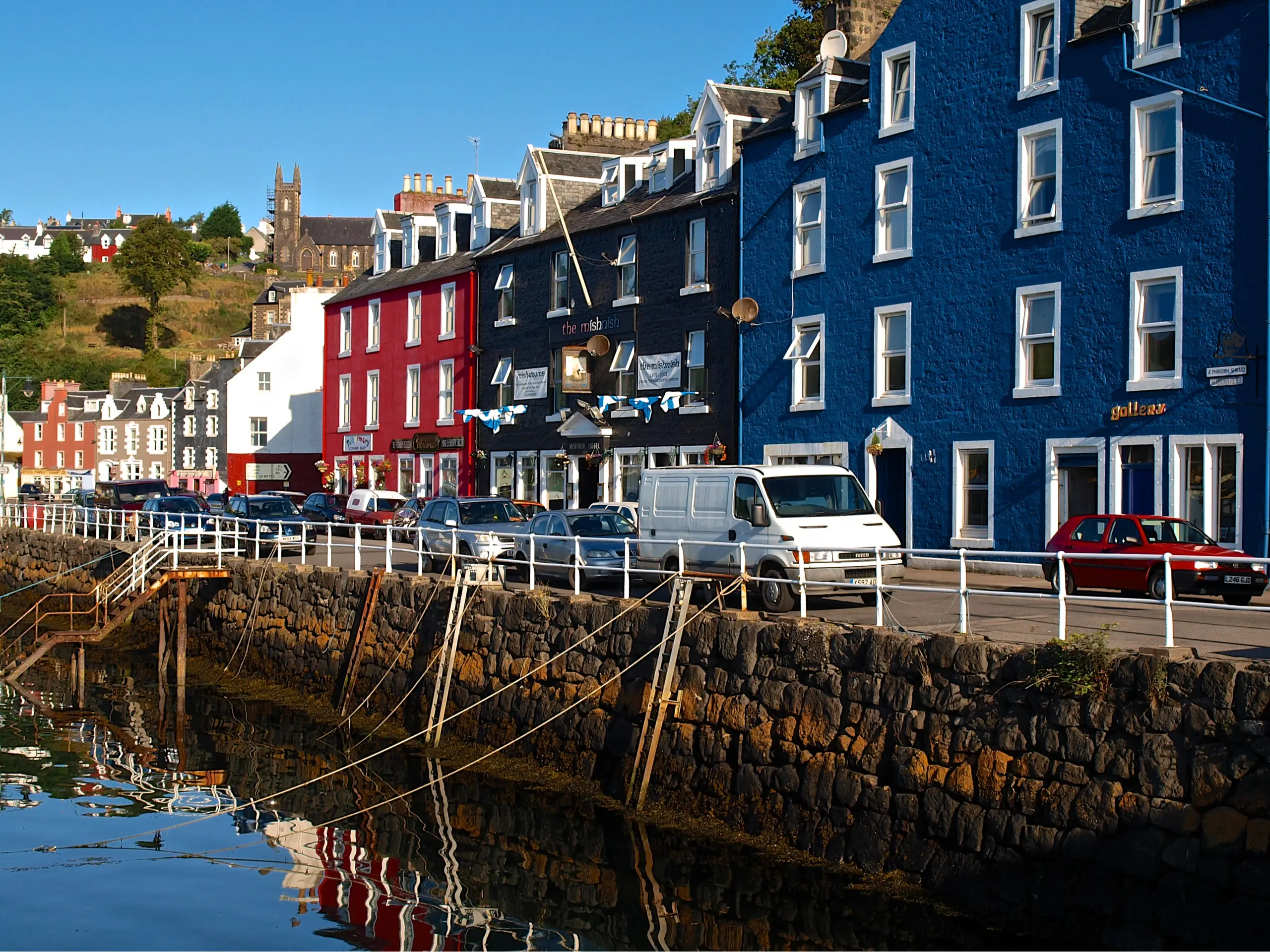
Finally, just why does the ensemble look so attractive (with the notable exception of the horizontal sign of the Co-op supermarket)? Probably because it was originally laid out from scratch in 1788 by the 'British Society for Extending the Fisheries and Improving the Sea Coast of the Kingdom'. Years before, a retreating Spanish galleon from the Armada had ended up here, before mysteriously sinking into the deep mud of the bay, where it lies still, awaiting the salvage of real or imagined treasure, despite many efforts over the years. In fact the bay had been well known as a safe anchorage for centuries, even though there was more or less no town or even a village, just a few houses: "..a very fine place for large ships; for it is sheltered from all winds, the ground good, and the depth moderate" according to Murdoch MacKenzie in 1776 (Nautical Descriptions of the West Coast of Great Britain from Bristol Channel to Cape-Wrath. Murdoch McKenzie, London, 1776) and "One of the most celebrated, and most frequented bays in the Highlands" according to John Knox ten years later (A Tour through the Highlands of Scotland and the Hebride Isles in 1786. John Knox, James Thin, Edinburgh, 1975).
The original town was built over a few years and still retains a wonderful sense of character and history. Ironically, fishing never really took off, instead Tobermory became more a centre for trade between the mainland and the outer islands, helped along by tourism right from early in the 19th century. William Daniell may have helped the tourism industry by not just his sketching but by writing in 1817 "The inhabitants of Tobermory, whether from the frequent intercourse with strangers which their situation occasions, or from other causes, are distinguished from other Hebrideans by a greater attention to personal neatness and cleanliness. … Another agreeable prepossession which a traveller acquires in journeying thither arises from the frequent praise bestowed on the beauty of its females, and this characteristic is also well warranted. There are certainly many pretty women at Tobermory, and their appearance, as well as that of the children and the men, is much improved, by that glow of health which habitual cleanliness never fails to promote” (A Tour thro' the Whole Island of Great Britain. Daniel Defoe, originally published 1724-6, abridged and edited by Pat Rogers, Penguin, London, 1971). So there you have it, wash regularly! Strangely, 50 years later Alexander Smith took a very different view: “The houses look pretty and clean when seen from the steamer’s deck, but on a nearer view they deteriorate and become squalid, and several transform themselves into small inns, suggestive of the worst accommodation and the fiercest alcohol” (A Summer in Skye, Volume 1. Alexander Smith, Alexander Strahan, London, 1865).
Apparently it was not until the 1960s that the owner of the Mishnish decided to splash colour on to his grey building, so setting the multicolour trend of what you see today. However, this story may not be quite true as Archibald Young described some of the houses as being painted 'bright yellow' in 1898 (Summer Sailings, by an Old Yachtsman. A Young, David Douglas, Edinburgh, 1898). And why the name Tobermory? Because Tobar Mhoire is Gaelic for Mary's Well which is somewhere hidden in the upper town near the remains of a medieval chapel.
To get an idea of what Tobermory looked like in 1939 have a look at this old silent movie.