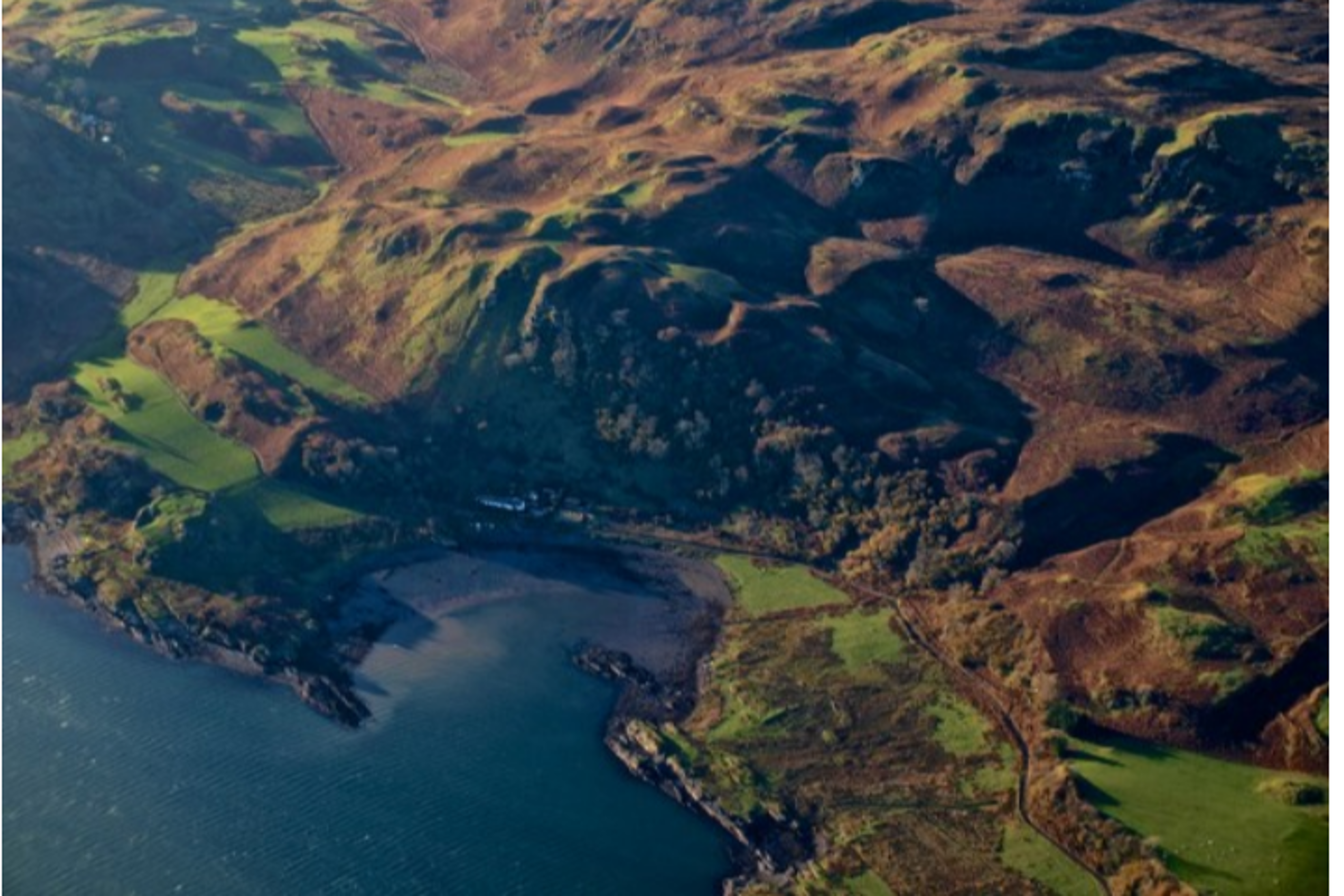
This is a better anchorage than it once was because back in the 1930s it was obstructed by the pontoons of lobster fishermen. Long before that the Vikings gathered just north of here, in Horseshoe Bay, on their way to the Clyde and their final comeuppance at the hands of the Scots at the Battle of Largs in 1263.
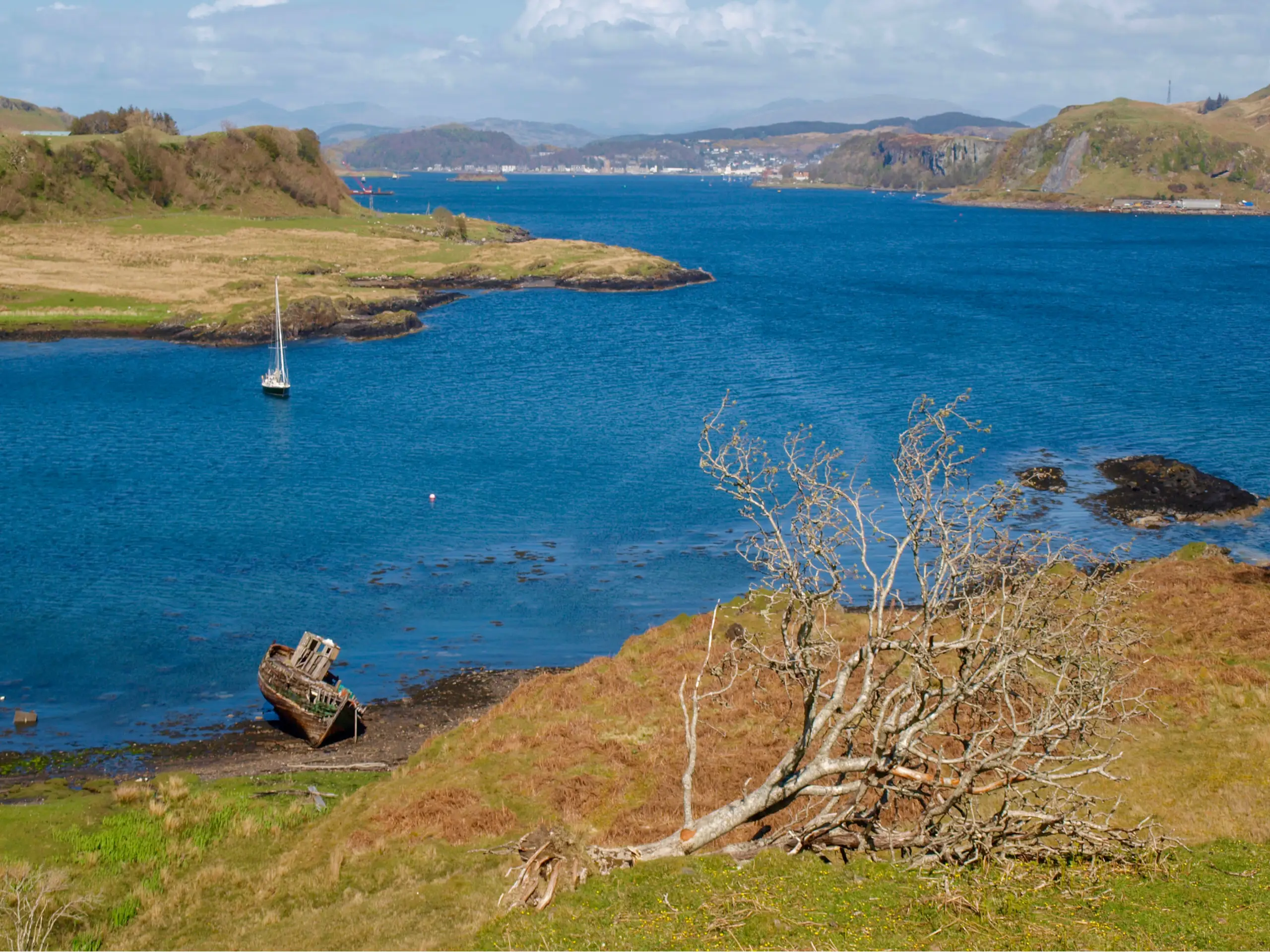
The old decaying wooden hulk on the beach enhances the scene in a rather nice way, and doubles up as a wrecked pirate ship with treasure (what on earth happens to plastic hulks, there must be thousands of them somewhere?). From the anchorage, scramble up to the site of an old iron age fort at the top of a little flat knoll on the south arm of the bay. There is hardly anything left but a few grassy lumps presumably cover the remains of the defensive walls. From this grand vantage point there are charming views up and down the Sound of Kerrera.
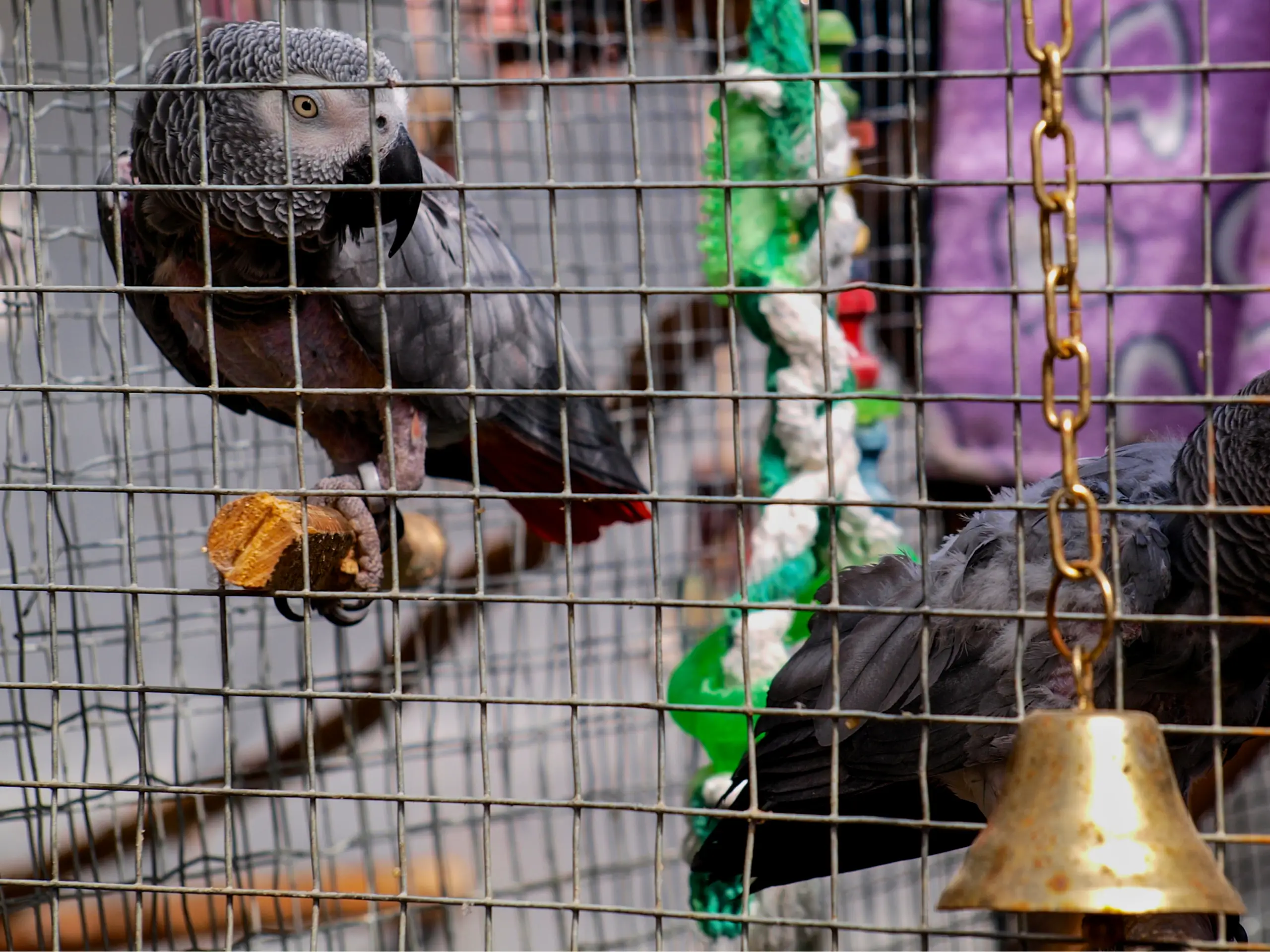
One of the small cottages by the anchorage was once taken over by the only parrot sanctuary in Scotland — not surprising to hear distant squawks more reminiscent of Treasure Island than the Hebrides when you anchored. In 2010 there were 60 birds in various stages of distress, or well- fedness, courtesy of Yvonne MacMillan who was clearly passionate about looking after them. The trouble was that by 2011 the sanctuary was full and she could only take more birds if one of her resident birds died. This is the same classic capacity problem we have in medicine — to see more new patients in out-patient clinics we have to discharge follow-up patients to make space, otherwise no new patients get seen. Not surprisingly some discharged follow-up patients become disgruntled, and with good reason if their GP cannot provide the sort of care they were getting in hospital. Sadly, in 2015 it looked as though the sanctuary was going to be closed and the parrots rehoused on the mainland. By 2016 it was all gone.
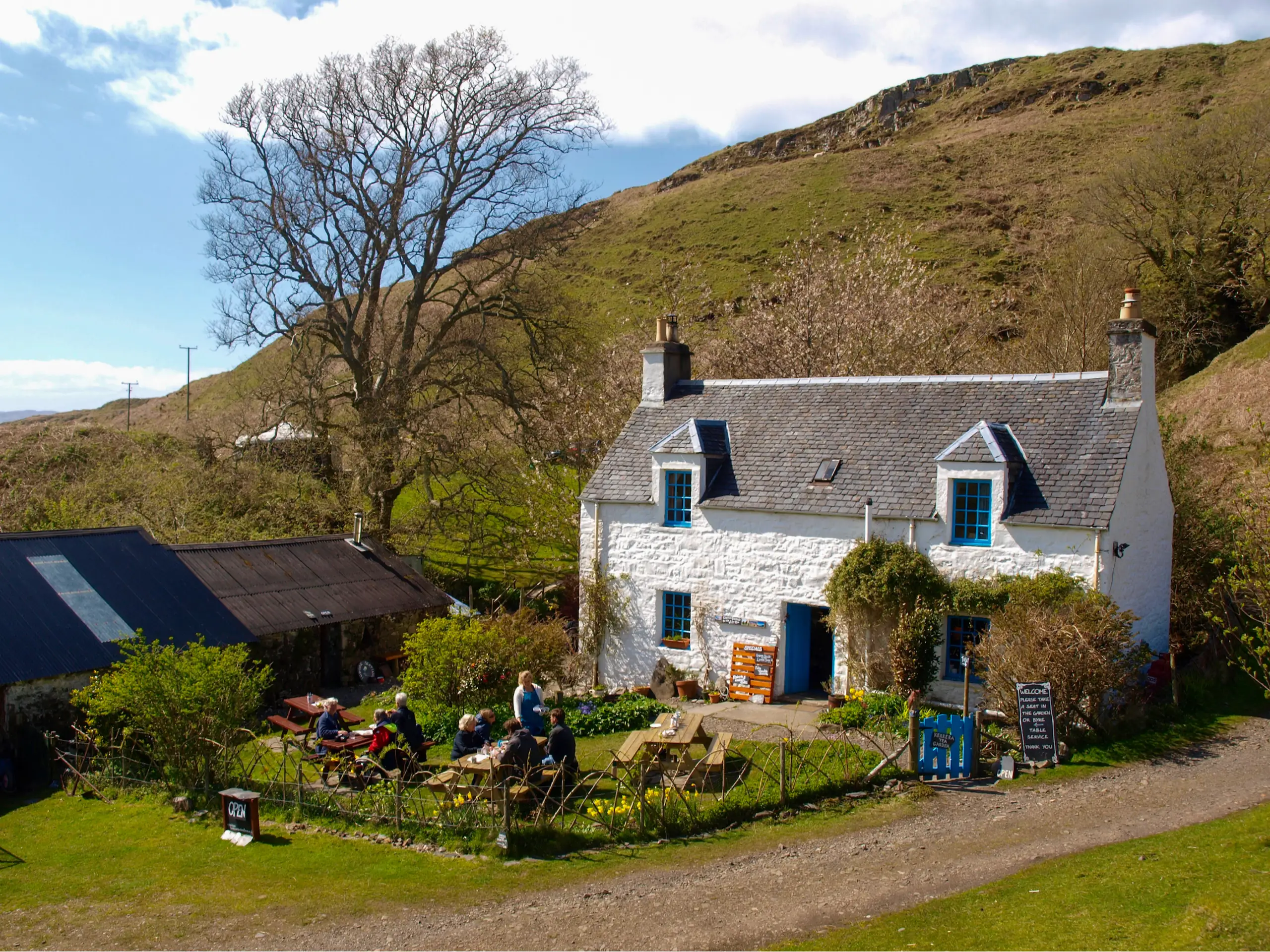
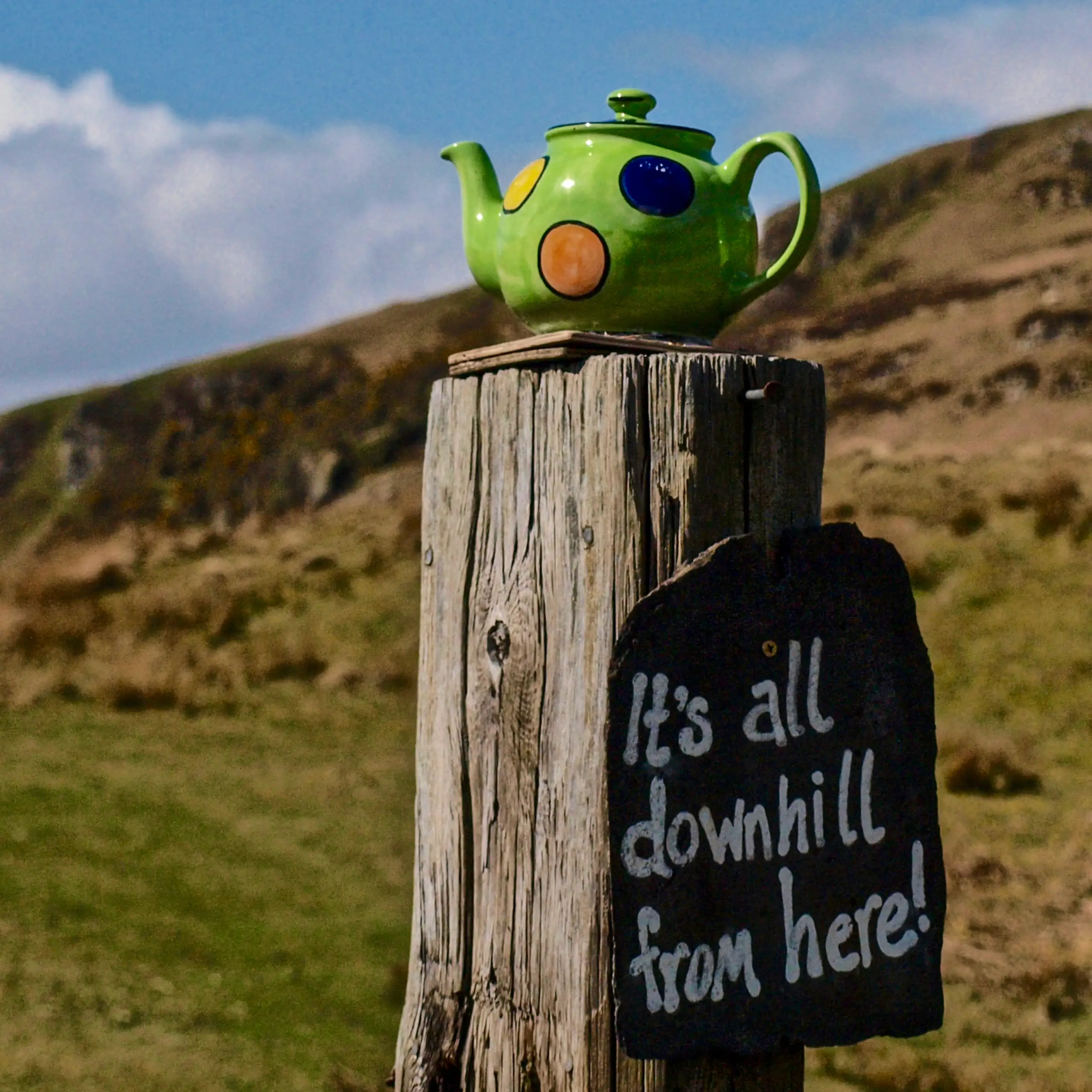
On a windless day with no sailing you could walk the circuit around the lower two thirds of the island. It is seven miles and takes about three hours or so, more if one stops off at the excellent Kerrera tea garden which is only about a mile from the anchorage. Strangely the owners have removed the outside tables and benches, and closed the atmospheric sitting room in an old barn. Instead, they take your orders at the gate and then you go and sit up on the hillock by the bunkhouse (in the open, or in converted barn space with flowers on the tables). There is a nice free-standing toilet to try, twinned with a toilet in Pakistan. The bunkhouse is where my son Oli and his friends celebrated his 21st birthday — certainly an unusual venue.
Because no one comes to the tea garden by car, and most have to walk the two miles from the ferry, one wonders how it makes enough money to keep going, but maybe that is not the point. It certainly has nothing of the feel of a mere money making operation, about as far away from those awful casino banks and their bonus-waving bankers as one could imagine (ph 07951 964231). As ever beware certain days it may be closed, and I think it usually opens 11-4.
This anchorage was clearly a favourite of CC Lynam's who even on Christmas Day 1901 "bathed and found the water quite warm"! But in 1904 he complained that "the loveliness of the pretty spot is not enhanced by the row of three new cottages just built on the shore" (The Log of the ‘Blue Dragon’ 1892-1904. C C Lynam, AH Bullen, London, 1907). These days we of course find them rather charming.
By 2019 the population of the island had risen to 68, including 18 children, encouraging. By 2021 a new 'road' (in truth a forestry-grade Land Rover track) had opened, connecting the communities in the north and south ends of the island. And the redundant school near the ferry terminal was converted into a community centre in 2024.