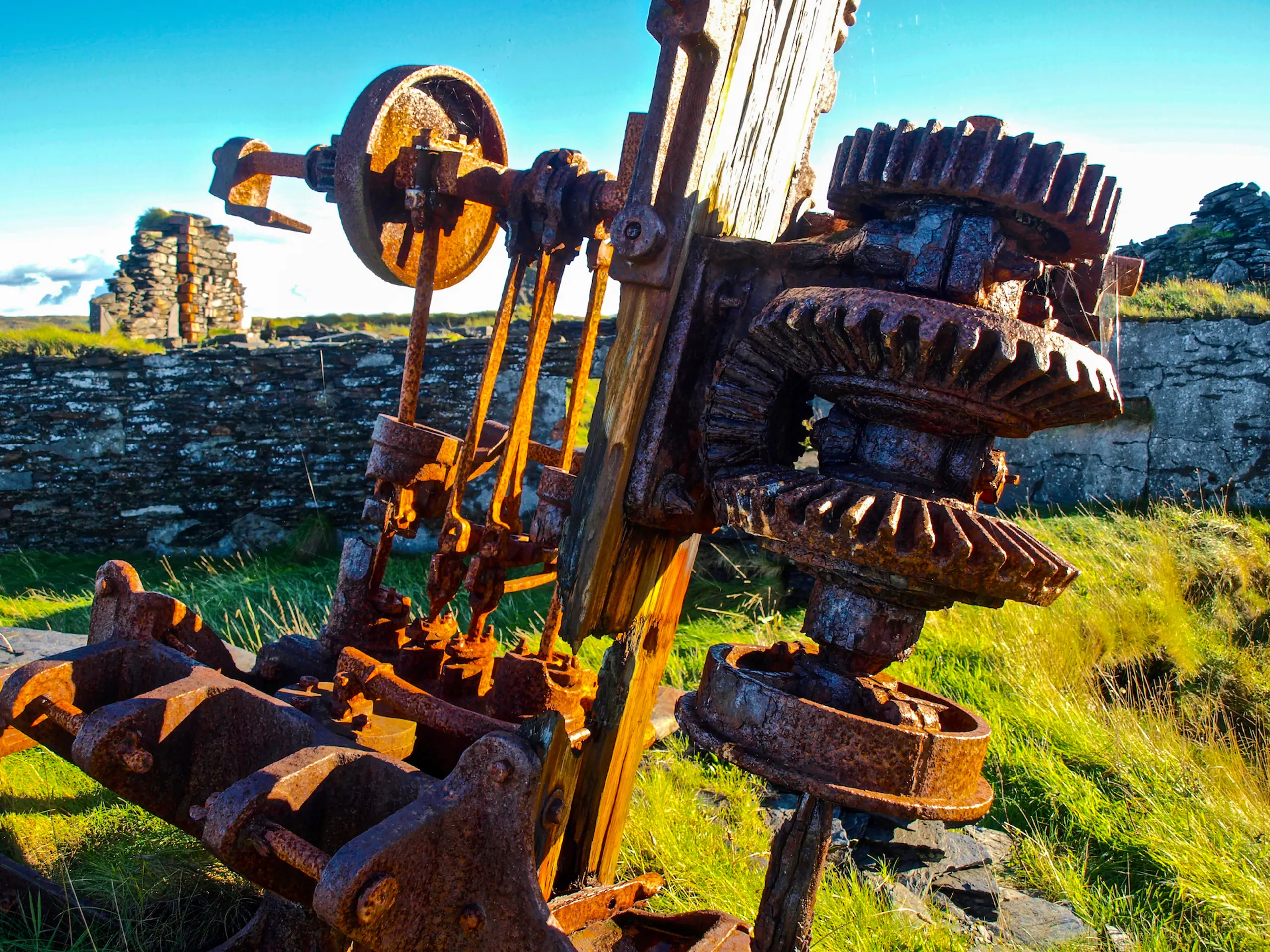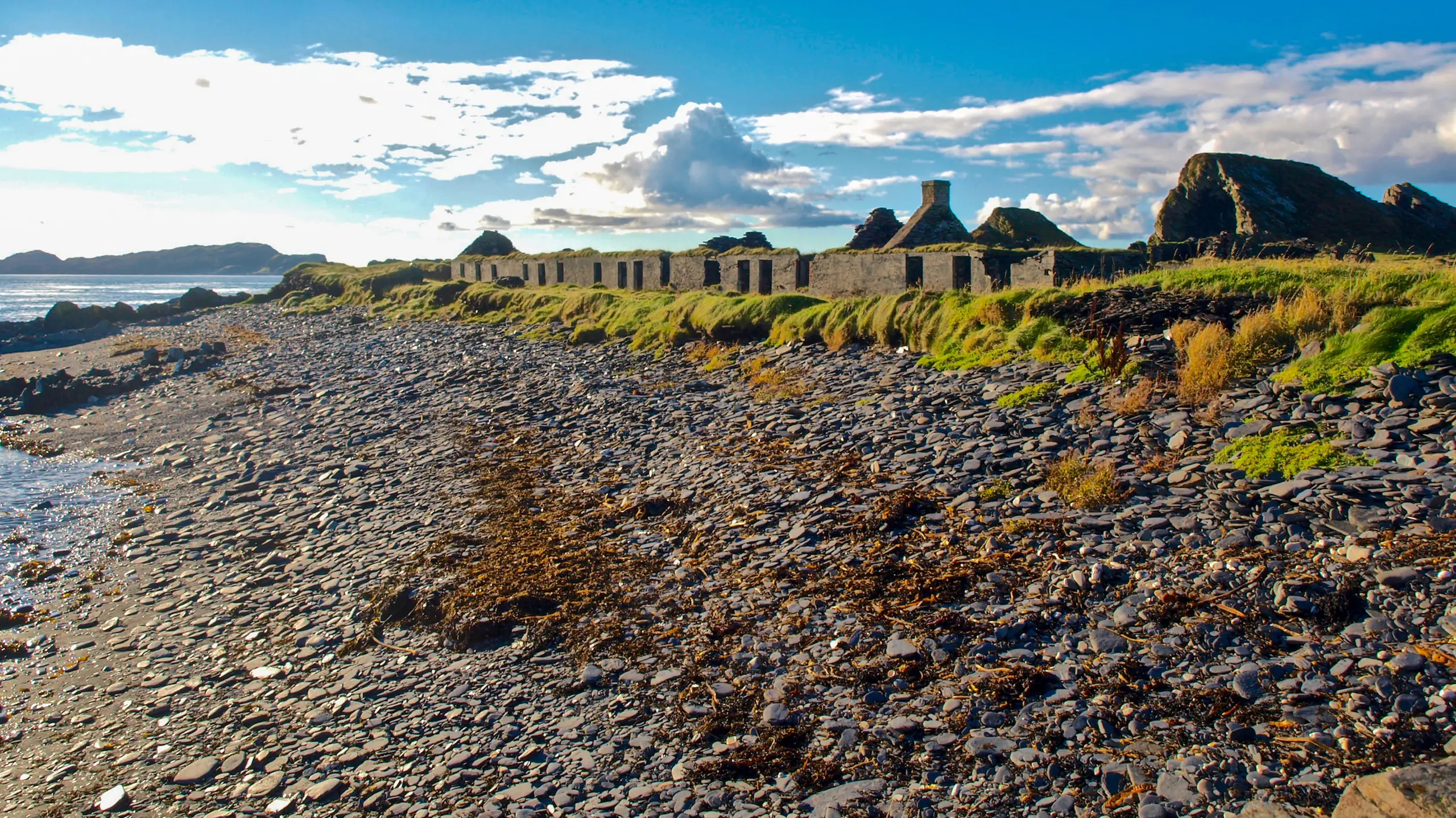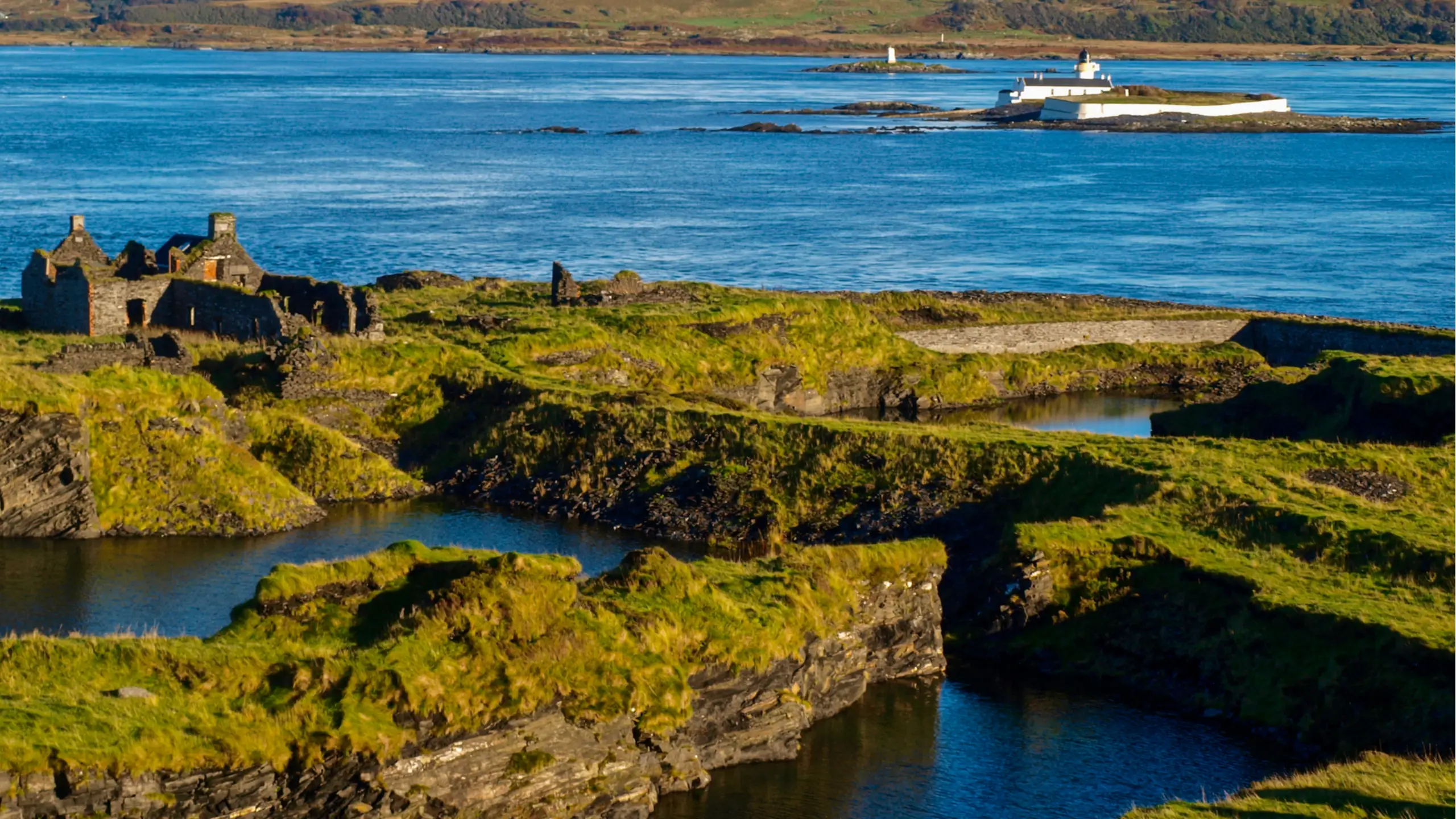
After 30 or more years of sailing straight past this tiny misshapen island (misshapen by the hand of man), I finally anchored here one sunny early spring day. It is certainly fascinating — and thought provoking — to wander around the ruined workers' cottages, and the flooded quarries, from where the slate roofs of so many Scottish homes once came (one cottage is being restored, a bit of a surprise). There are still the well-made stone walls built to keep the sea out of the quarries. At its peak in the 1880s, the Slate Islands were producing about 9 million slates per annum (from here along with Luing, Seil, Easdale, Shuna and Torsa).
It is difficult to imagine that about 150 people once lived on the island, there was a school and even a shop. And how they lived, and how they sustained themselves — maybe the Christian religion with the hope of better things after death did the trick. Apparently there was not even a reliable source of water, only an artesian well. Sometimes water had to be brought over from Lunga, Luing or Eilean Dubh. The working, and living, conditions must have been terrible.
No more slate mining now of course, it all vanished from here after the First World War, as did the local population. Instead of wearing out the young slate miners in Scotland we are probably doing much the same to slate miners in other parts of the world.
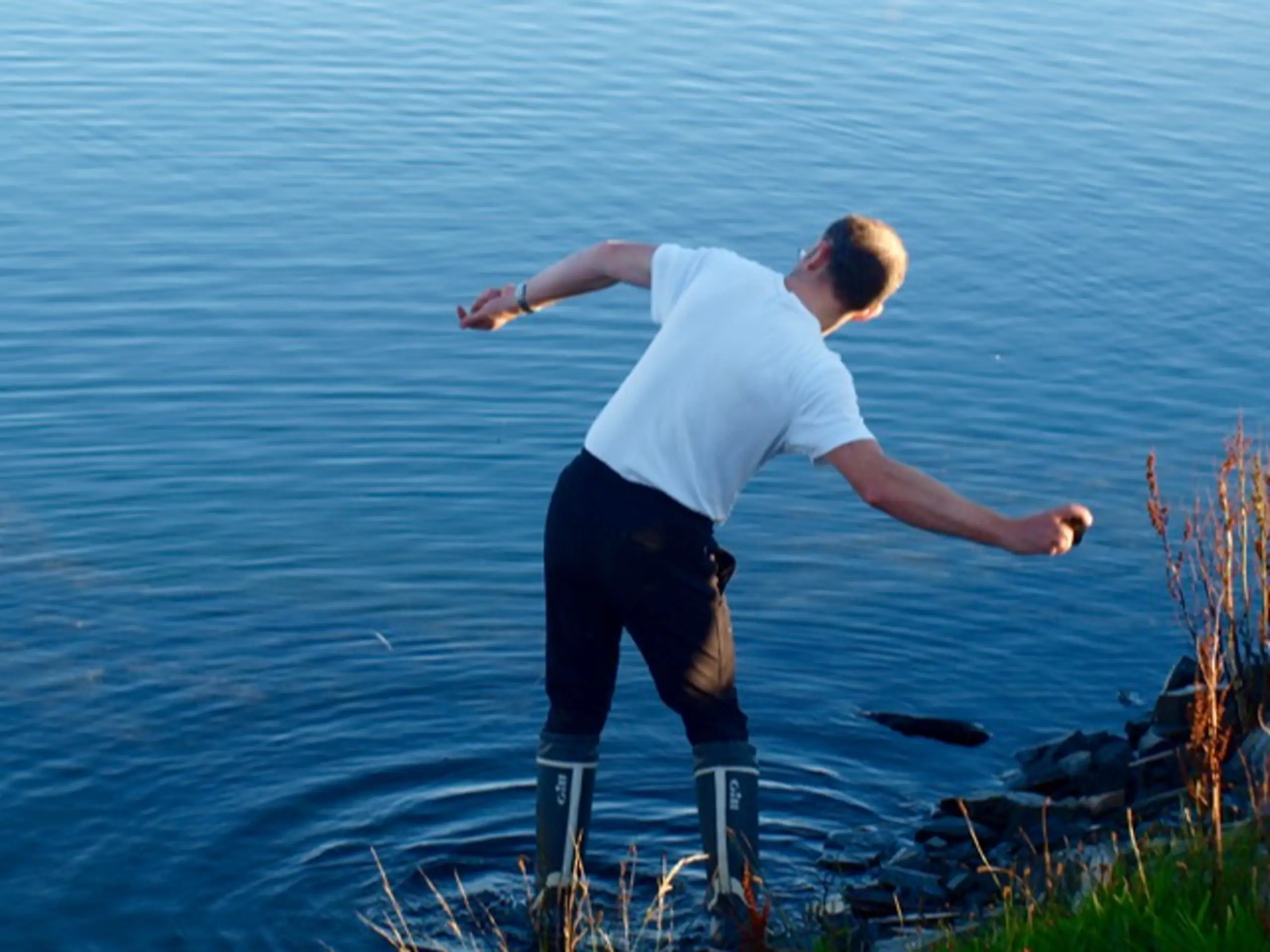
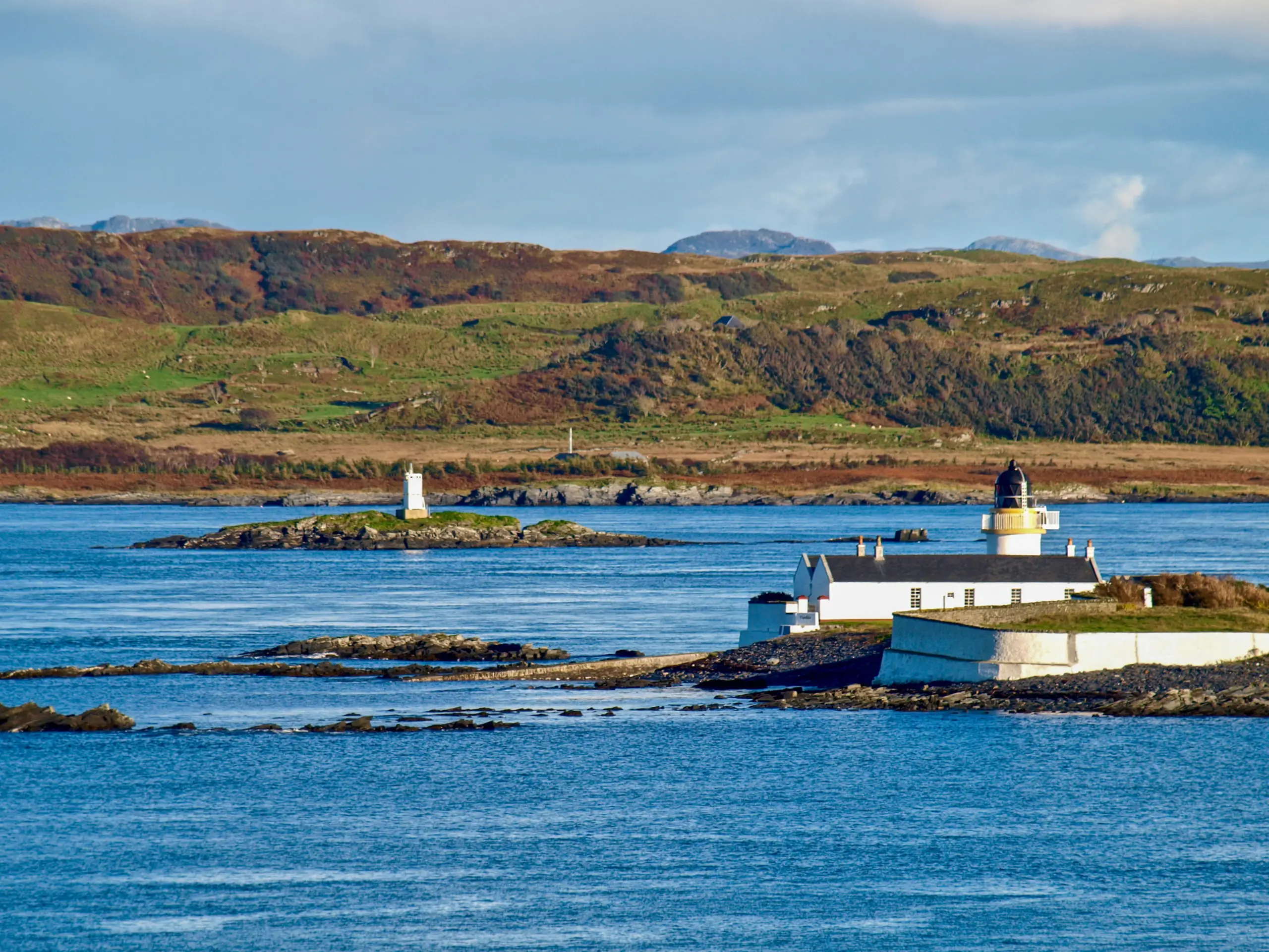
Off the slate beach on the east side you will find what appear to me to be the very best skimming stones in Scotland. And definitely walk to the top of the hill for the all-round panoramic view, and of the tide swishing boats through the Sound of Luing.
In 1936 a Latvian ship heading from Liverpool to Blythe to pick up coal to take to Riga was wrecked here in a major storm, the Helena Faulbaums. Her SOS message was picked up in Northern Ireland. As the telephone lines had been blown down, the BBC was asked to broadcast a message over the wireless (aka the radio these days) for the Islay lifeboat. Four survivors were eventually found by the lifeboat on the by-then uninhabited island, and later 16 bodies were washed up on Luing. Rather poignantly, a personal connection is still kept up between Luing and Latvia.