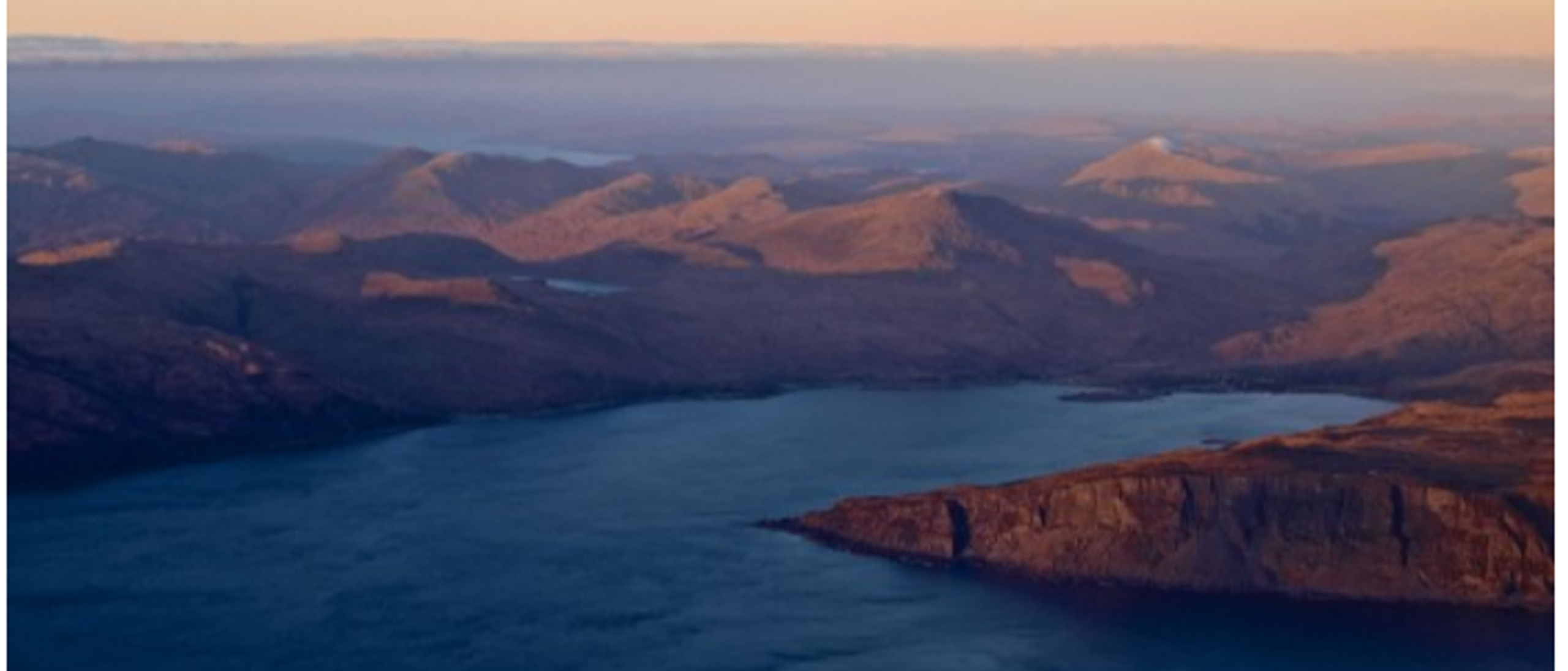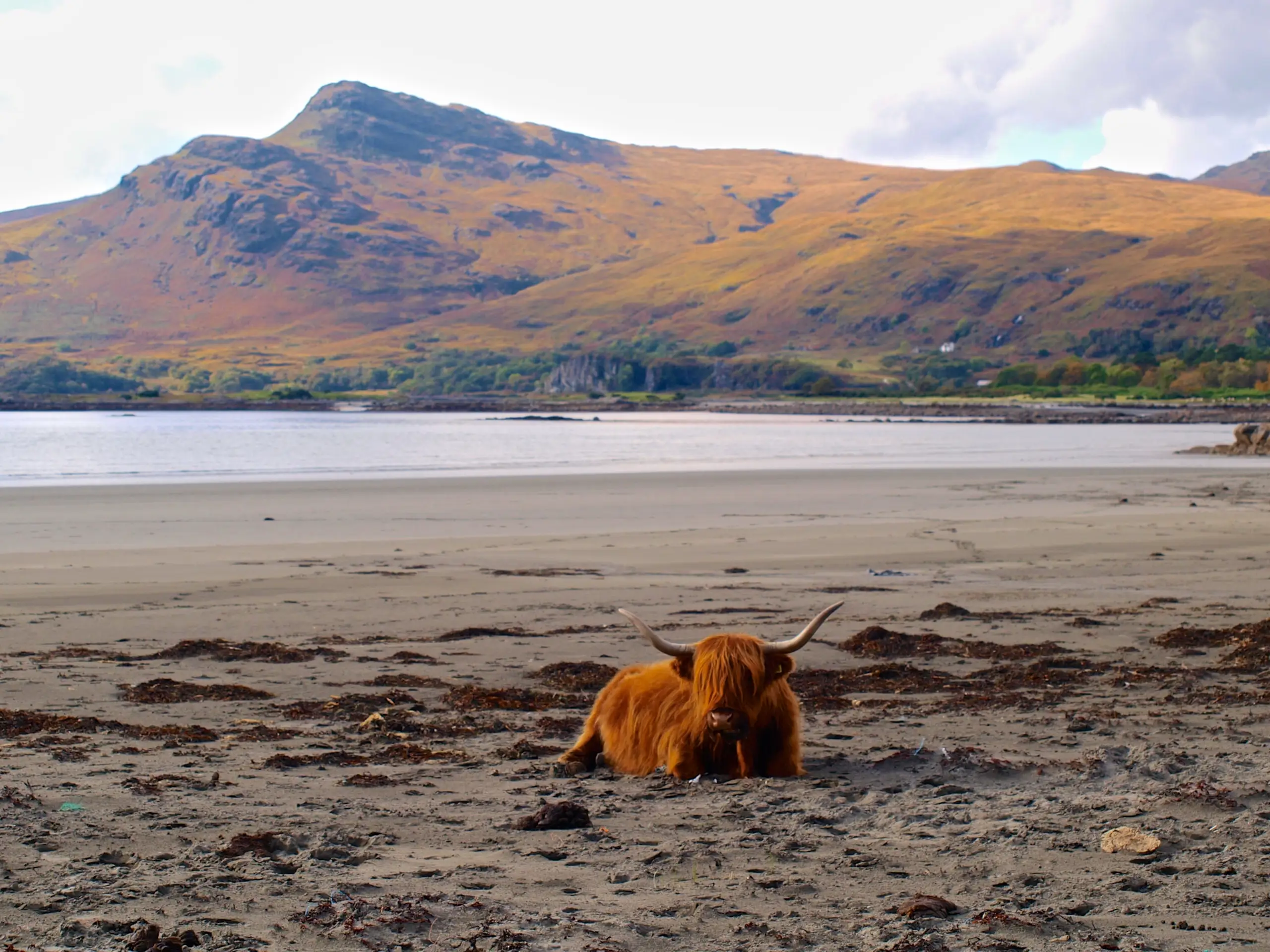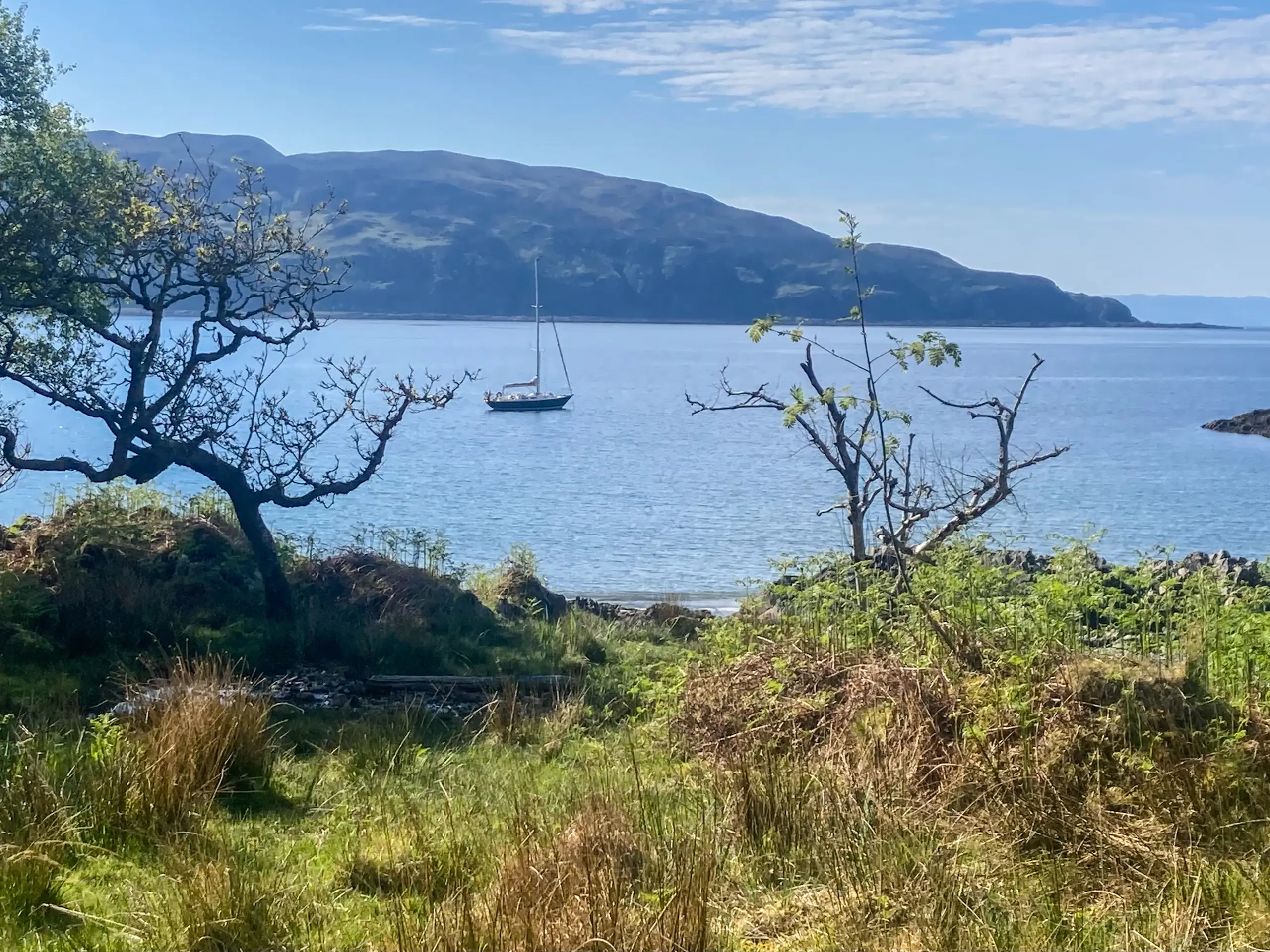
Loch Buie is a wide-open bay with wonderful sandy beaches, rock pools, a castle, highland cattle, a medieval chapel and a stone circle. All surrounded by low mountains and a horizon out to Colonsay. And yet it is not much visited by boats, maybe in part because obviously the wind has to be from the north. And there can be a swell problem.
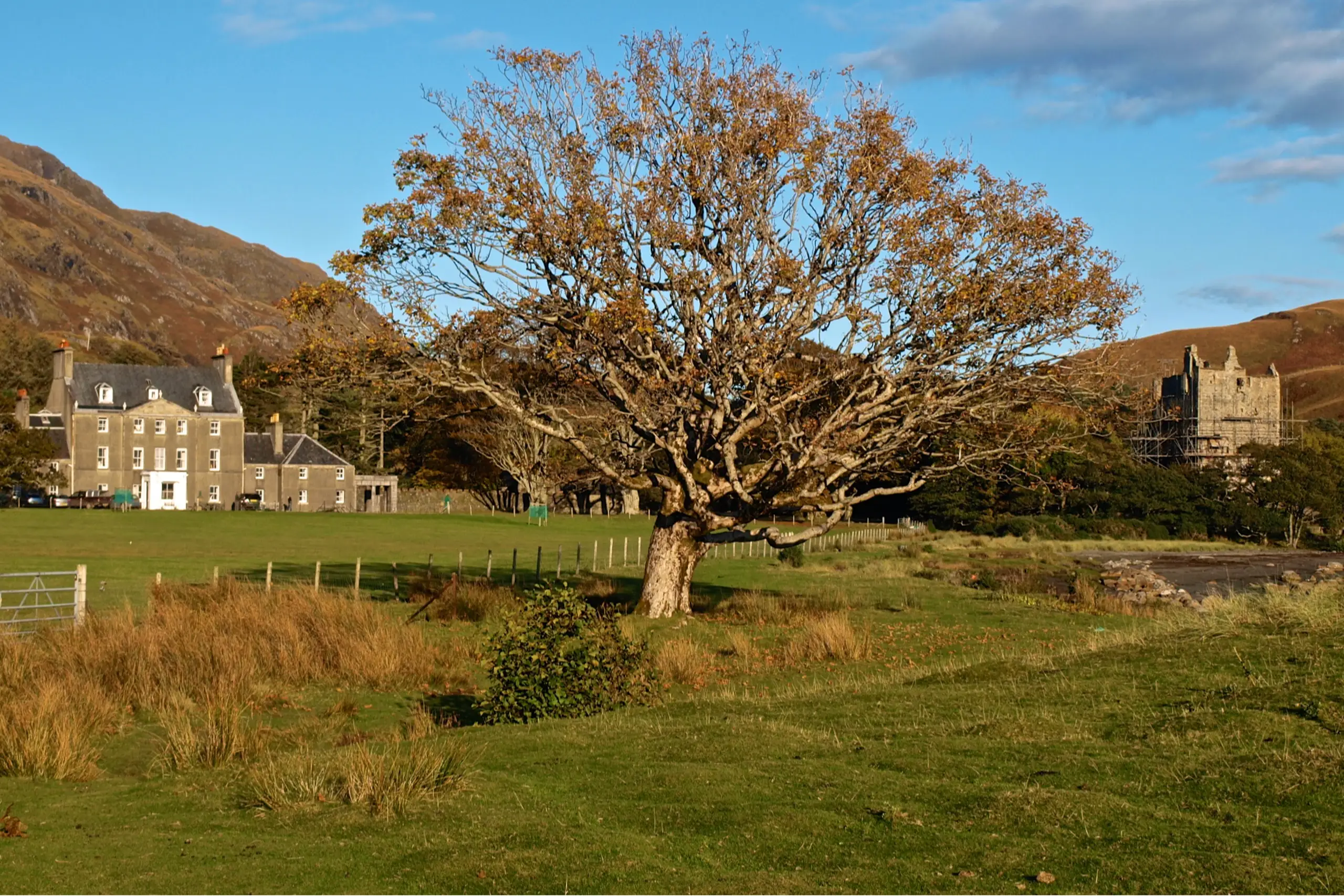
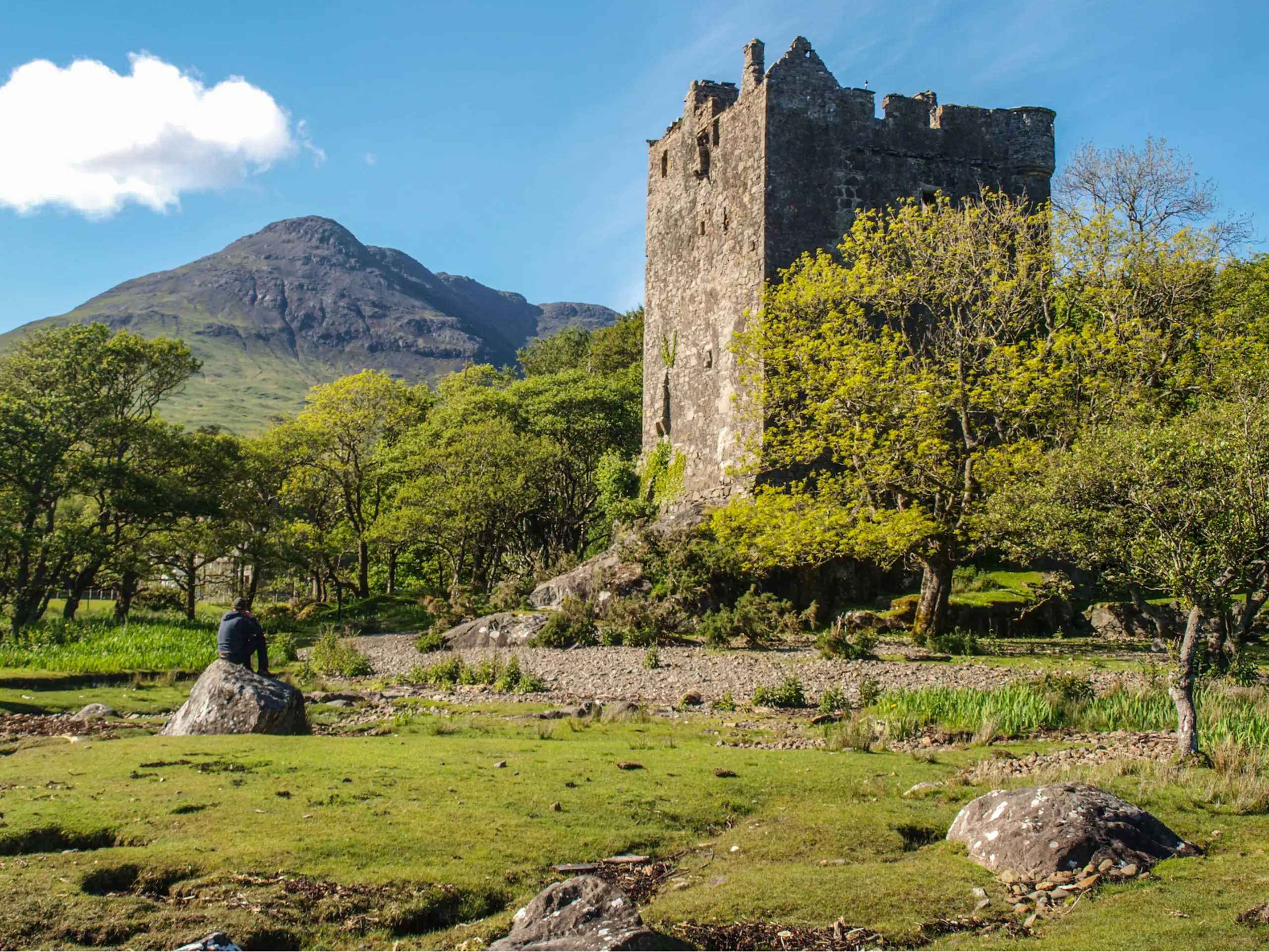
Castle Moy, a splendid 15th century tower house, is more-or-less on the beach, and was recently restored by Historic Environment Scotland having been wrapped up in scaffolding for years. If they have done as good a job as they did on Gylen Castle on Kerrera then there is a treat in store. They did, and it is, but you can't get inside (I am told a polite enquiry at the big house might yield permission to enter). Just below the castle is a double row of boulders which was once a boat landing, and then further out beyond the stream is a curved row of boulders put there it is said either as a fish trap or to make some sort of artificial anchorage.
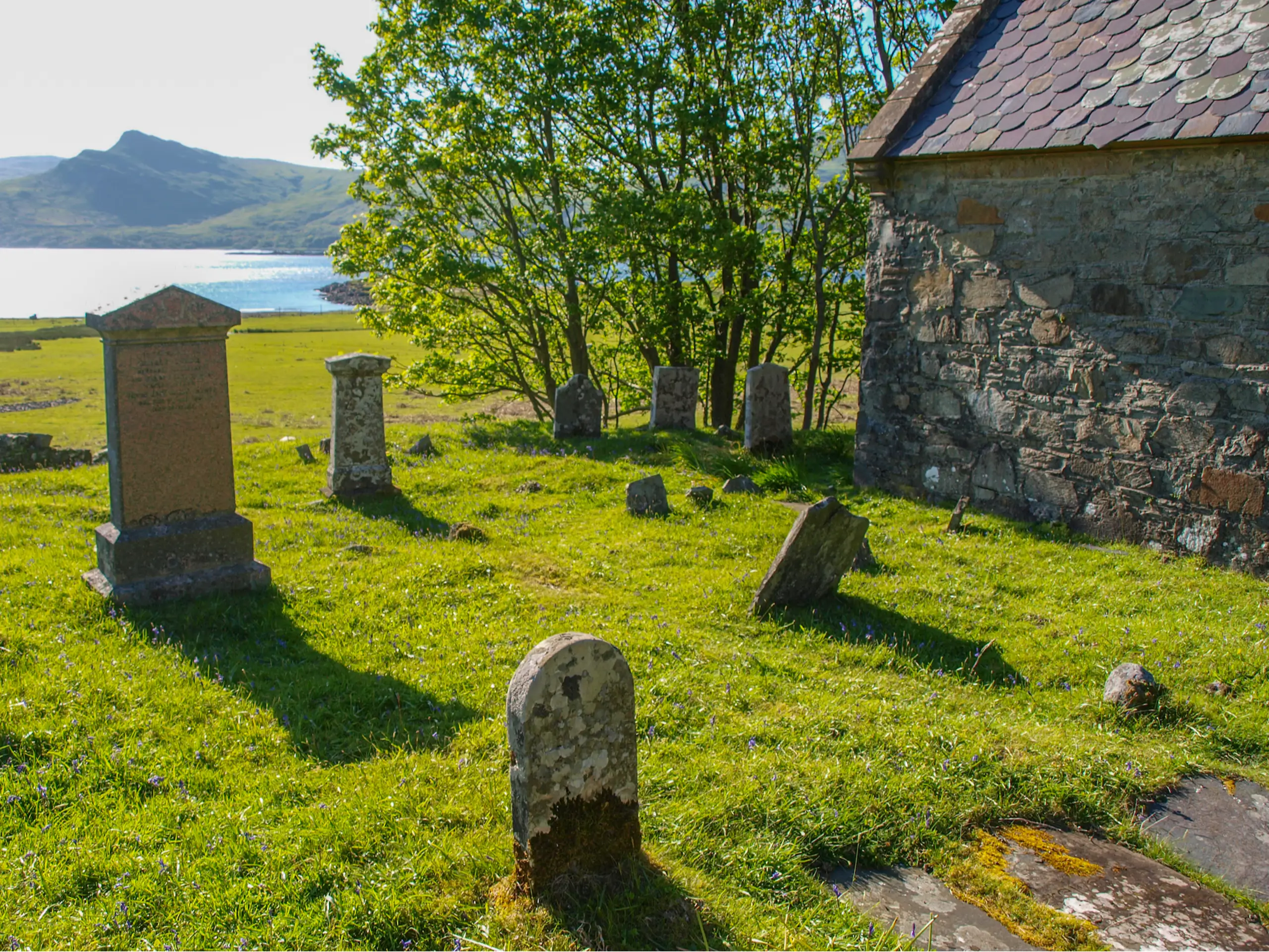
Walk round by Laggan beach to the east of the castle to St Kenneth's Chapel (Caibeal Mheamhair), a small late-medieval church in a group of trees. It was converted into a mausoleum by the MacLaines of Lochbuie in the 19th century and then restored in the 1990s when I presume the vulgar coloured glass was put in the roof — rather kitsch. The font is medieval, made from Carsaig sandstone.
Lochbuie House is late 18th century with an Edwardian bit struck on the west end, and a rather nice bow-fronted gable. The house is owned, and has been restored by, Jim and Patience Corbett whose family run the estate. An earlier house is where Johnson and Boswell stayed during their celebrated Highland Tour in 1773.
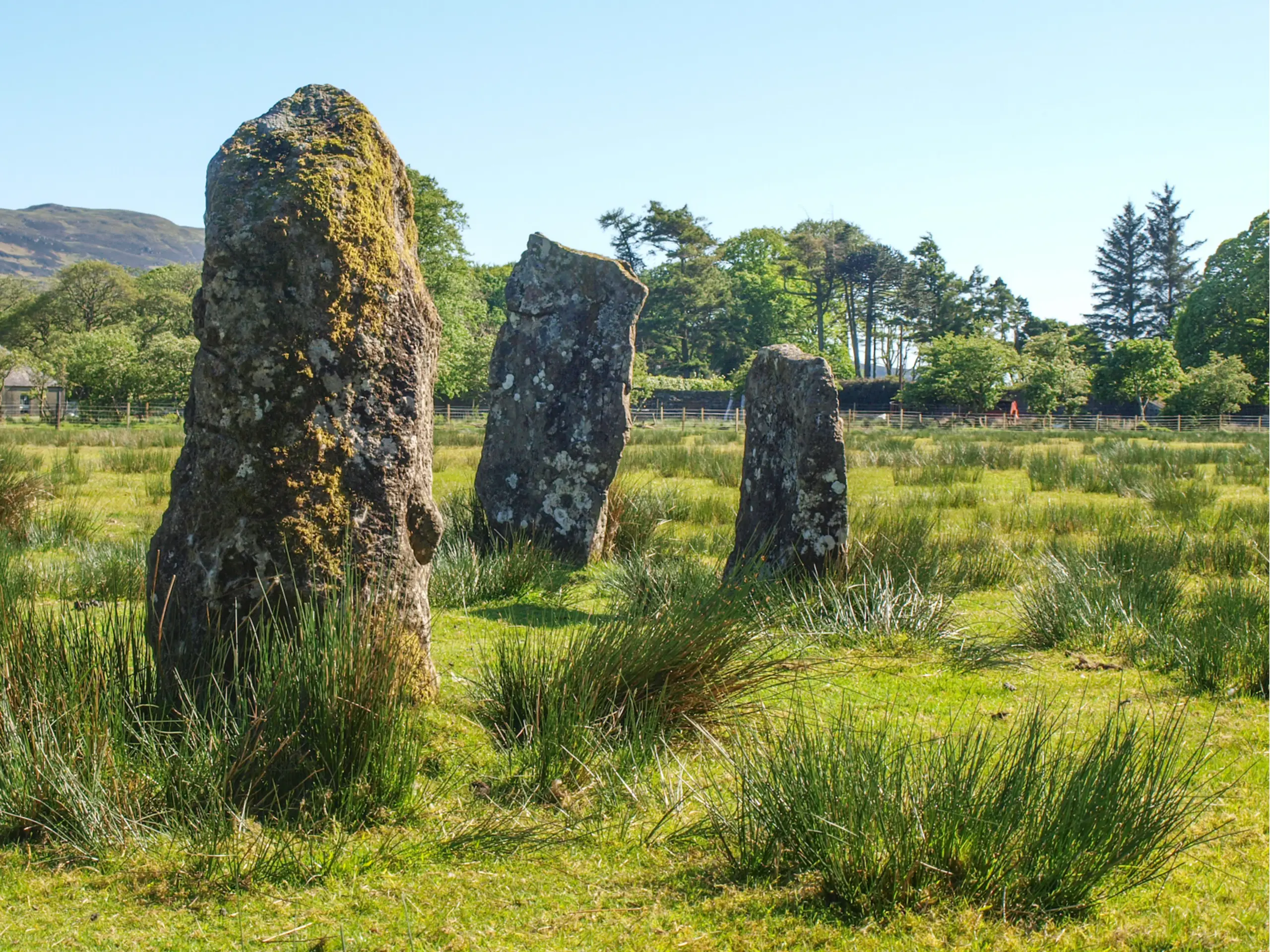
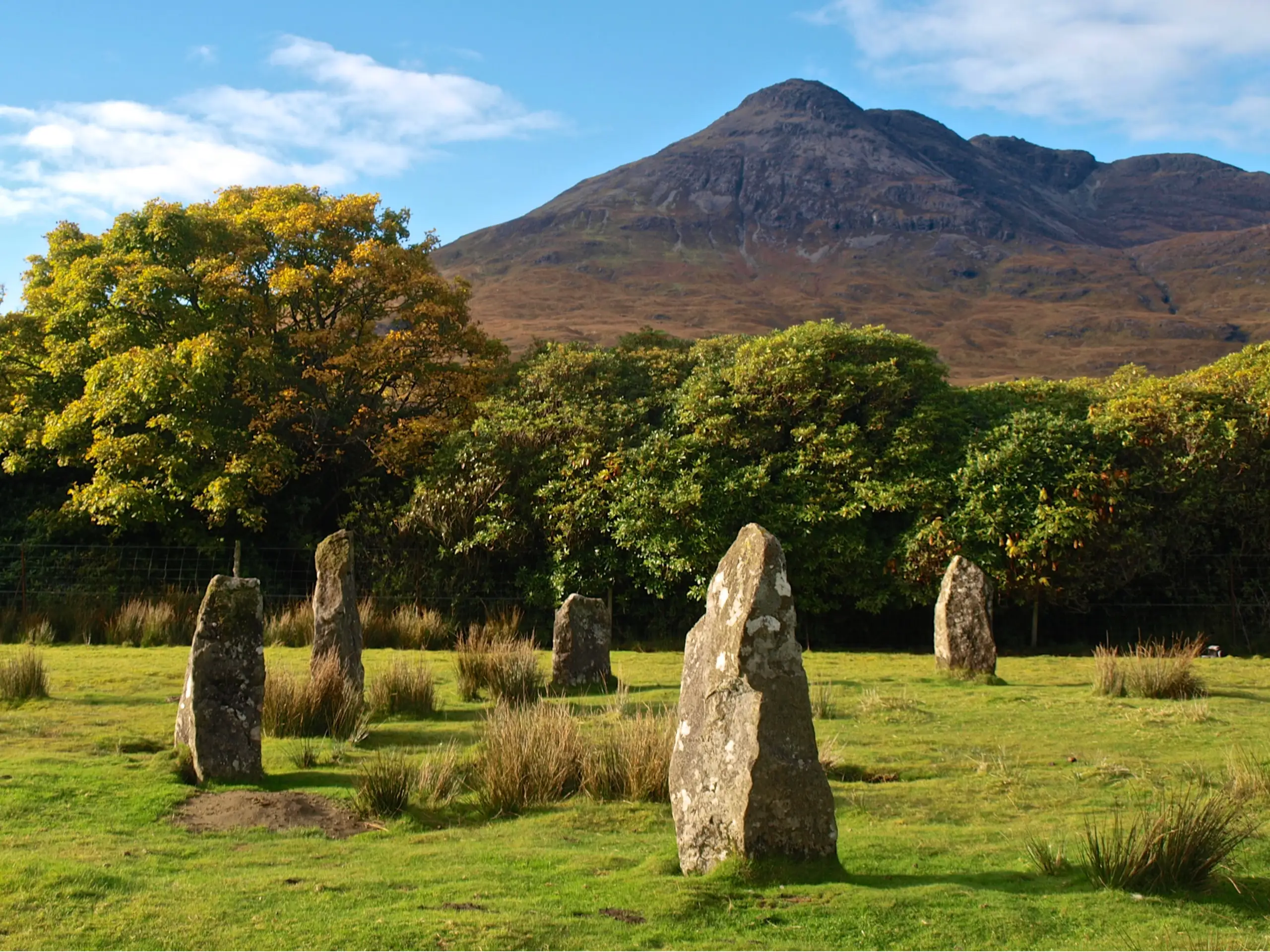
And do walk behind the house to find the stone circle in a field, fairly complete but with quite low stones and a couple of outliers. What were these things for? We don't know. The default position of archaeologists is almost always 'for religious and ritual purposes'. I think this circle is probably the only example within reach of an anchorage in the area.
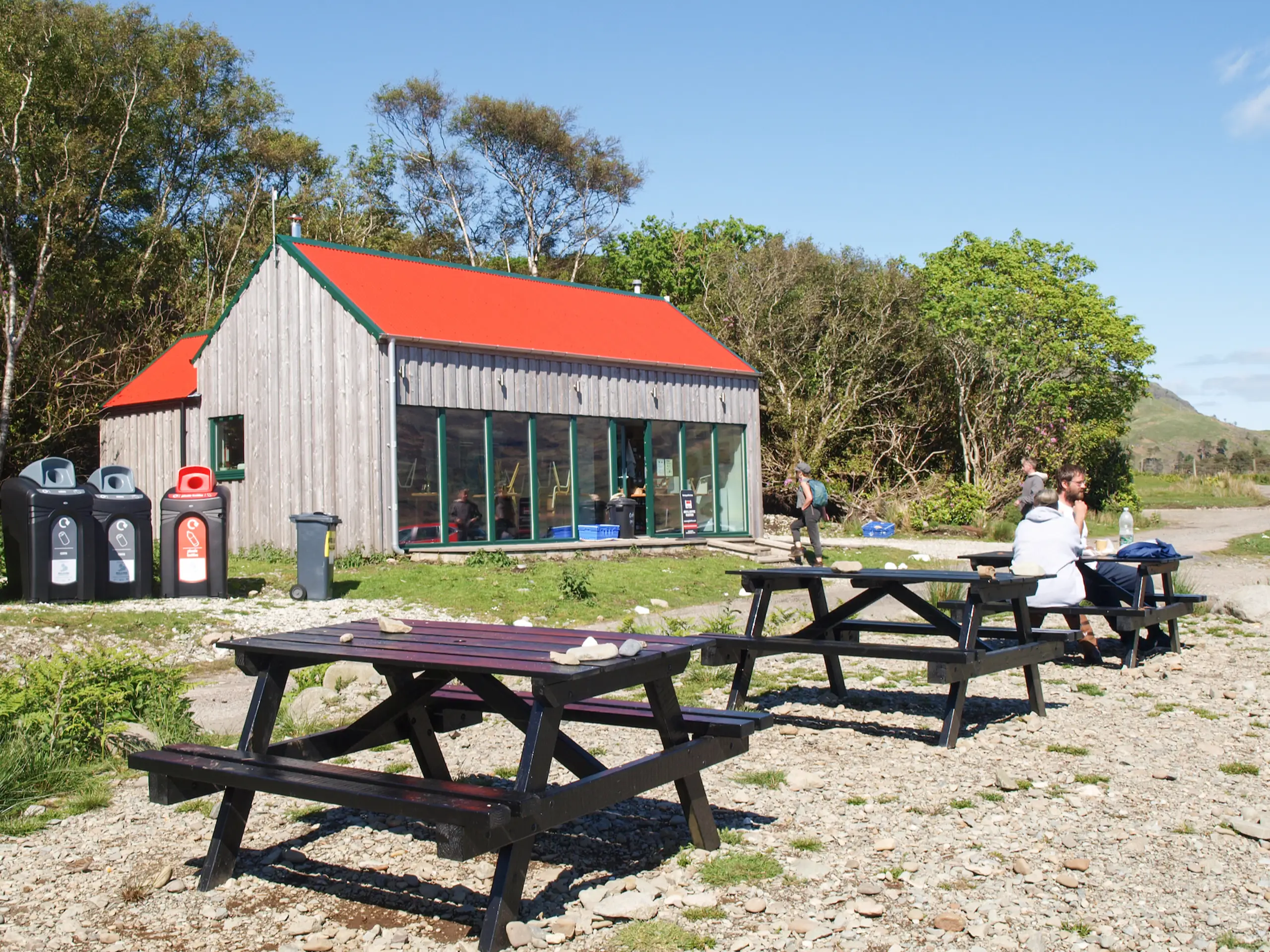
Keep going west along the shore to find The Old Post Office which is now a coffee/tea shop, and an outlet for local produce (and crafts), as well as ready-made meals (to order ph 01680 814153 or flora@dobhrancroft.co.uk). Flora Corbett opened it in 2012 and in 2020 upgraded it into a smart building with inside and outside seating, and a very red roof (easily spotted as you enter the loch). It used to have irregular hours, as you could tell from the sign on the door, now gone:
"OPEN Most Days About 9 or 10. Occasionally as Early as 7. But SOME DAYS As Late as 12 or 1. WE CLOSE About 4 or 5, But Sometimes as Late as 11 or 12. SOME DAYS OR AFTERNOONS, We Aren't Here At All, and Latterly I've Been Here Just About All The Time, Except When I'm Someplace Else, But I Should be Here Then, Too."
The capitals were Flora's, not mine. These days the opening hours are a more prosaic 10am - 3.30pm.
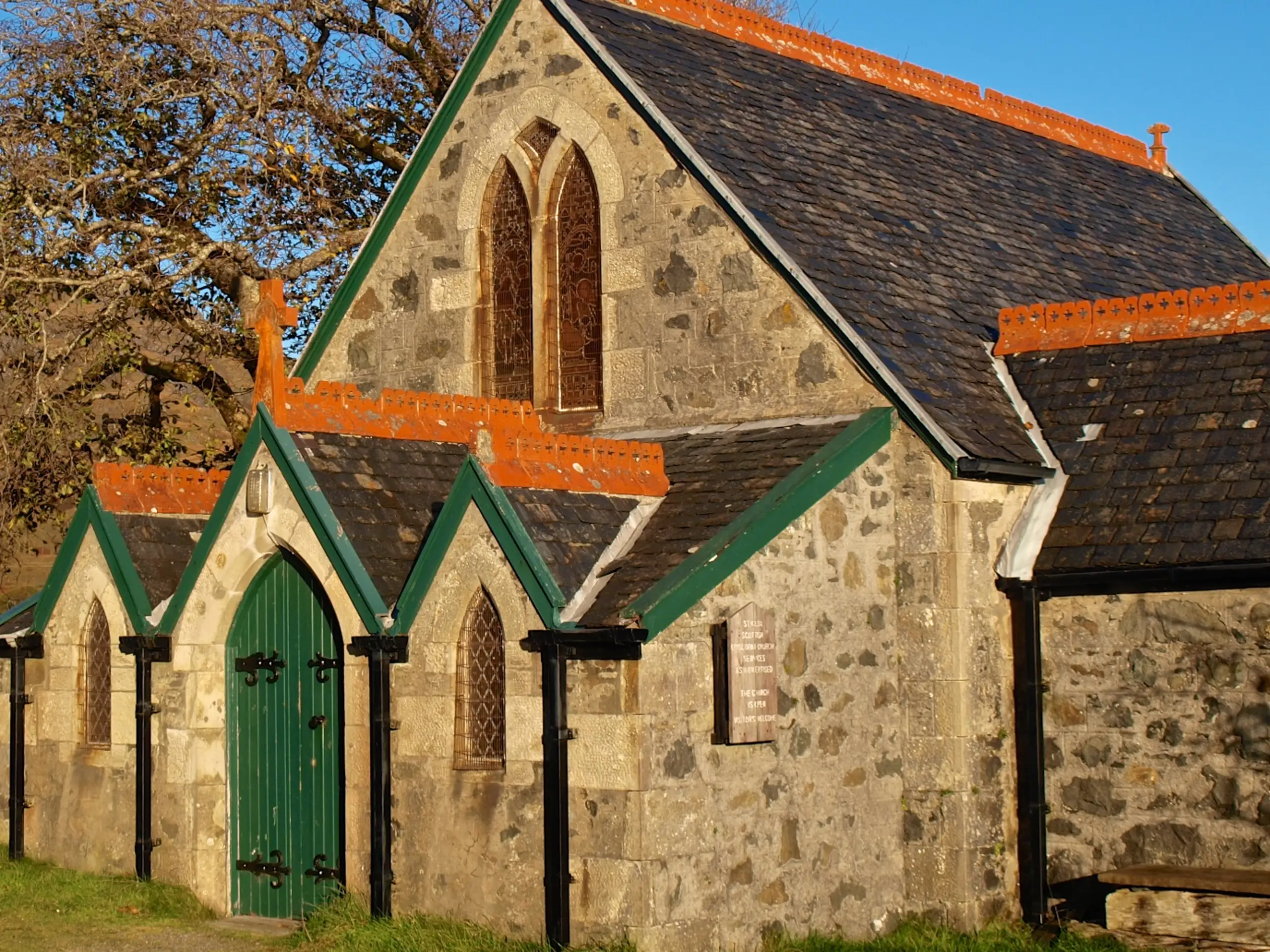
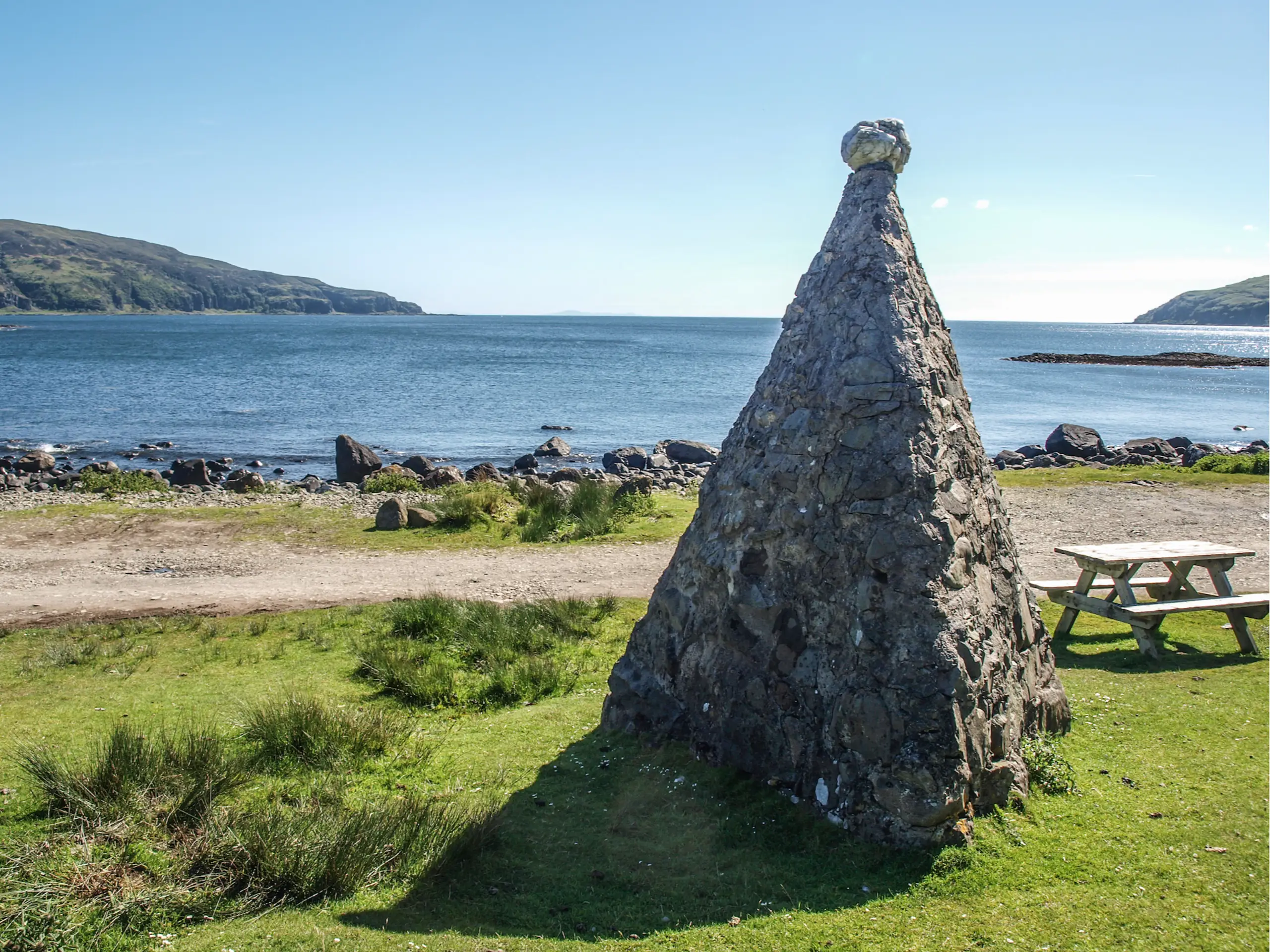
The stone pyramid just outside commemorates the Coronation of King Edward VIIth and his lady wife, Queen Alexandra, in 1902, 'Erected by Lochbuie and his Highlanders', no doubt emphasising their non-Jacobite credentials. Not far away is St Kilda's church which is approached through someone's garden. Victorian 1876, very small, very well maintained, very dark until you turn on the lights by the switch low down on the left inside the door, cluttered, Episcopal.