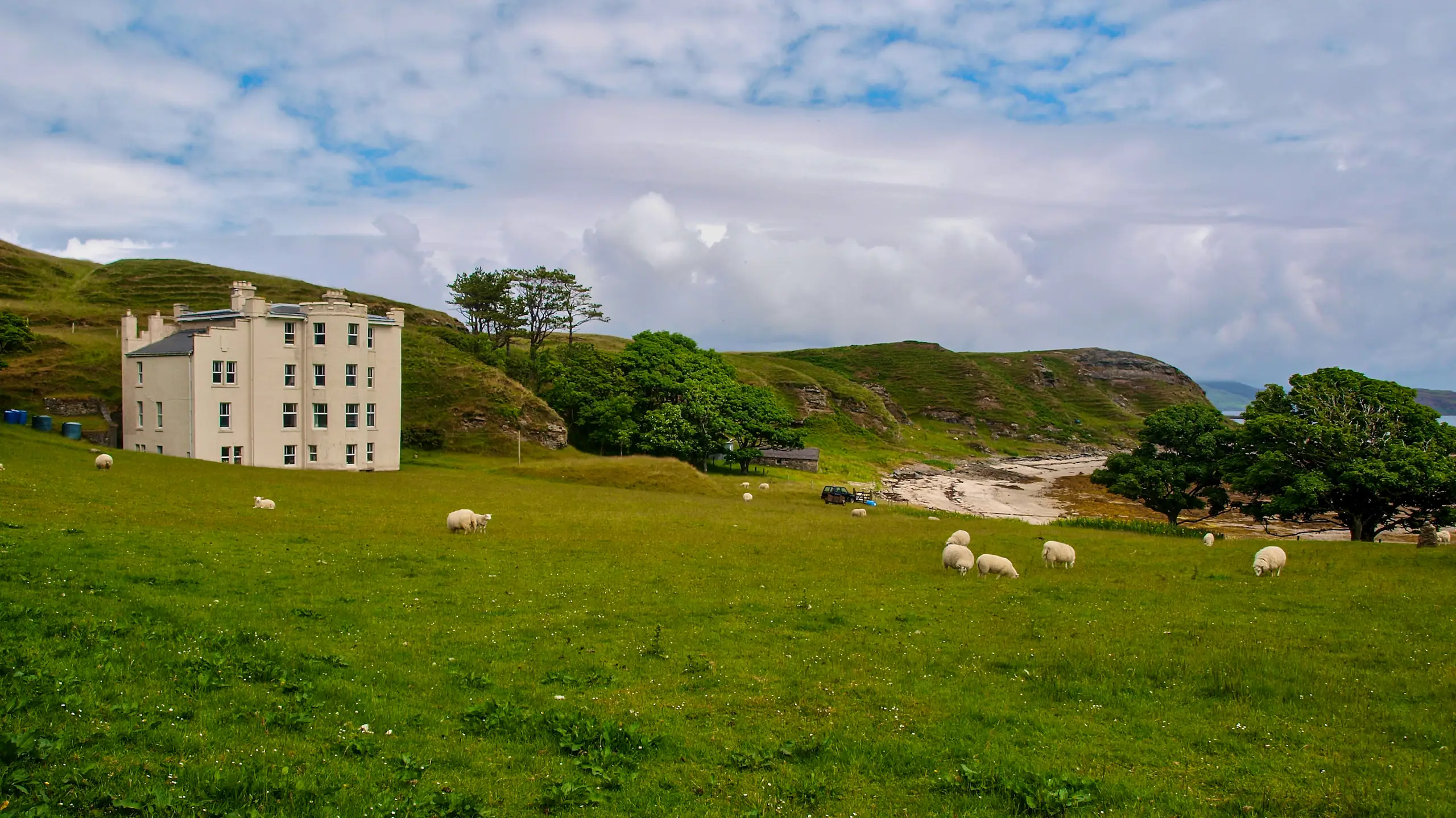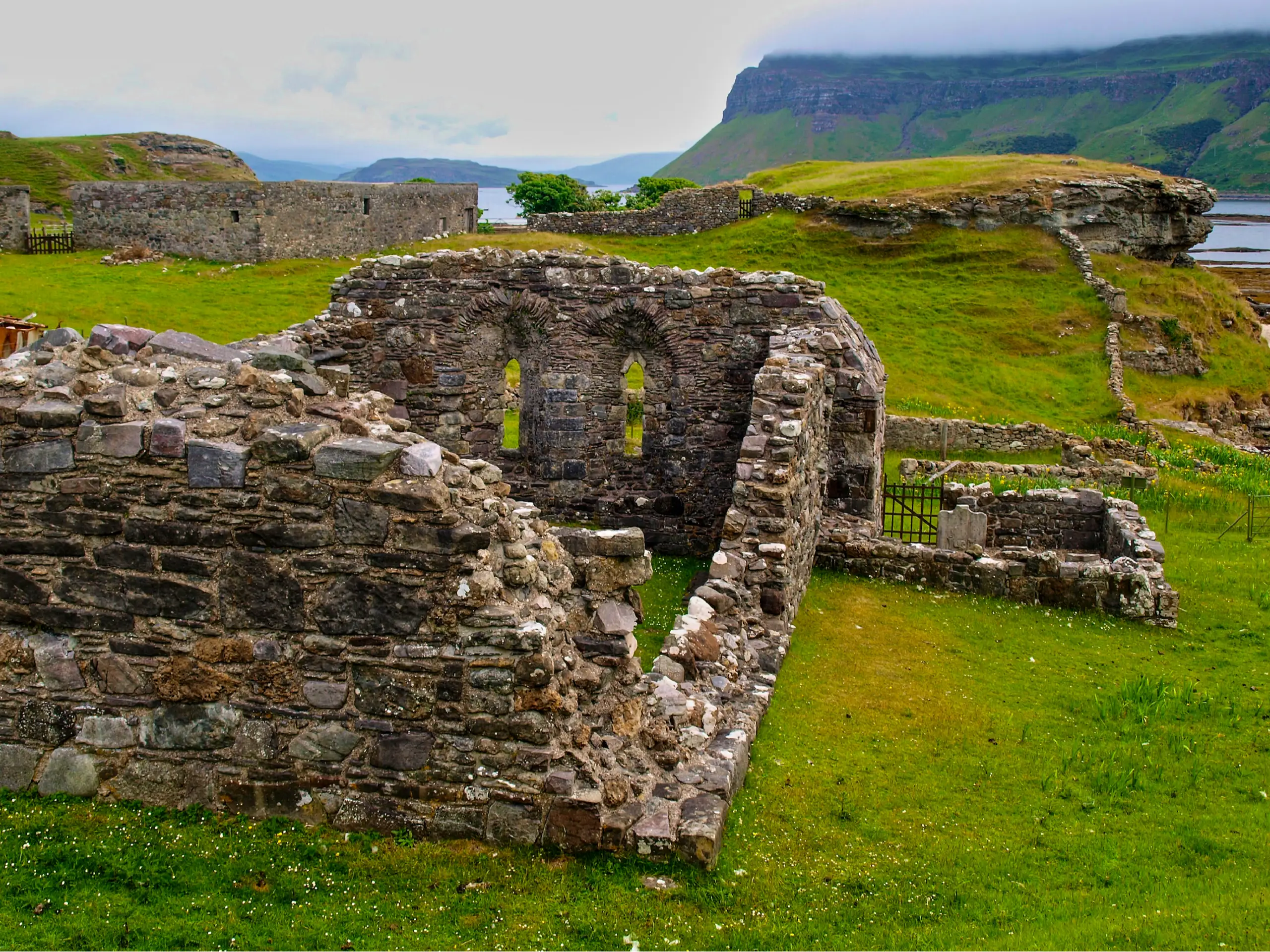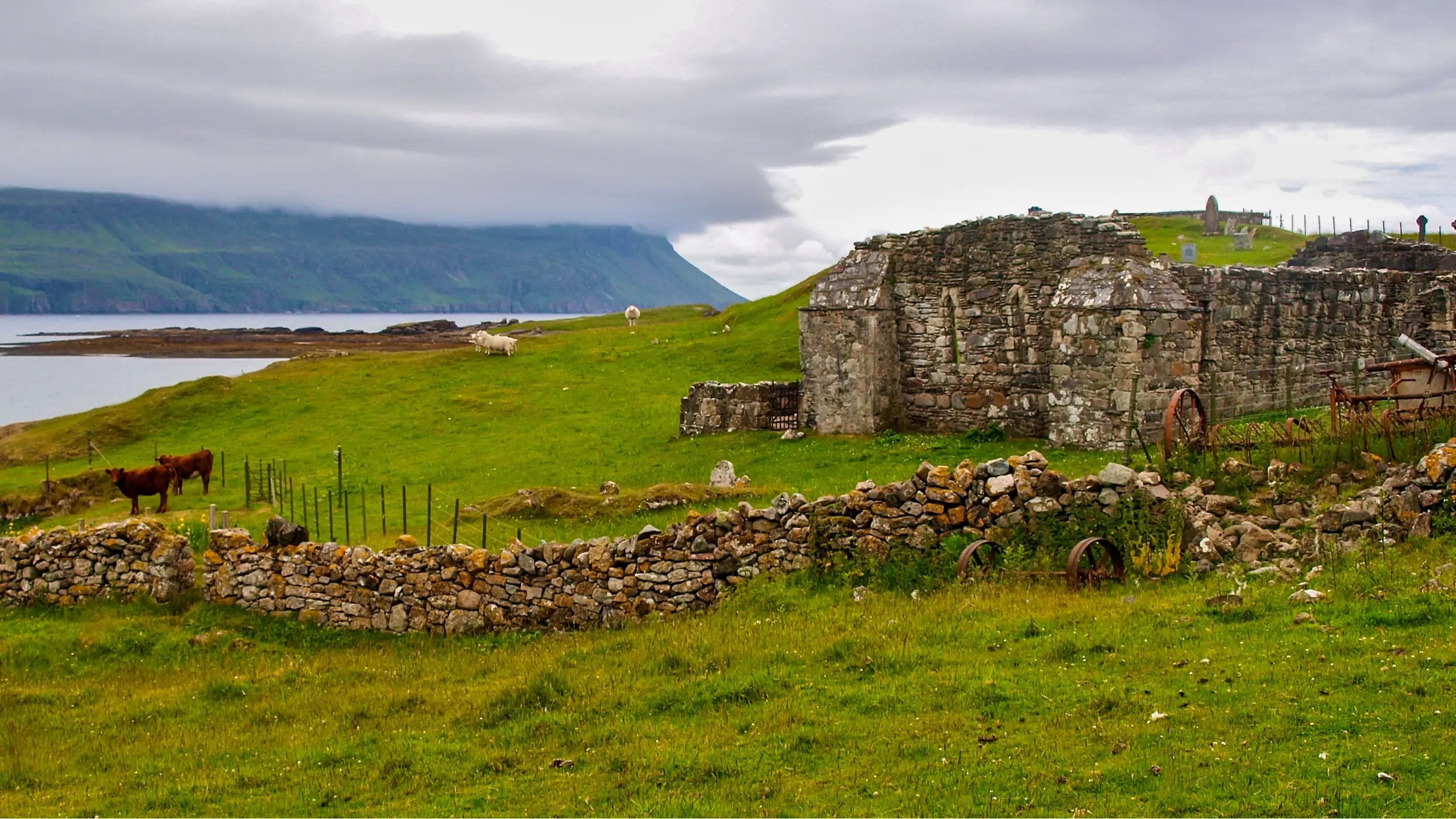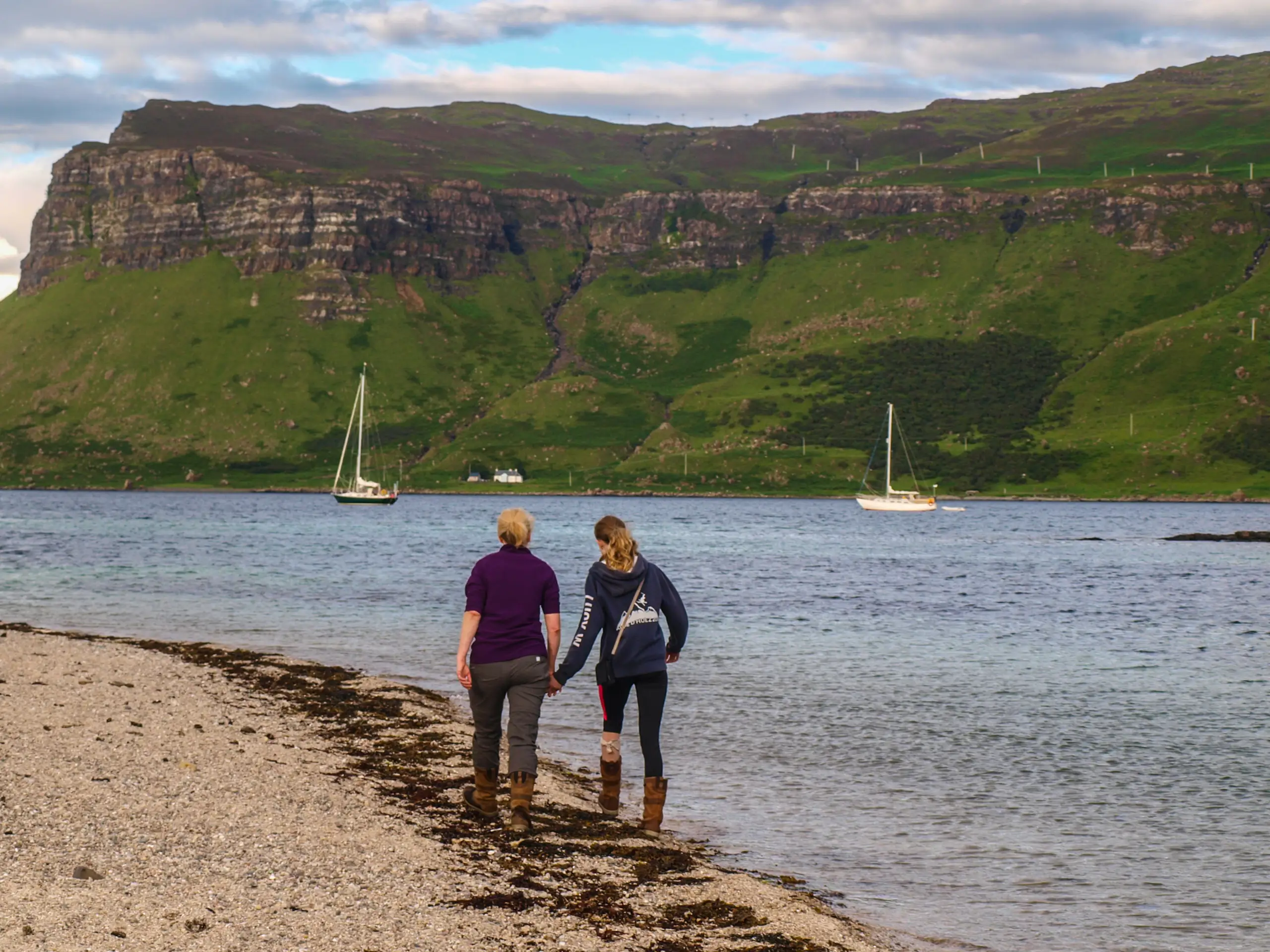
One medieval chapel and one strange house. And very quiet. Is there anyone at home? Even in the late 18th century Samuel Johnson found "its only inhabitants were Sir Allan Maclean and two young ladies, his daughters, with their servants" (A Journey to the Western Islands of Scotland. Samuel Johnson, 1775, Ed RW Chapman, Oxford University Press, 1970). Now there is nobody, at least not all round the year. The anchorage seems quite far out from the shore but is pretty good, even I should imagine in rough weather. There is a very extensive foreshore with loads of pools and patches of sand, ideal for children, and for the grown-ups too, with great views of the awesome Mull cliffs, particularly in the evening light.
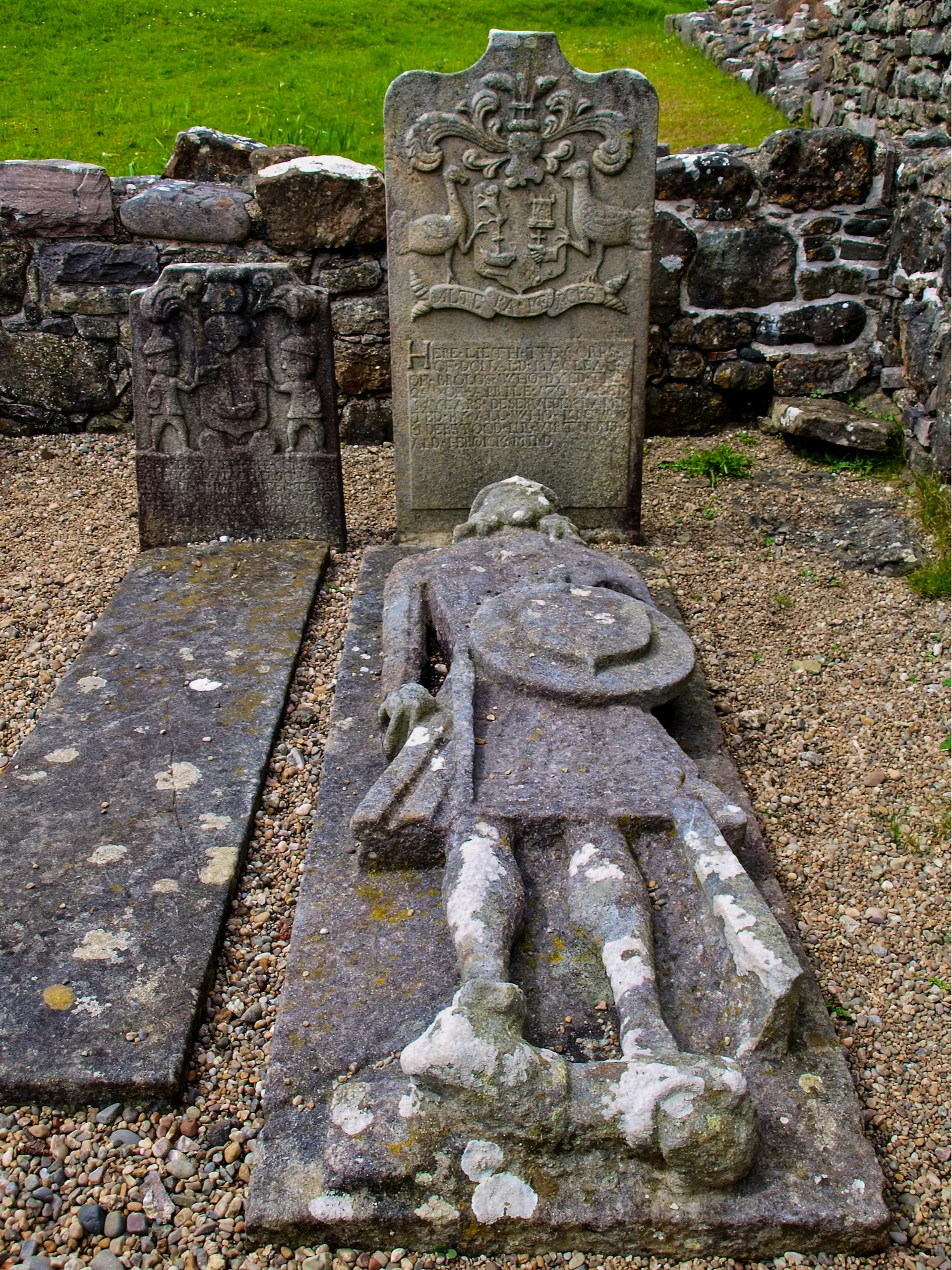
The 13th century and long-ruined chapel is perhaps over-restored with rather crude pointing but there is quite a lot of it to admire along with the Iona graveslabs, and a graveyard to reflect in as you gaze at the view of the cliffs on Mull.
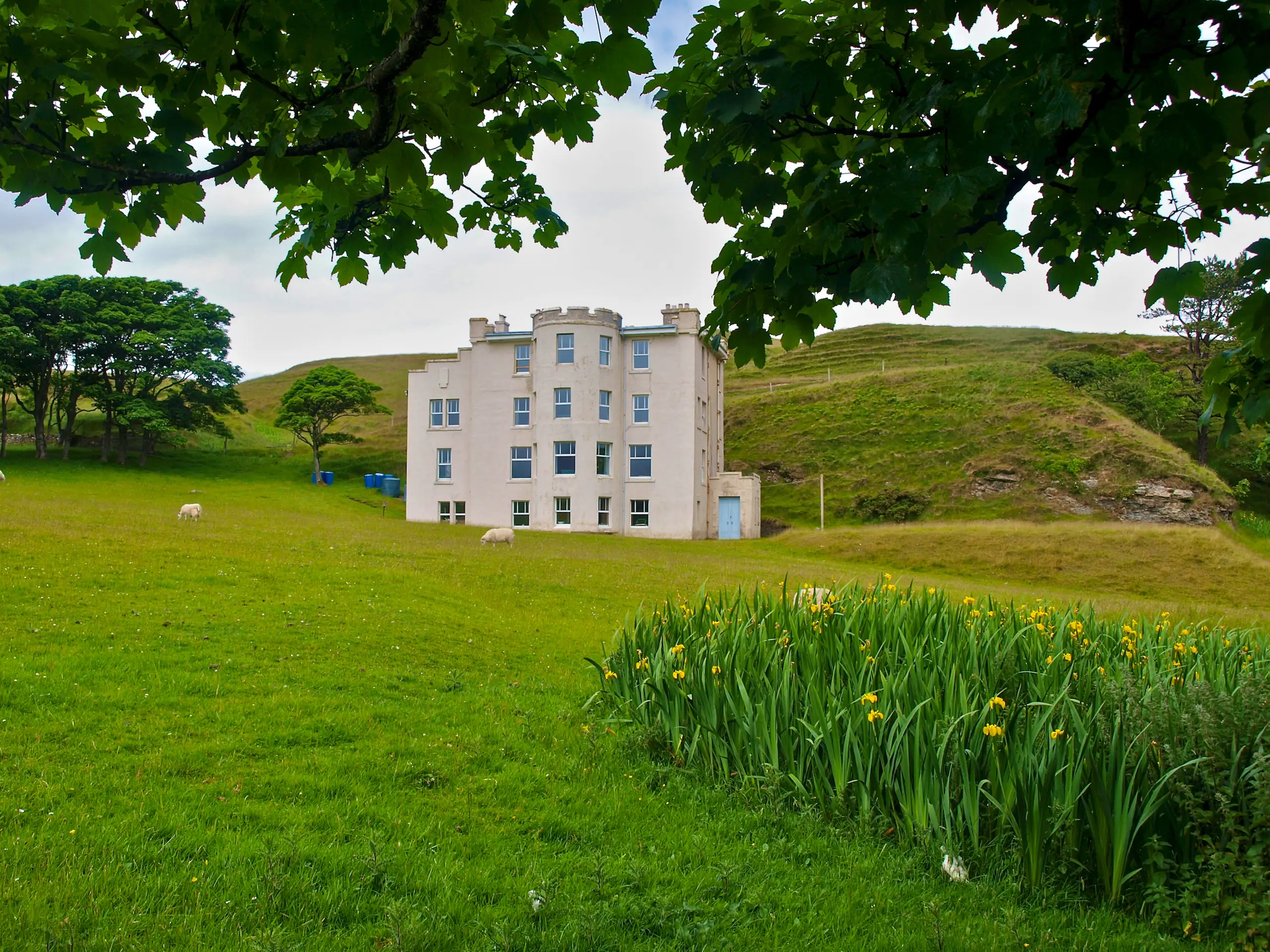
Inch Kenneth House is famous as having been the home, from 1938, of the Mitford family with their Nazi and Fascist connections (it is even rumoured that Hitler once visited here). There is a wonderful filmed interview with Deborah, the youngest Mitford sister, reminiscing about her times in the house. The family sold it for £25 000 in 1967 to Yvonne Barlow, an artist, and her late husband, who in 2011 said she wanted to open the house to the public but I don't think that ever happened. She actually lived in London so I imagine the house is unoccupied for most of the year. Recently she passed it on to her children, Claire and Martin Barlow. Apparently it still contains some Nazi memorabilia. The house itself is moderately ugly, a strange battlemented confection originally built in the 1830s and then much altered in the 1930s, rather dull. The flattish roof is designed to collect rainwater (and is no doubt subject to leaks). In 2017 there were some signs of life, a wind turbine had appeared, and a distant person. Something might be stirring.
The island's name is derived from 'innis' (island) and ('St Cainneach', the Irish saint), another of St Columba's mates.