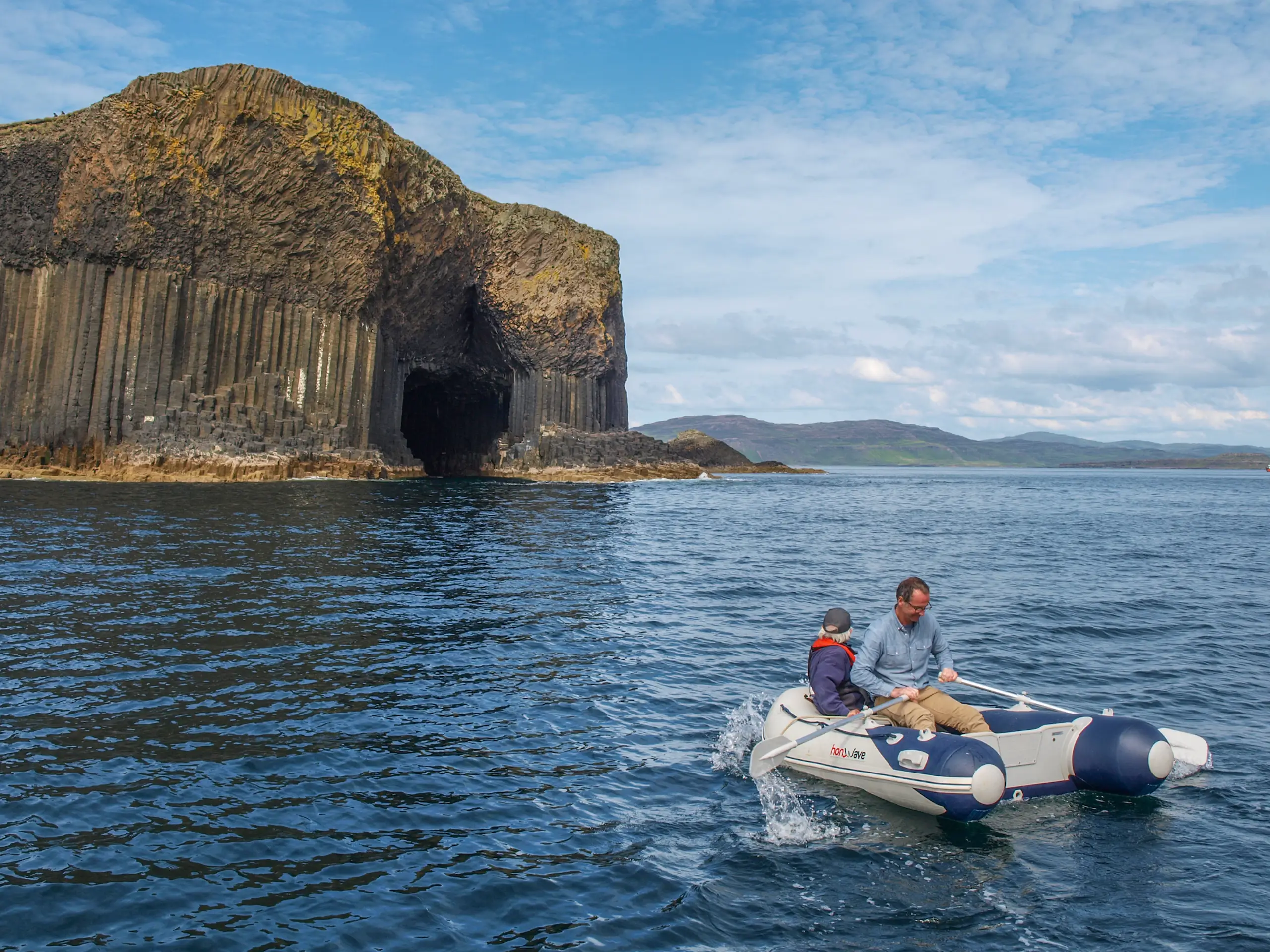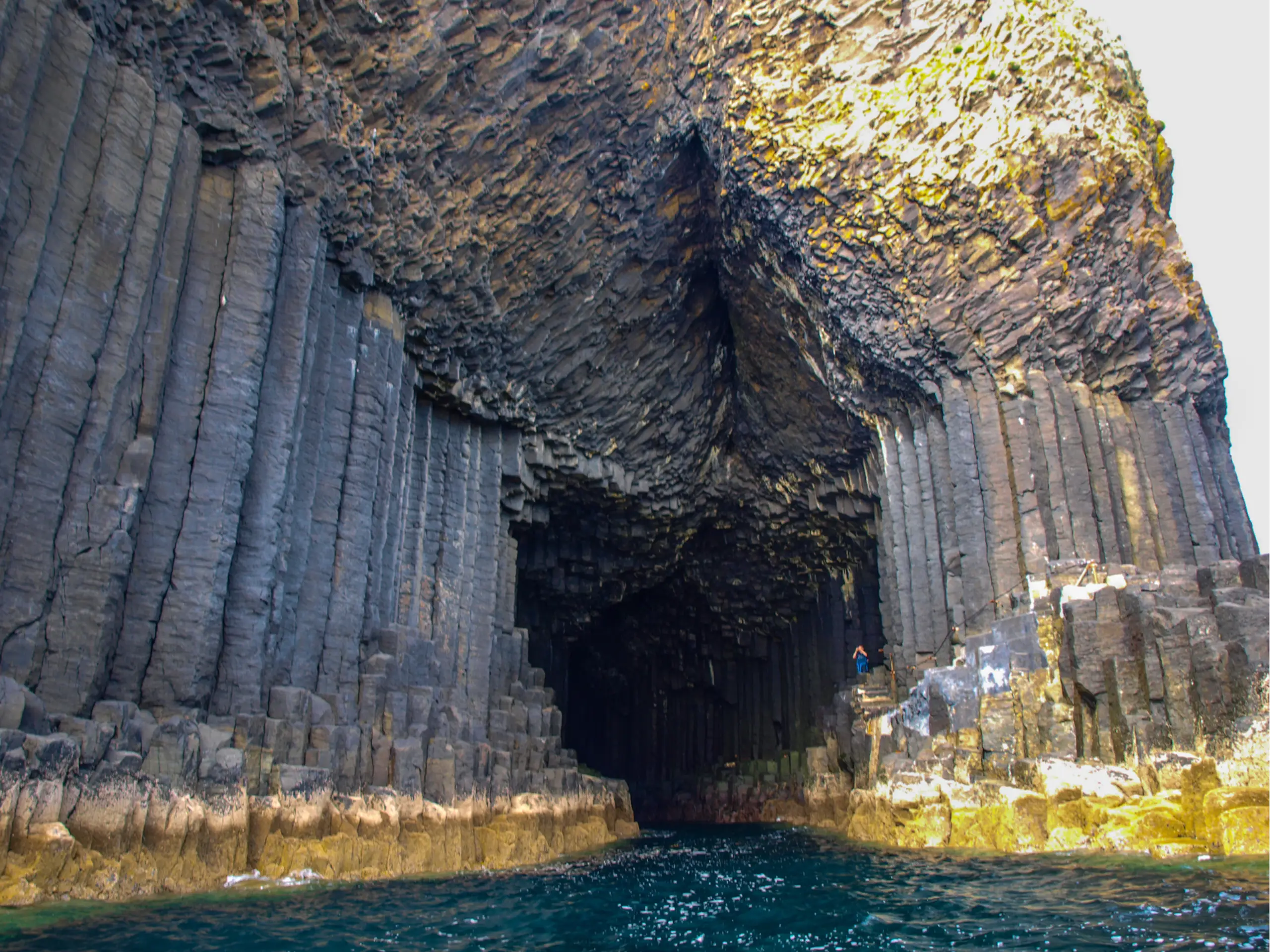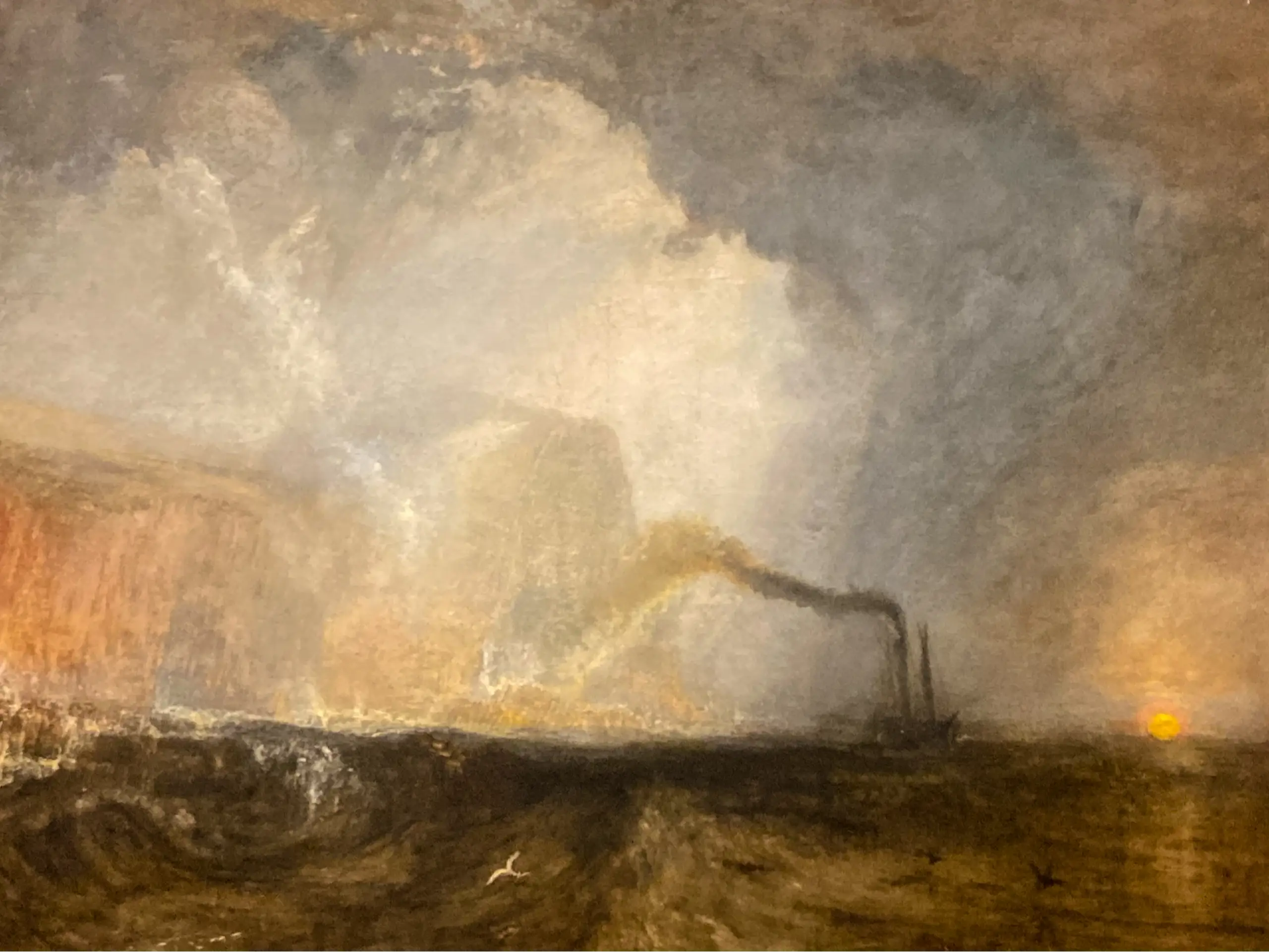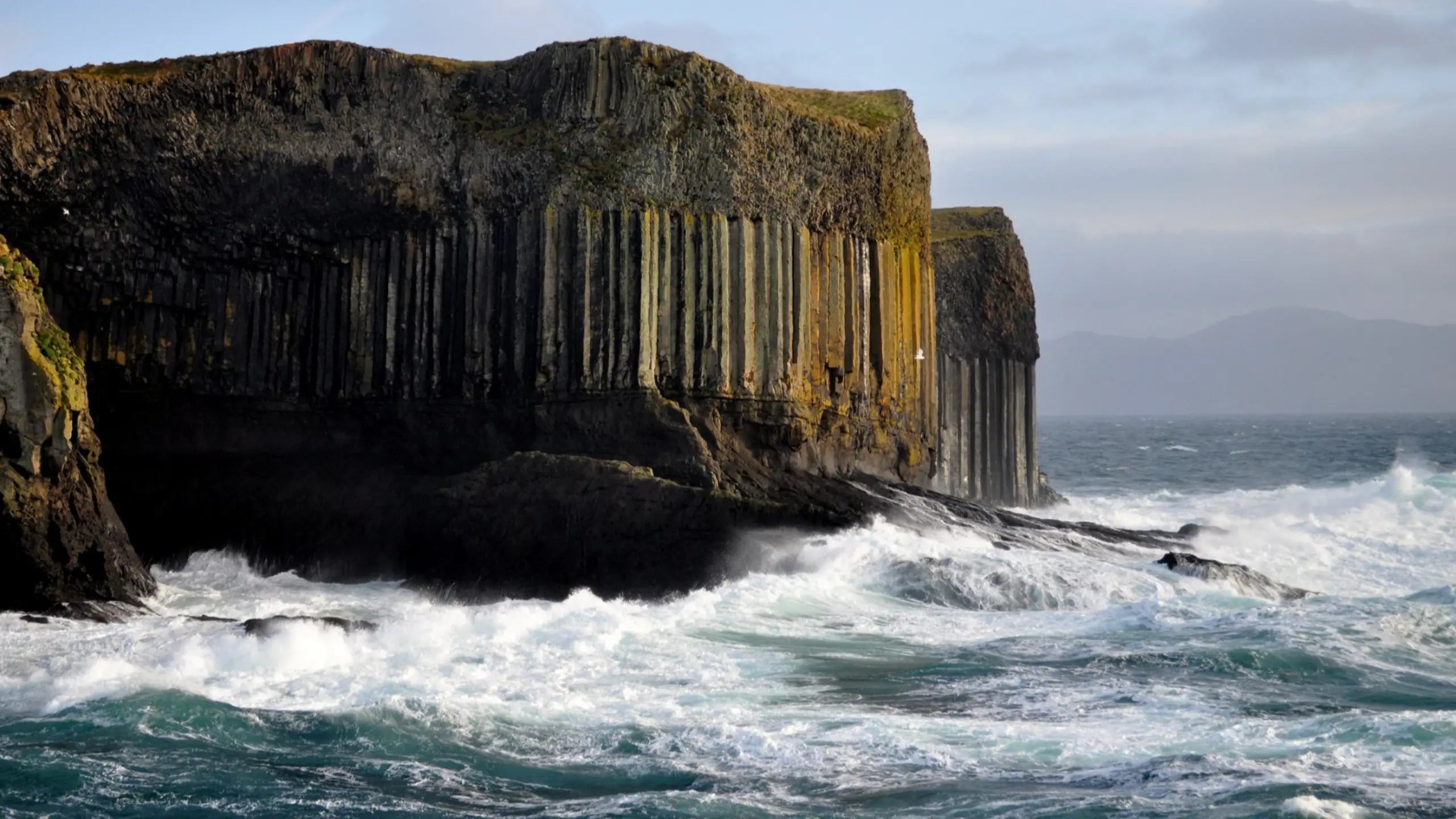
Everyone but everyone must have heard of Staffa, as well as Fingal's Cave (originally called An Uamh Bhinn, the melodious cave), and Mendelssohn and his Hebridean Overture first performed in London in 1832. However, not that many people have been there. But Jules Verne has. He set the denouement of The Green Ray here, a rather wonderful 19th century novel based on his travels in Scotland (Luath Press, 2009). And JMW Turner painted Fingal's cave. Even earlier, in 1772, Joseph Banks went quite overboard with admiration, quoted in Pennant's Tour in Scotland: "Compared to this what are the cathedrals or the palaces built by men? Mere models or playthings, imitations as diminutive as his works will always be when compared to those of nature. Where is now the boast of the architect?" (A Tour in Scotland and Voyage to the Hebrides 1772. Thomas Pennant, Birlinn, Edinburgh, 1998). It is said that Banks heard the original Gaelic name of 'Bhinn', which is pronounced 'Finn', and assumed it was the shortening of Fingal, hence the modern name. And in 1814 Walter Scott got his oar in too "stupendous columnar side walls ... the variety of tints ... august billows ... circumstances elsewhere unparalleled" and so on (The Voyage of the Pharos, Walter Scott’s Cruise Around Scotland in 1814. Walter Scott, Scottish Library Association, Hamilton, 1998). Apparently it is possible to scramble down to Cormorants' Cave on the west of the island and then down some sort of narrow tunnel into Mackinnon's Cave. Not for me at my age, although maybe one can get a view from the sea.
The island was gifted to the National Trust for Scotland in 1986 by Eleanor Elliott on whose behalf it had been bought for £150 000 by her husband Jock Elliott, an advertising executive from New York, for her 60th birthday. There's a nice idea for a birthday present — give your wife a Scottish island. The island has not been inhabited for years, probably not since the late 18th century.
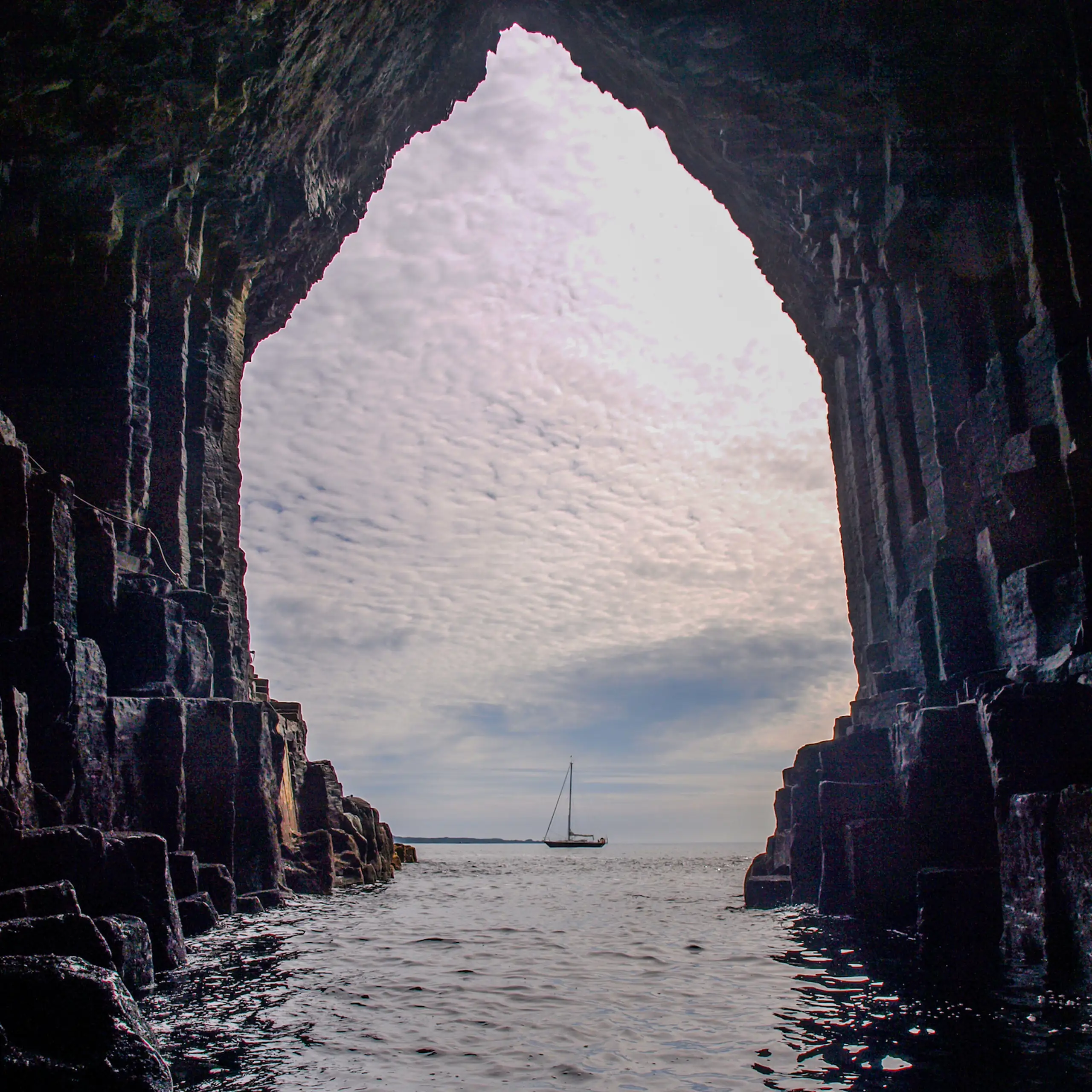
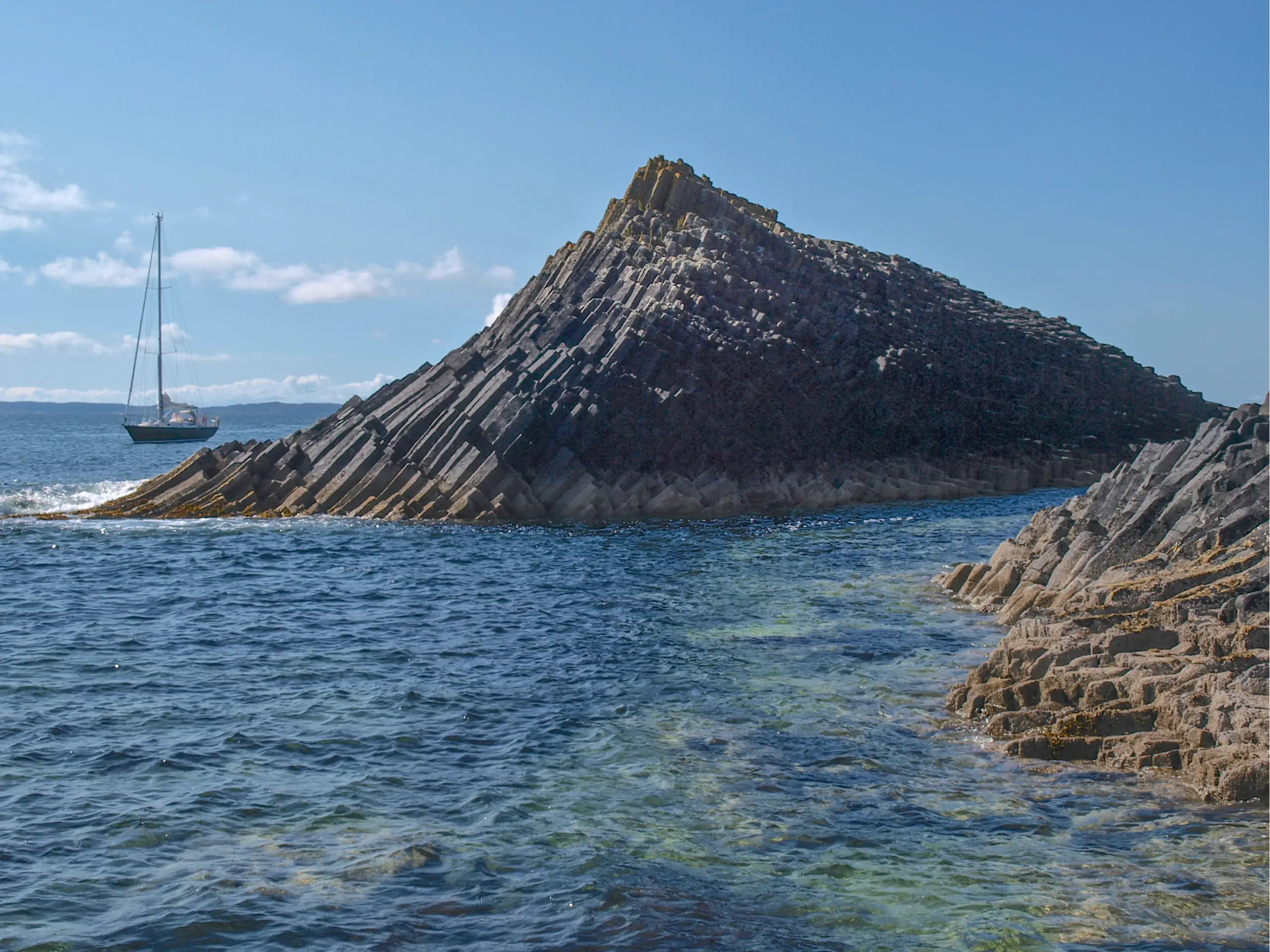
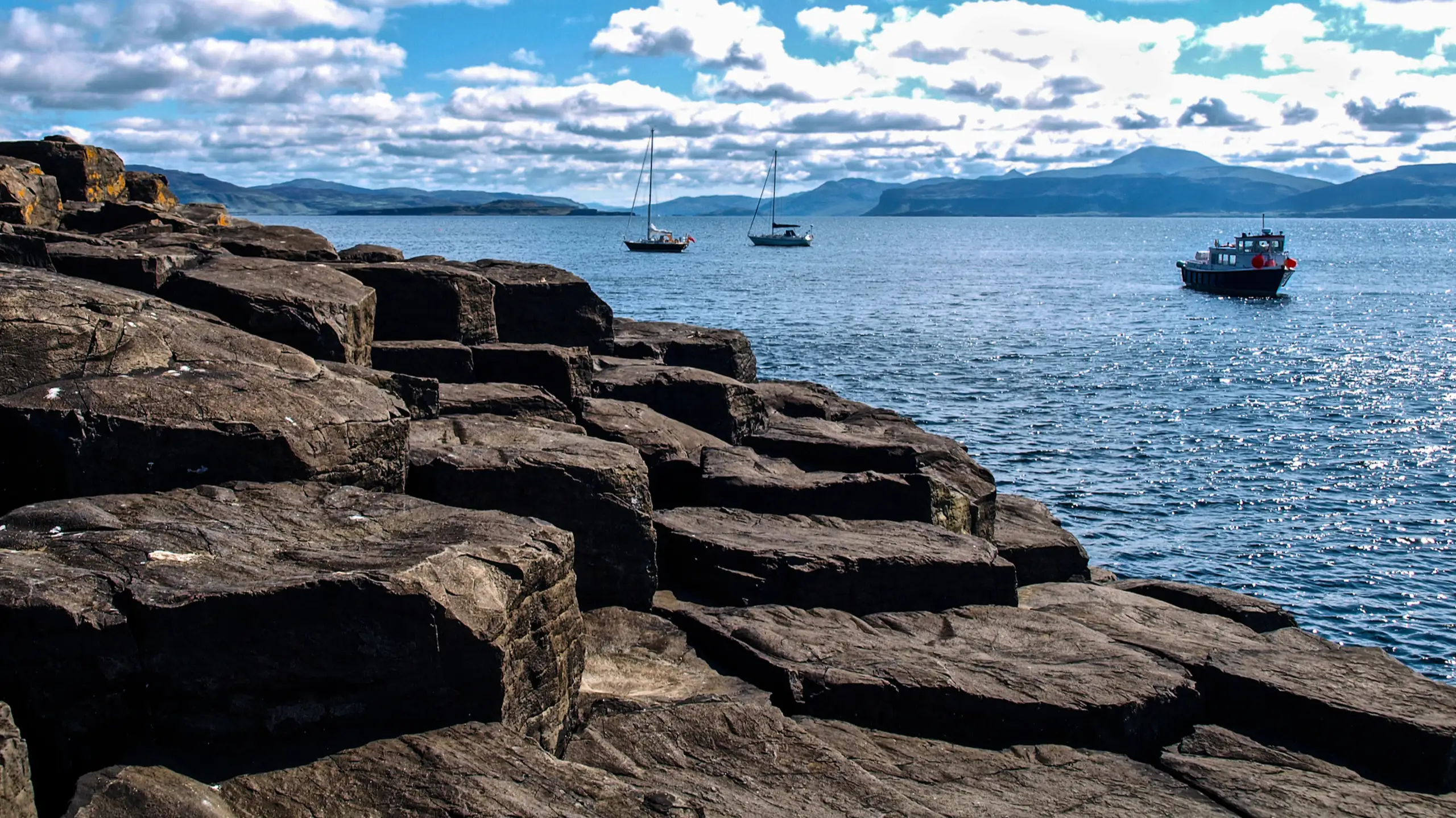
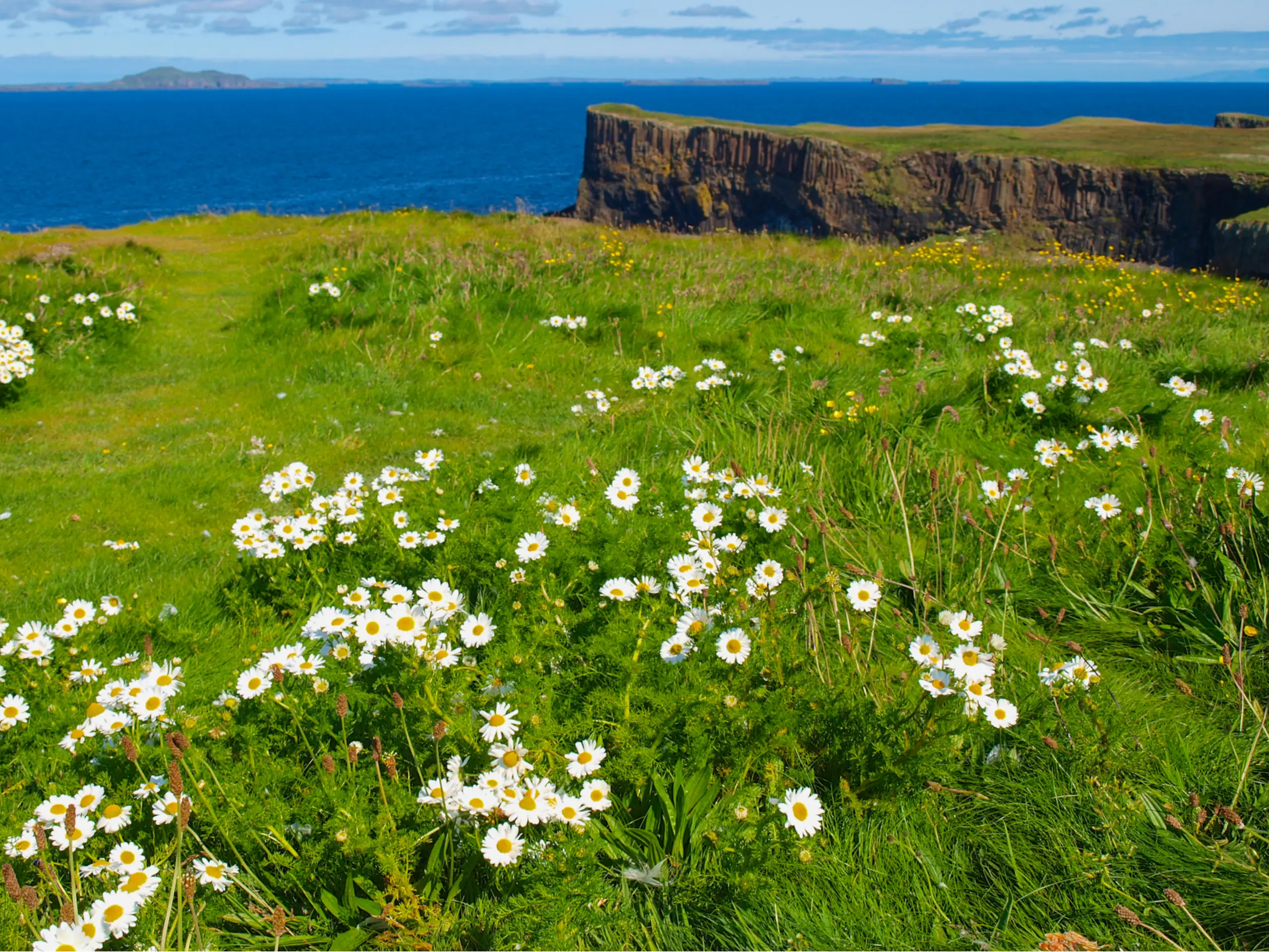
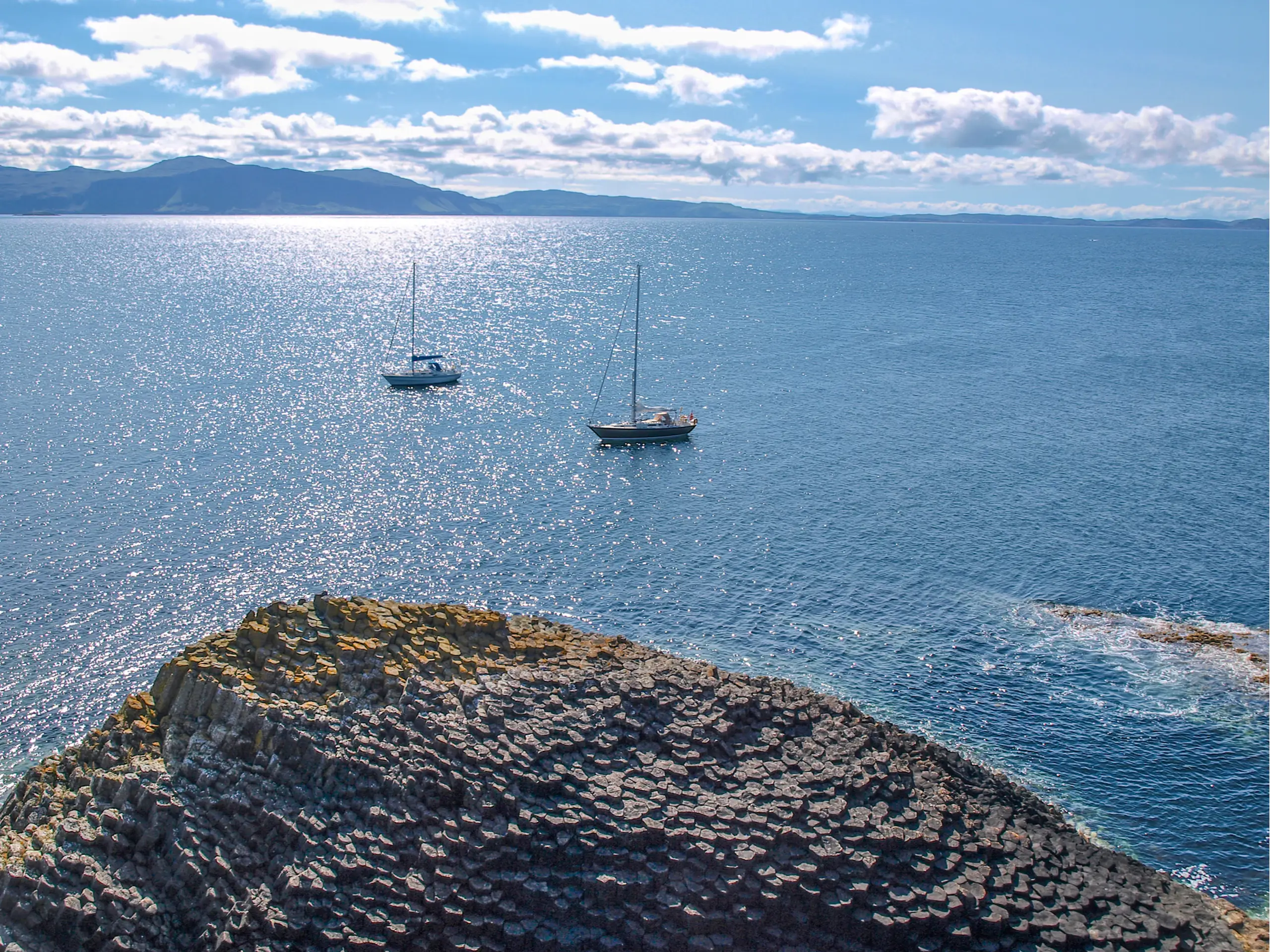
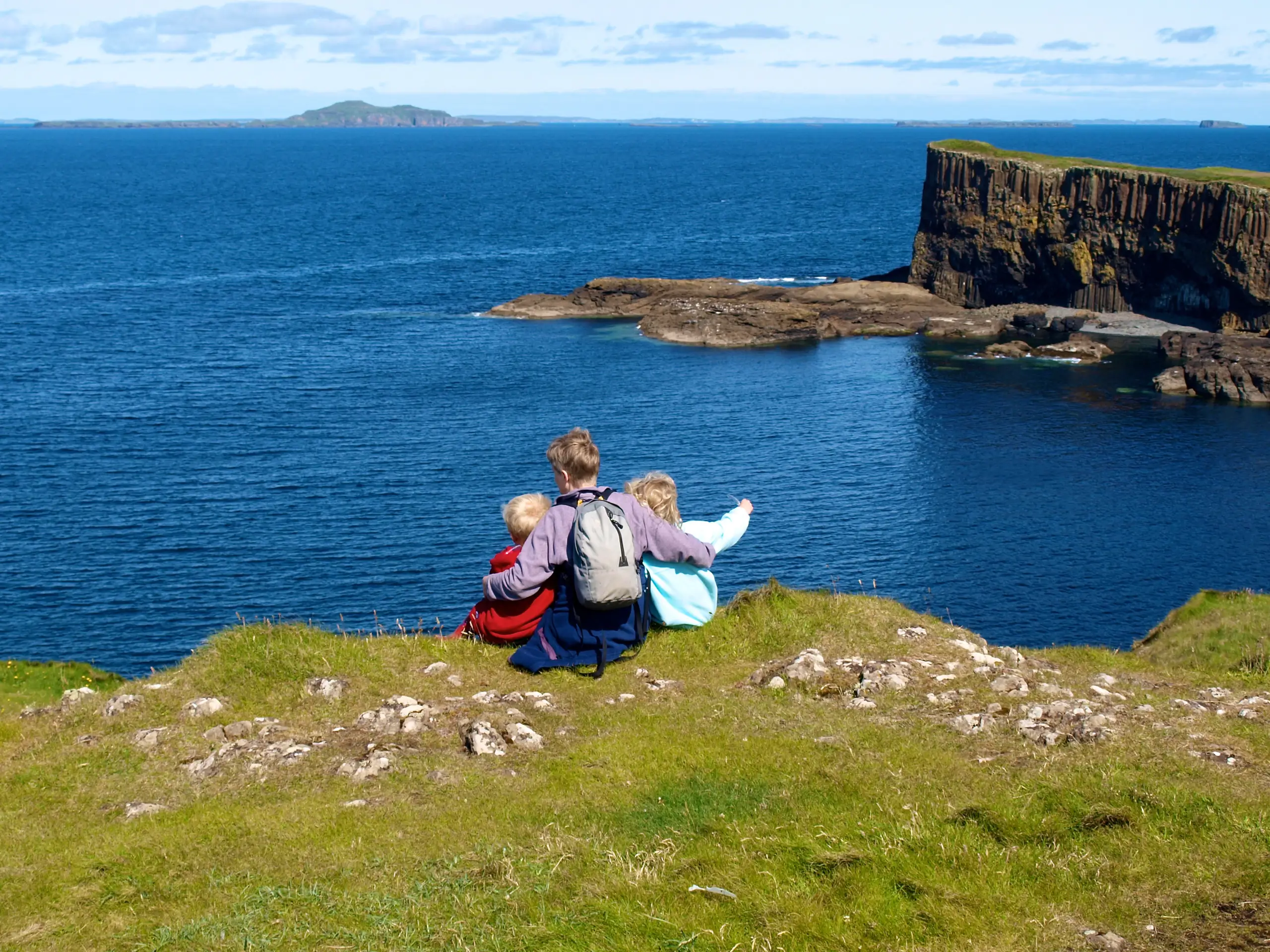
It is a dodgy spot to anchor, only sensible in quiet conditions, and maybe best to leave someone on board while the rest of the crew land and walk round to look into Fingal's cave, after that you leave. Land by the jetty, turn left and follow the path for 10 minutes where one time I was there a woman fell and broke her arm, so hold on to the railing. Since then access and safety have been improved. On a really quiet day you can take your dinghy into the cave itself, another great Hebridean experience. The cave is huge with flickering reflections and echos, the rock is volcanic basalt and has been formed into amazing more-or-less vertical hexagonal columns. Also do the short walk up to the top of the island where you get a fabulous view, and where there are countless Hebridean wild flowers but, as I said earler, it is unwise to leave your boat for very long at anchor.
This island is definitely worth a detour, a romantic must. But best done early or late in the day to avoid the many tourist boats that bring people over from Mull and Iona (100,000 a year apparently). Not so many in the 19th century: Jules Verne again: "Except during the visit of tourists which lasts for barely an hour twice a week, we will not be disturbed by anyone" and "It is impossible to imagine a more spectacular route to take to this cave, which was in itself worthy of being inhabited by some hero from One Thousand and one Nights" (The Green Ray, Jules Verne, Luath Press 2009). And from probably the first guide book to the Highlands, written by the intrepid traveller, the Hon Sarah Murray: "The greatest wonder, I verily believe, existing on the face of the globe; namely, the island of Staffa" (A Companion and Useful Guide to the Beauties of Scotland, and the Hebrides ... to which is now added An Account of the New Roads in Scotland, and of a beautiful cavern lately discovered in the Isle of Skye'. The Hon. Mrs Sarah Murray, London, third edition, 1810).