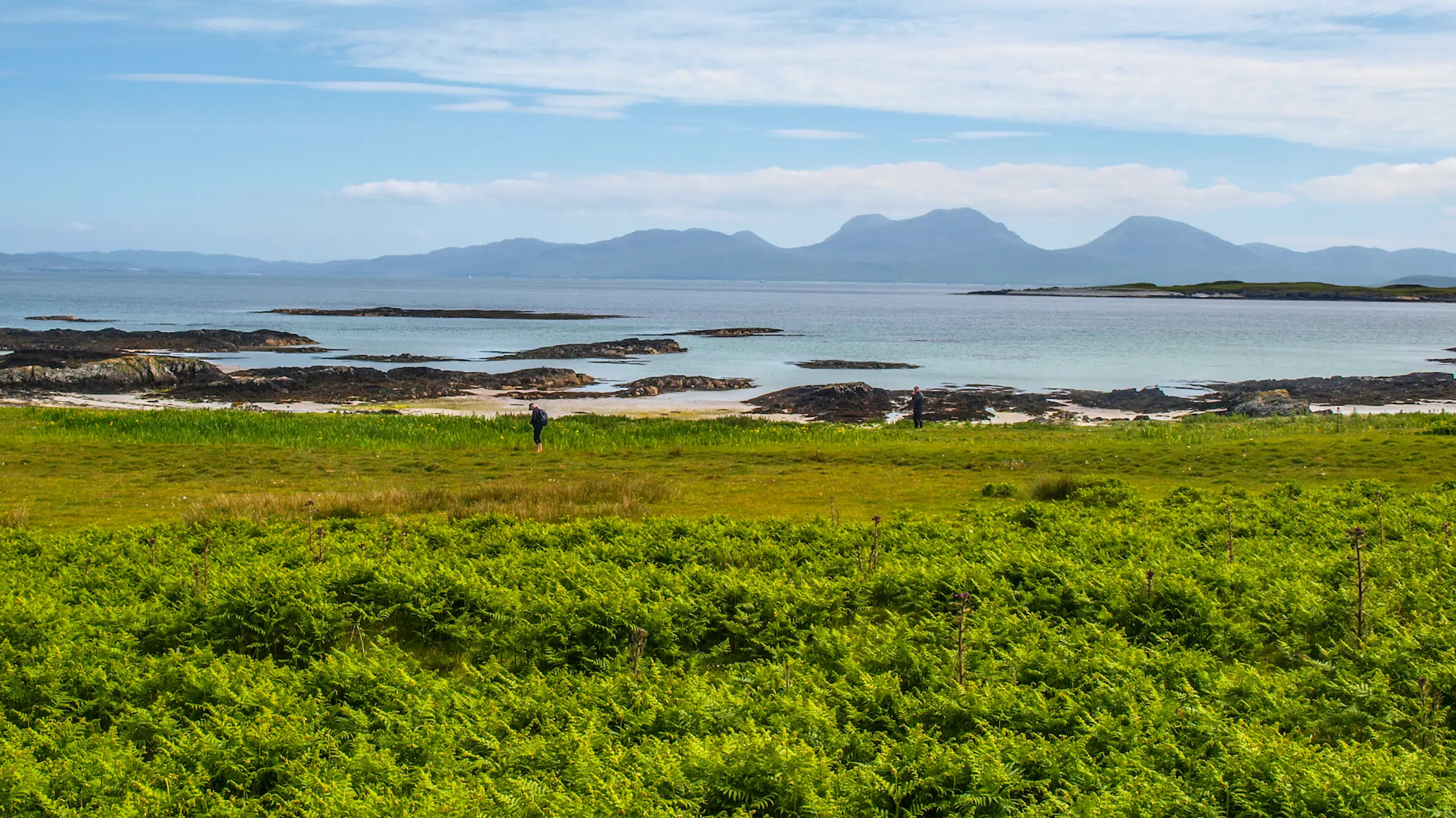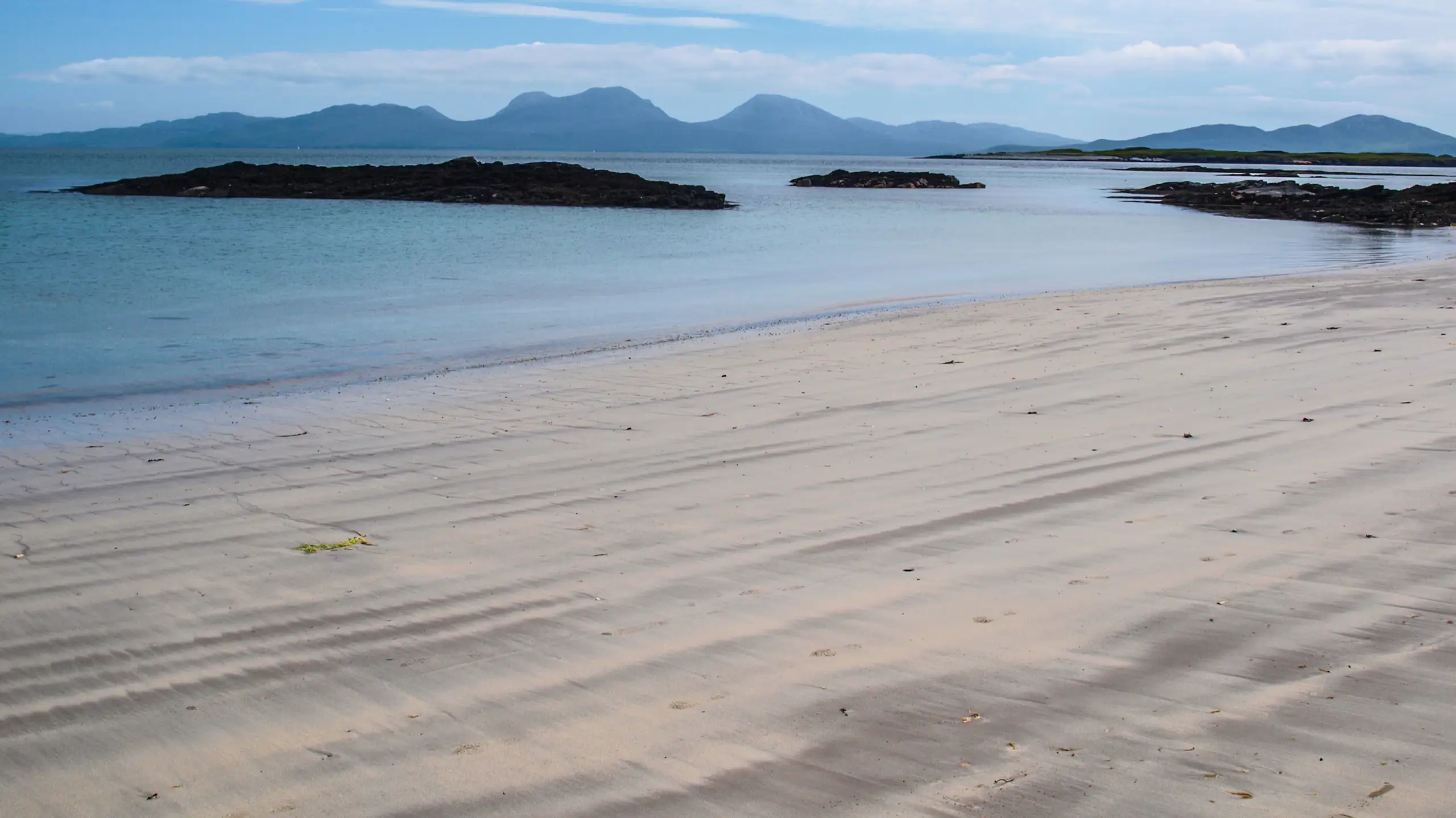
Reserve this lovely spot for a hot summer day, definitely don't come on a bad day. There are any number of anchorages to choose from. If you pick your timing right there will be very few people around on Oronsay because they can only walk across from Colonsay itself at low water. The beaches round the anchorage are stunning with plenty of machair (dunes) to act as wind shelters, and there are great views of the Paps of Jura. In any photograph on a sunny day it would look like Greece or the Caribbean, the giveaway being that the grass is green and not brown. Behind the dunes is one of the best of so many places for Hebridean flowers: tormentil, bog asphodel, birdsfoot trefoil, eyebright, heathers, orchids and all the rest. Marvellous! Picnic or barbecue, or both. We celebrated my eldest son's 8th birthday here, our first summer on Calypso in 1988.
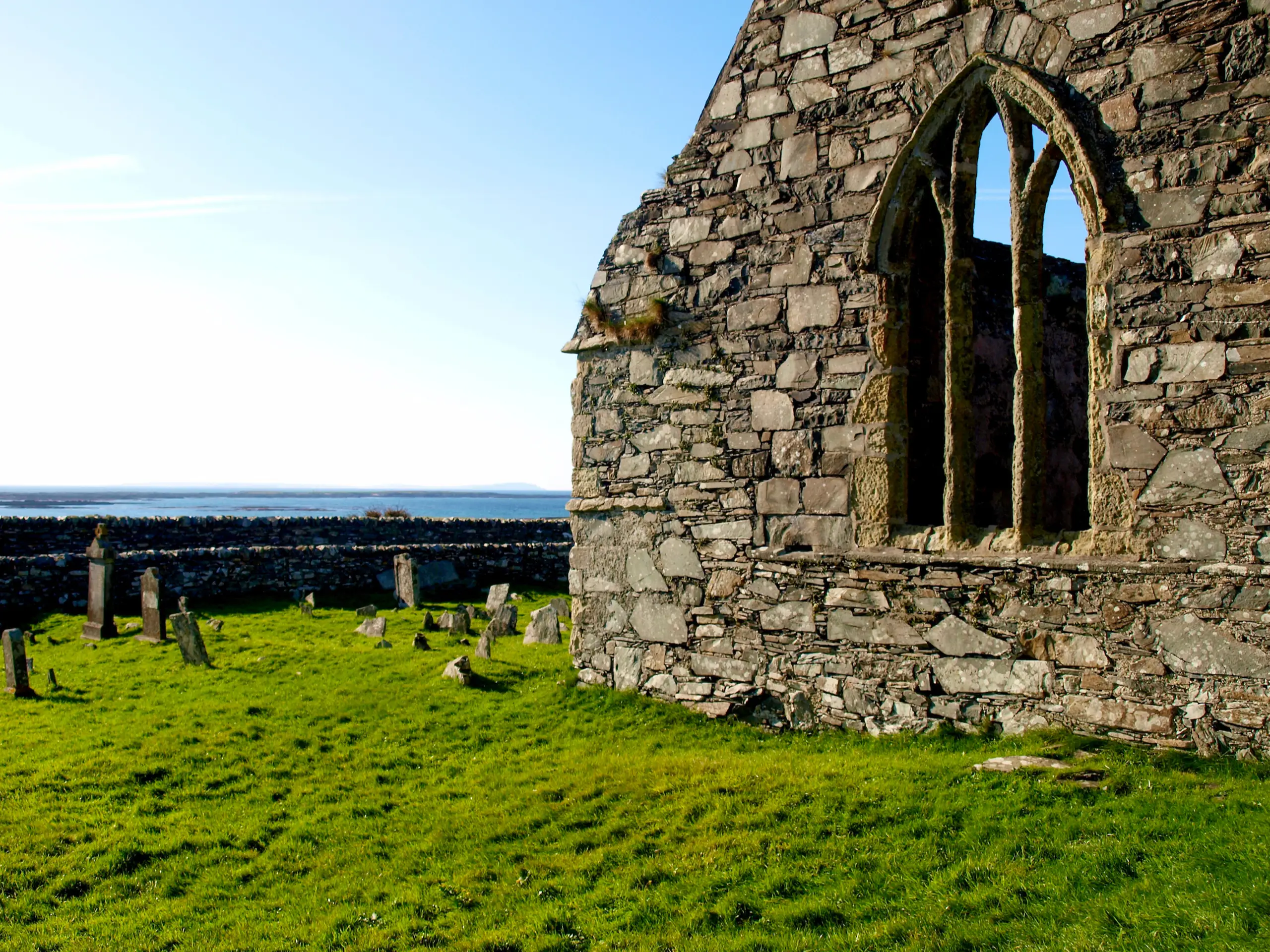
Then take a walk up to the 14th-century Augustinian Oronsay Priory — a remarkably well-looked-after ruin for such a remote place so far off the ecclesiastical tourist trail. It stands on the site of a much earlier 6th century monastic foundation, with the usual — for these parts — St Columba connection, real or imagined. Indeed, the island's name comes from St Oran (or Odhran), an Irish friend of St Columba who accompanied him to Scotland.
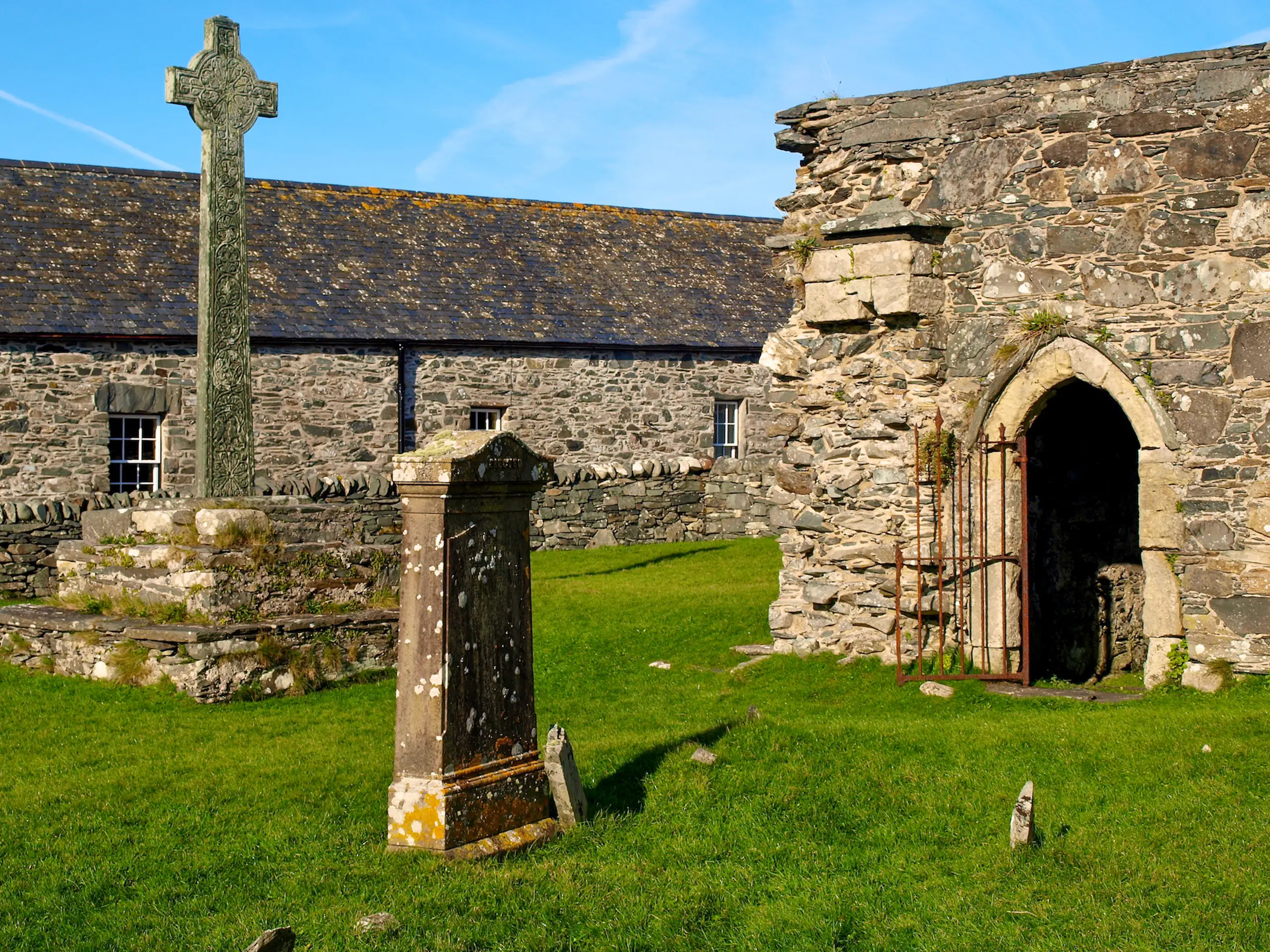
The present buildings are mostly 14th and 15th century. They fell into disrepair in the 17th century. The Victorians did some repairs, in particular of the west arcade of the cloister, the east gable and extension to the church (with the McNeil tombs), and the Prior's House which contains some very fine 15th and 16th century graveslabs solemnly stacked up round the walls (no guide to who was who anymore I think). In a small chamber off the south wall of the church you will find a stone recess with human bones, something to scare/fascinate the children.
Just to the west of the church stands the late 15th century Oronsay cross, one of the finest high crosses in Scotland. The cross to the east is much smaller and more weathered — it is a combination of an Oronsay school 16th century cross head with a 14th to 15th century Iona shaft.
The adjacent farm buildings look rather good. They are privately owned and currently tenanted by the Royal Society for the Protection of Birds who are dedicated here to saving the corncrake and red-billed chough. The island was bought and the farm restored by an American couple in 1984 — Ike and Frannie Colburn (his mother was Scottish which probably explains why). The whole island is designated an SSSI (Site of Special Scientific Interest).
Jane Smith has written and illustrated a rather charming book about Oronsay wild life: 'Wild Island, a Year in the Hebrides', Birlinn, Edinburgh, 2016. And much earlier, way back in 1887, Mrs Frances Murray — American, suffragist and early feminist, married to a rich Glaswegian lawyer — wrote a splendid book for her friends about her long and adventurous family holidays based in the long-disused and partially ruined Oronsay House on the island: 'A Companion and Useful Guide to the Beauties of Scotland, and the Hebrides ... to which is now added An Account of the New Roads in Scotland, and of a beautiful cavern lately discovered in the Isle of Skye', 1810. She was clearly posh, rather patrician, tough too, but she seemed very sympathetic towards the local islanders. Mind you, she didn't appreciate the corncrake which back then was far more common than it is now: " ... which used to treat us to an uninterrupted concert in the field before our windows all the summer long, much as we might have wished to eject him from the premises".