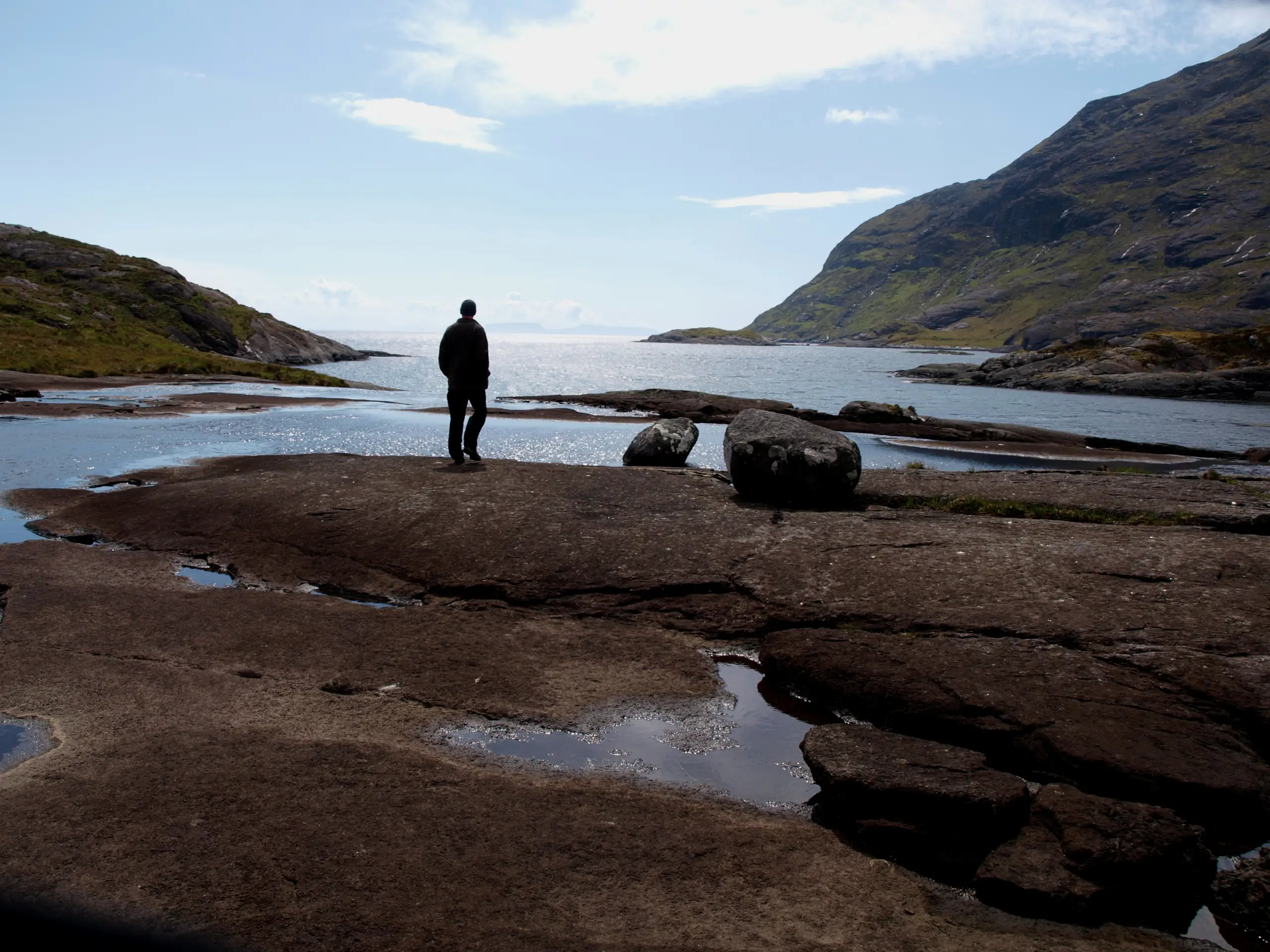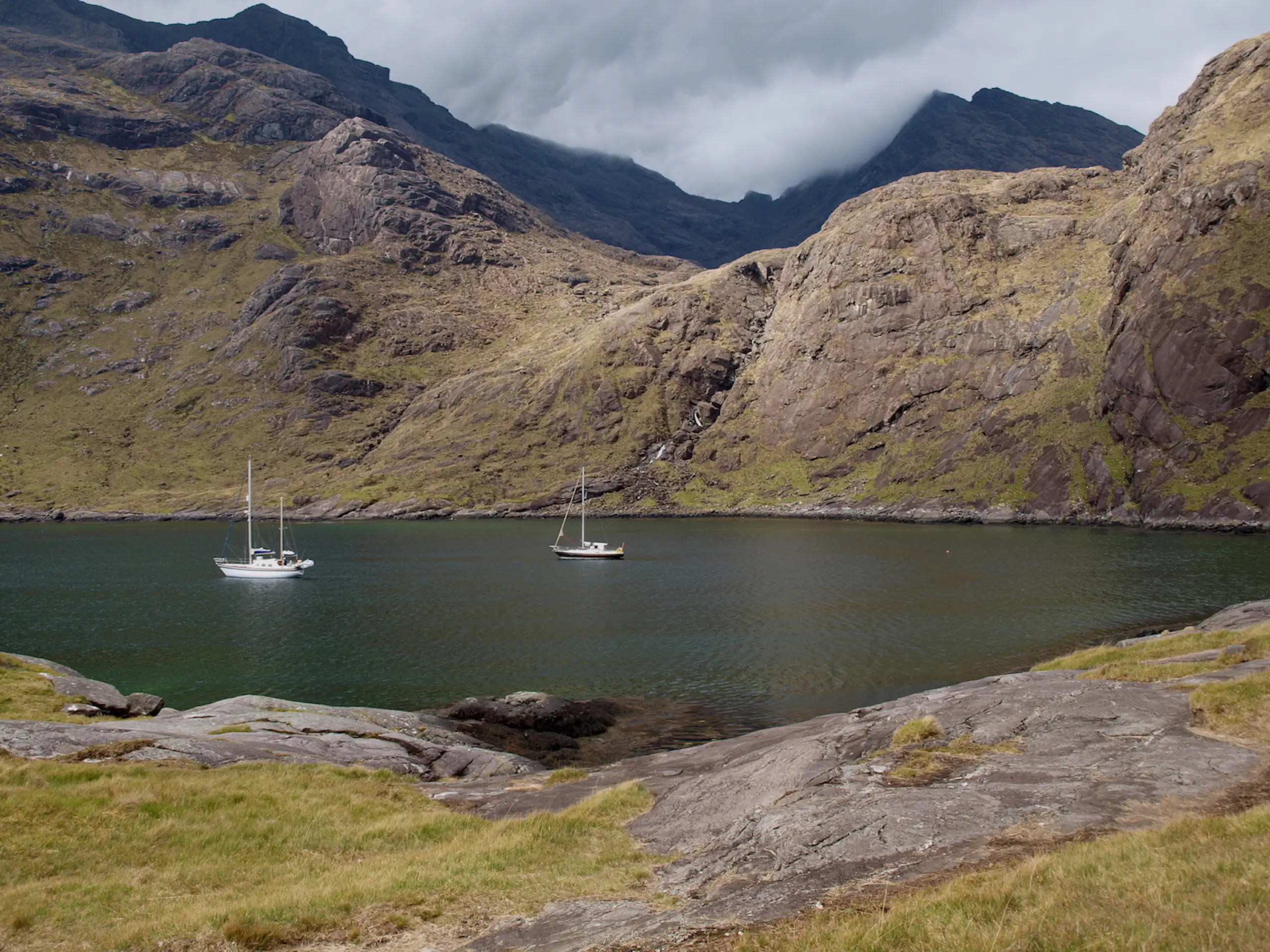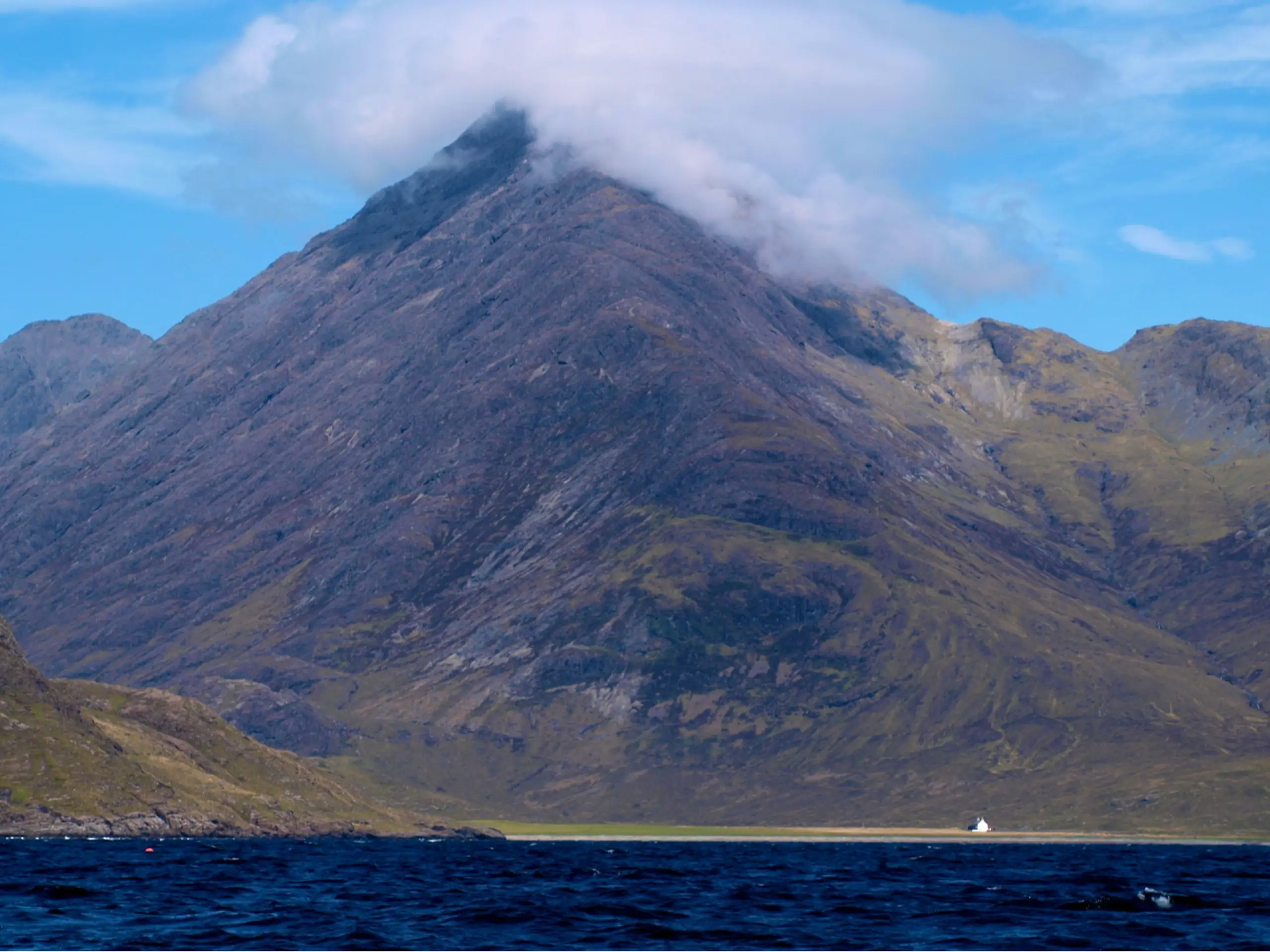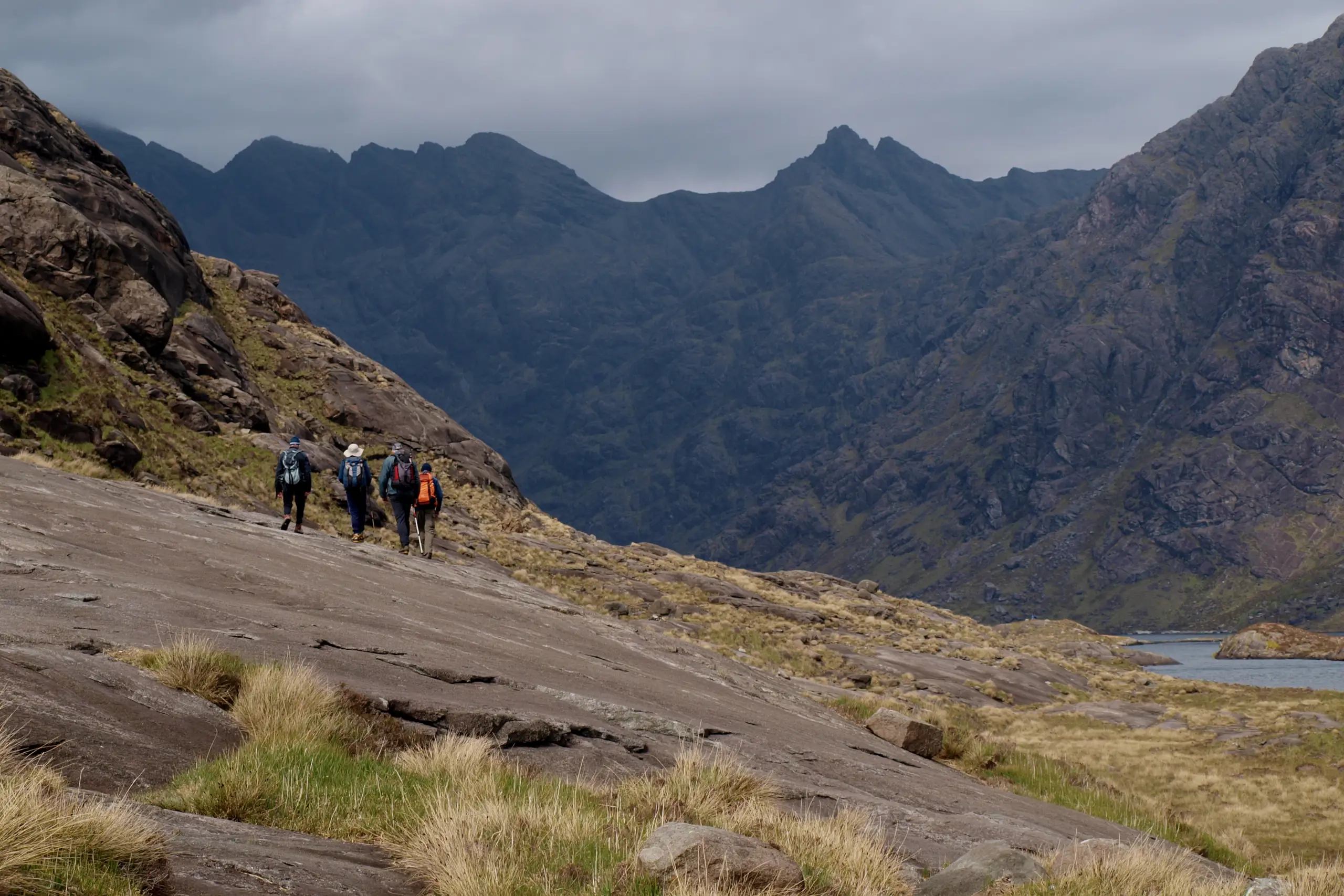
If any of your crew are climbers, this is where to head for. The awesome back-door to the Cuillins, without doubt the most dramatic anchorage in the Hebrides. I can't better Frank Cowper's 1896 opinion: "For those delighting in wild, extraordinary scenery this district is well worth exploring, and for doing it comfortably there is nothing like a yacht" (Sailing Tours: The Yachtsman's Guide to the Cruising Waters of the English and Adjacent Coasts, Part V, The West Coasts of Scotland, the Orkneys, and the west coast of the North Sea. Frank Cowper, Upcott Gill, London, 1896).
As you approach from the south the climbers will all be vying with each other to name the various peaks along the ridge, and to retell their most dramatic exploits from being helicoptered off after trying to cross the ridge without enough daylight (my dear wife in her younger days) to their fastest traverse in winter (son Oli does not hold the record but maybe would like to). But draw their attention back to sea level, and take a look at the seals on Sgeir Doigich on your way in (you may have to look back if they are sheltering from a southerly wind). And divert the climbers from discussing the niceties of rock climbing to watching out for that much more interesting piece of rock underwater as you turn in to starboard, hit by several yachts every year because it is closer to the island than you think.
These days the anchorage is more crowded than it was not so long ago. As well as yachts at anchor there is a steady stream of boats bringing tourists from Elgol. Even in the late 19th century a steamer used to call from Oban for tourists to take a look: "Thousands have been thereby enabled to see this out-of-the-way part of the kingdom who would never otherwise have had that pleasure" wrote John Inglis in 1879 (A Yachtsman's Holidays or Cruising in the Hebrides. John Inglis, Pickering and Co, London, 1879). And why not? The short walk up the river to Loch Coruisk and a view of the ridge is terrific. But, as Inglis rightly observed "It is not as one among a throng of excursionists, gentle reader, that you will to the full enjoy Coruisk". Indeed not in these days of over-tourism. Probably the first to popularise Loch Coruisk was Sir Walter Scott in his 1815 narrative poem, The Lord of the Isles: "A scene so rude, so wild as this, yet so sublime in barrenness, ne'er did my wandering footsteps press, where'er I happed to roam." Followed on by Alexander Smith in 1865: "Picking your steps carefully over huge boulder and slippery stone, you come upon the most savage scene of desolation in Britain. Conceive a large lake filled with dark green water, girt with torn and shattered precipices; the bases of which are strewn with ruin since an earthquake passed that way, and whose summits jag the sky with grisly splinter and peak. There is no motion here save the white vapour steaming from the abyss" (A Summer in Skye, Volume 1. Alexander Smith, Alexander Strahan, London, 1865). Then Robert Buchanan in 1871; "Coruisk, though so accessible, is comparatively neglected; it is nevertheless the most marvellous picture in the British Isles, and one of the scenic wonders of the world" (The Land of Lorne including the cruise of the “Tern” to the Outer Hebrides. Robert Buchanan, Chapman and Hall, London, 1871). Clearly an inspirational place.
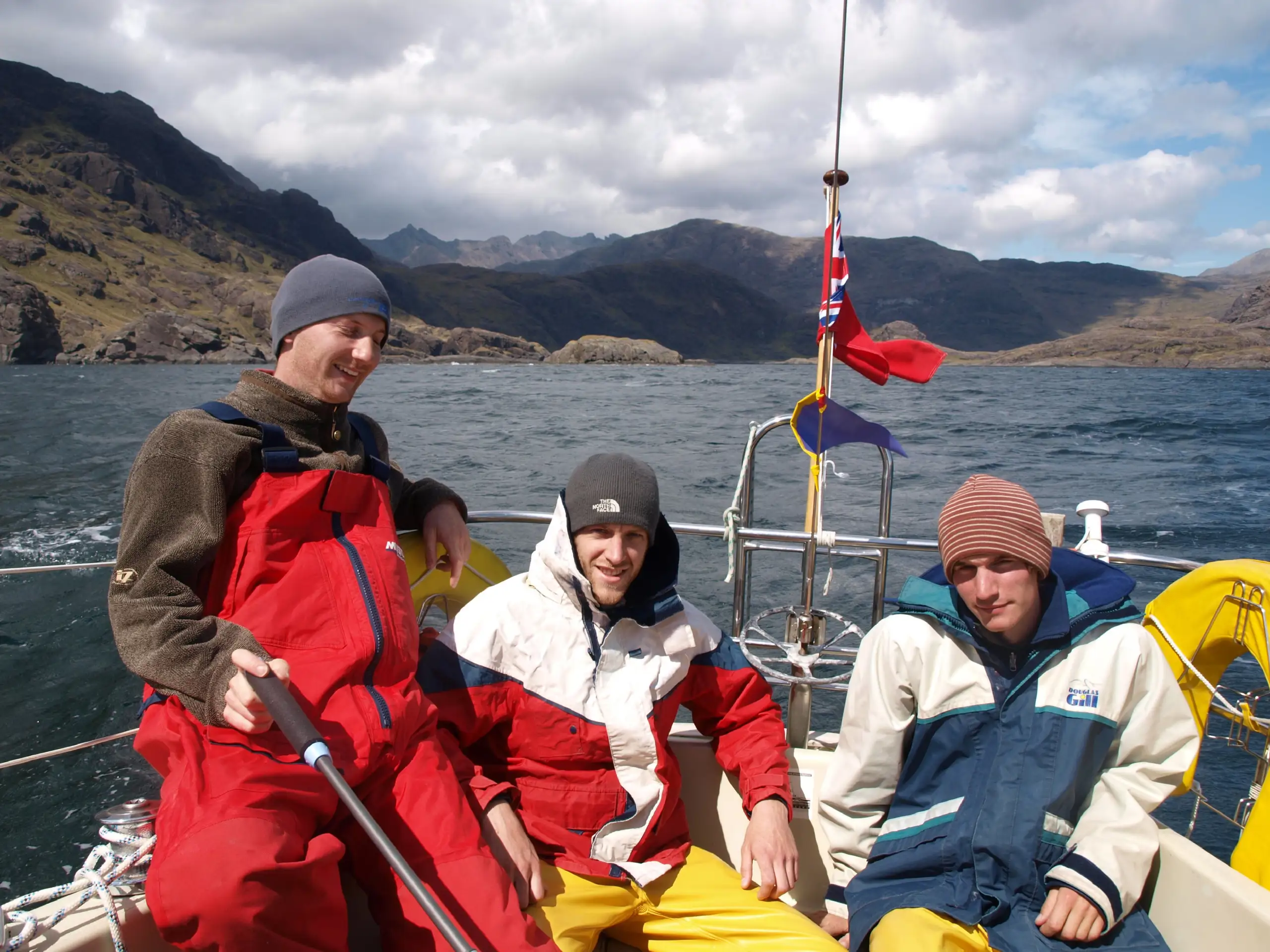
On a very hot day, take a shower in the waterfall that cascades down into the sea. But don't get trapped here in a southerly gale, or indeed in any sort of gale. As John McClintock opined in 1938: "Not that wind direction matters much in Scavaig, for be it north, south, east or west, if the wind be strong at all, terrific squalls, born on the mountain tops, will roar down from all points of the compass, and blast you and your boat with a broadside of venomous fury" (West Coast Cruising. John McLintock, Blackie and Son, London and Glasgow, 1938). And even earlier, in 1863 R T McMullen anchored here and later in 'Down Channel' wrote: "Gladly as I was to have been there, I was more glad to have got free, and determined that no amount of curiosity should tempt me into such a prison of shrieking little whirlwinds again" (Down Channel. R.T.McMullen, first published 1869, Grafton Books, London, 1986). They had experienced what we now call katabatic winds.