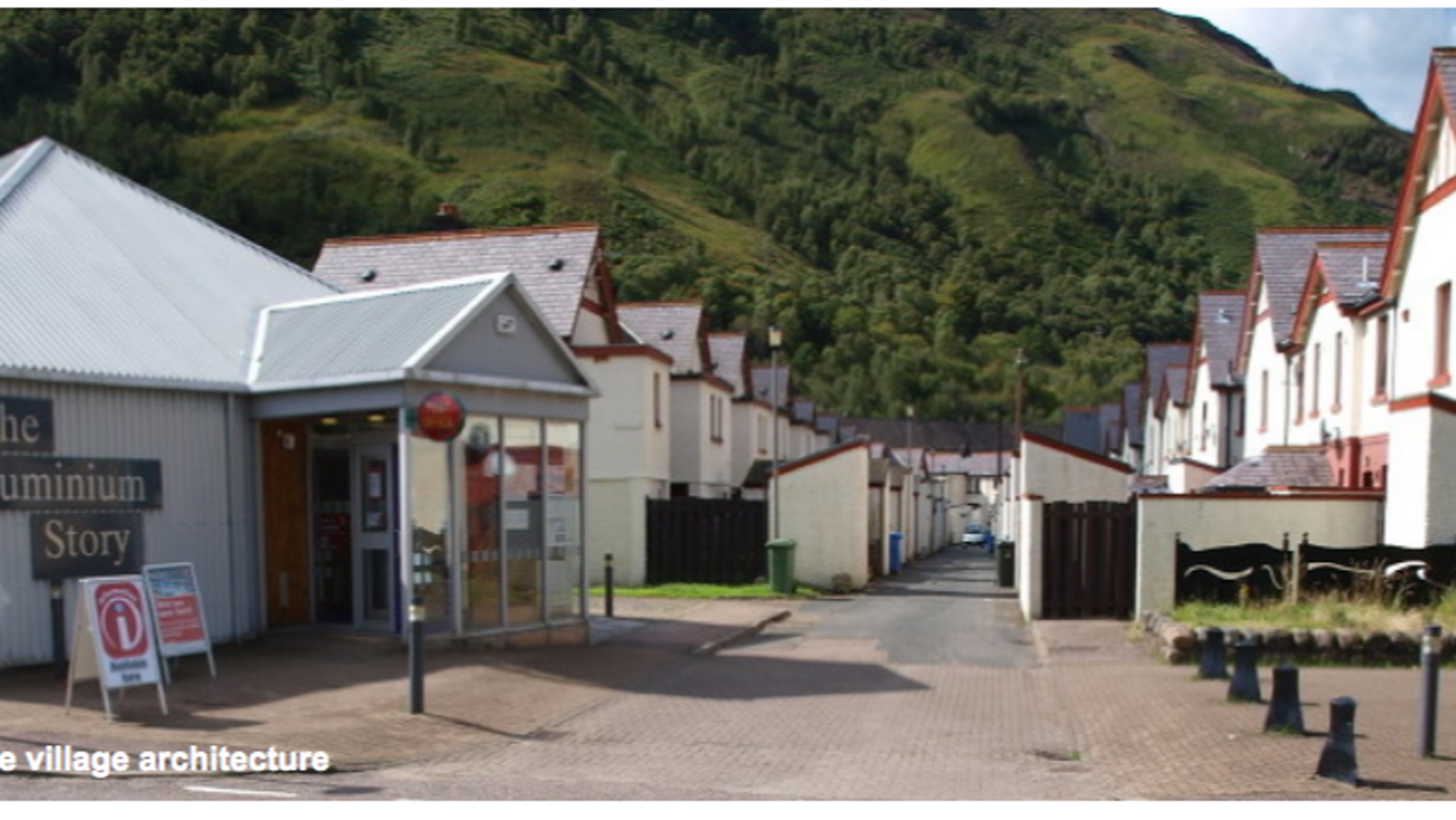
It takes some persistence, which I have never achieved, to sail right up to the head of Loch Leven to find yourself at Kinlochleven, hardly the most attractive village on the West Coast although the mountains around about are stunning. Apart from scenery, and saying you have done it, there seems not a lot of point in sailing all that way, and then back again.
The village was built in the early 20th century to house the workers at the new hydro-powered aluminium smelter. The alumina was brought in by sea. The smelter closed in 2000 and the site is now derelict, although the power station is still working. If you want to discover more then check out the Aluminium Story Visitor Centre which has a small but informative display (currently closed for refurbishment). This whole place rather reminds me of Sheffield, on a smaller scale of course: industry arrives in a beautiful part of the country, a population grows up to service it, industry leaves, and the dwindling population then struggles to reinvent itself, here at the very time the village had been bypassed by the building of the road bridge over the entrance to Loch Leven in 1975. The attempted reinvention here has taken the form of an outdoor pursuits centre with one very remarkable feature — the world's largest indoor ice climbing wall. The rest is not really worth the effort for the boatie, although it probably is for the thousands of walkers who pass through here along the West Highland Way — the not very exciting pub, the boarded-up shops, dull domestic architecture, and locked churches.
Sadly the the Ice Factor closed in 2023 but there are plans to reopen it in 2027. It is in one of the old aluminium plant buildings, but inside you could once find not just the 12-metre ice wall but an ordinary climbing wall too, a bouldering wall, a café and a bar. A rather good place for a wet day where you could get climbing instruction too. Outside there was an enormous aerial adventure structure which I have not seen in action. Too old to try it myself.
If you fancy a nice walk, take the track south of the river up to the Blackwater Dam which was built to power the smelter. Just before it you will find the lonely 'Graveyard of the Unknown', with mostly nameless concrete headstones marking the graves of the 22 men and one woman, out of about 3000, who died building the dam — without machinery.