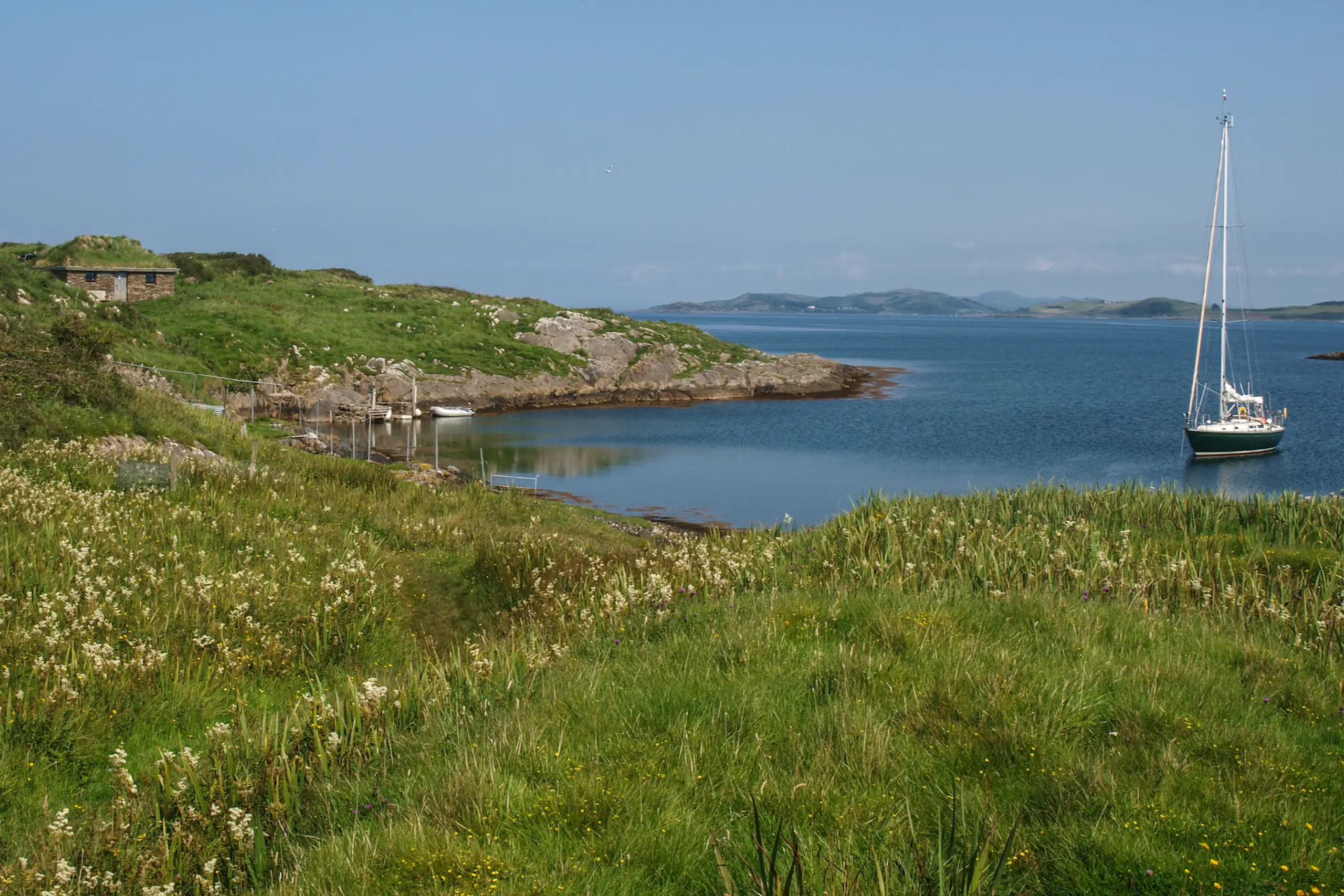
This tiny and most Hebridean of islands is now owned and looked after by the Eilean Mor MacCormick Trust (taking over from the Scottish National Party which had been bequeathed the island in 1978). The Trust has restored the jetty (nicely) and built a small stone house with over-large windows and a turfed roof (not so nicely). They have also provided useful information for visitors (many of whom seem to come by RIBs from Loch Sween).
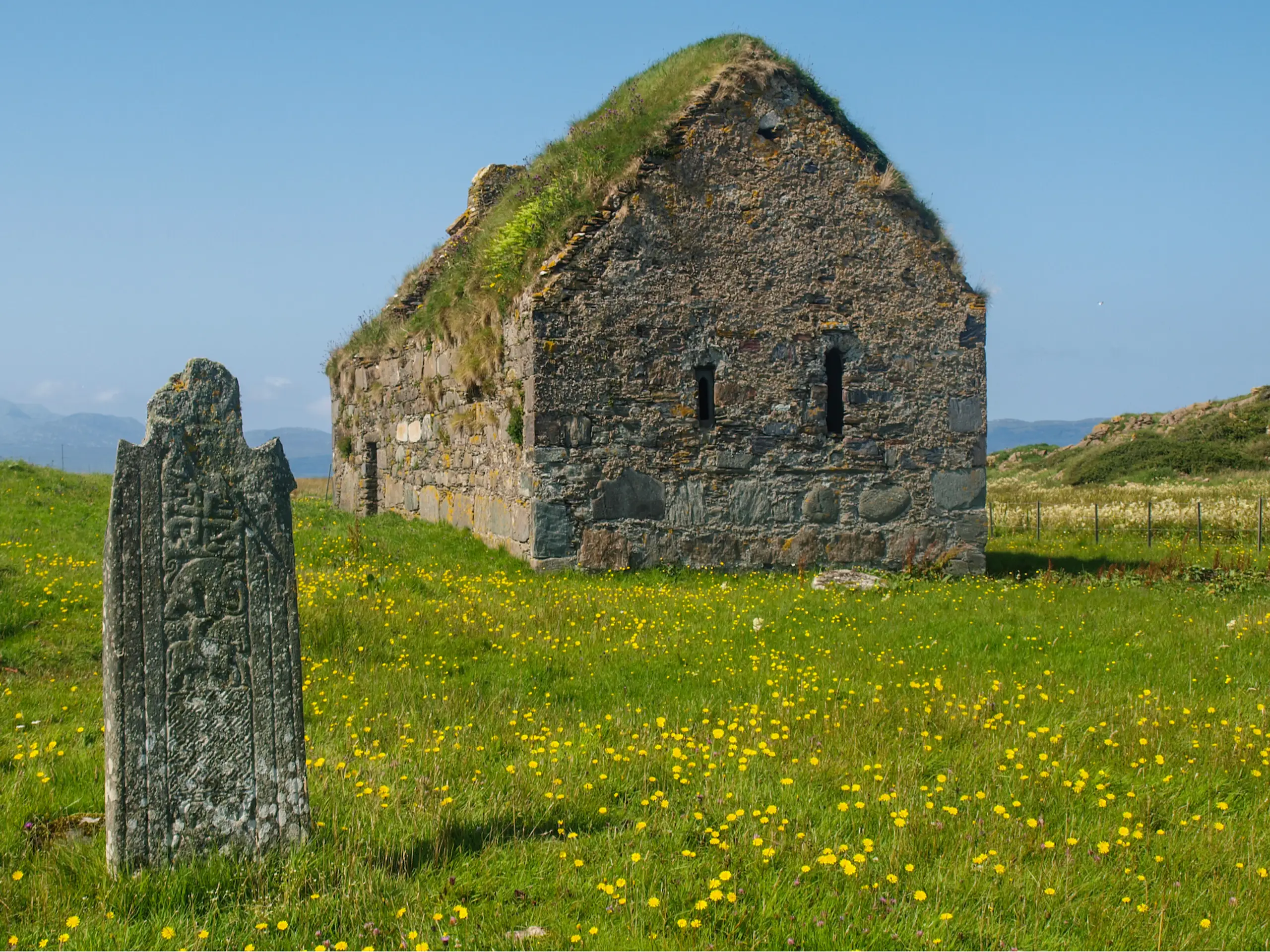
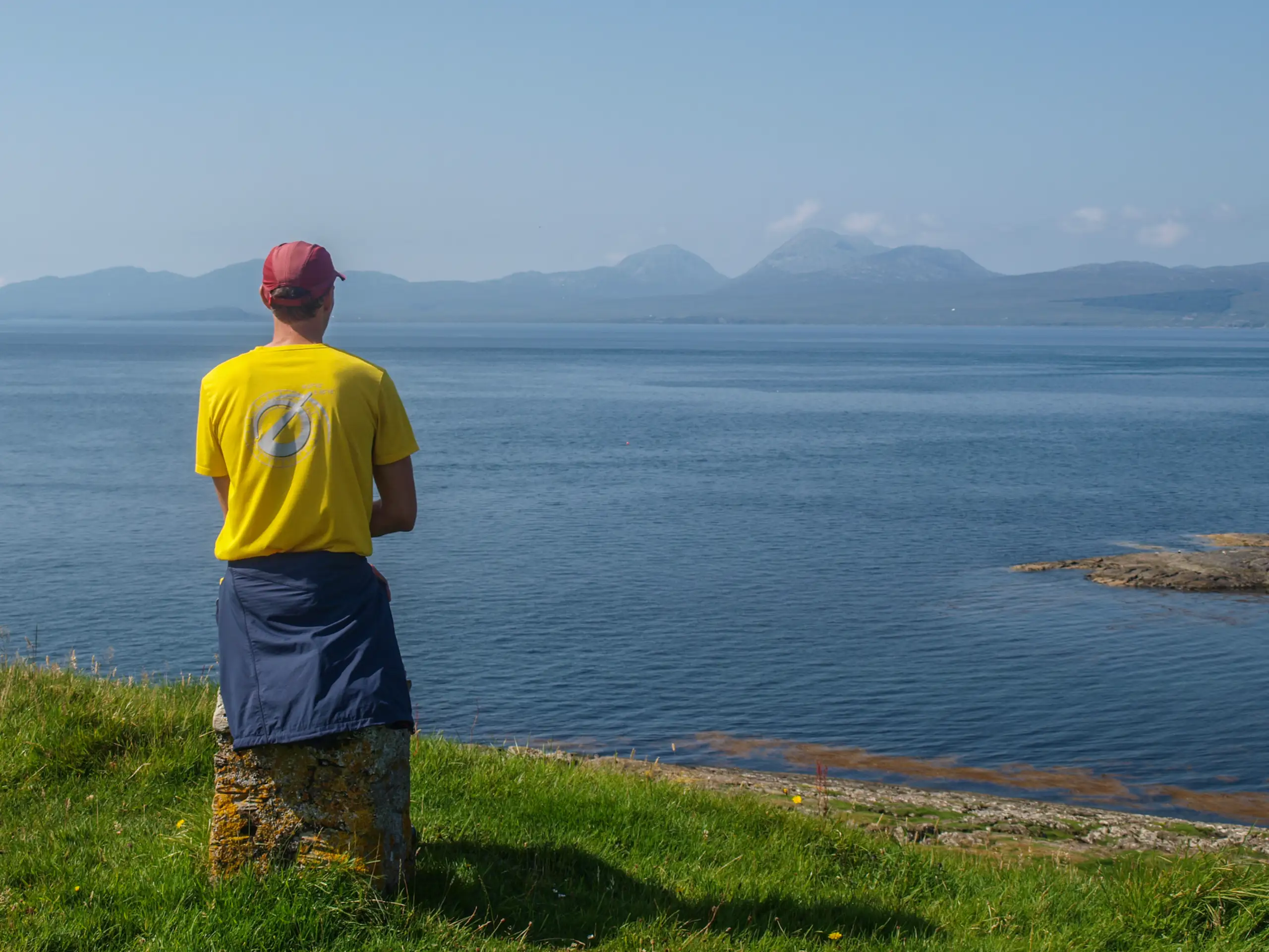
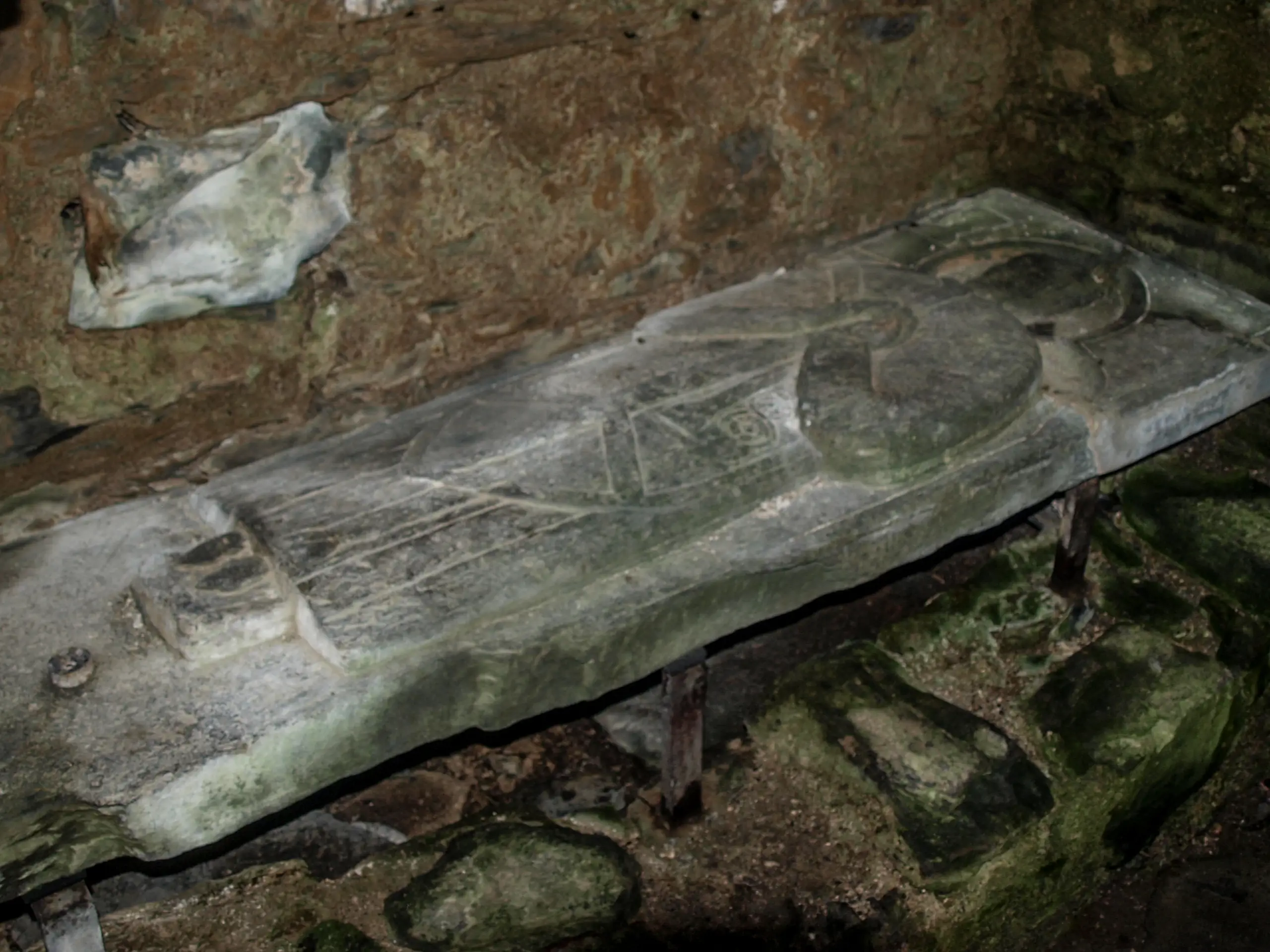
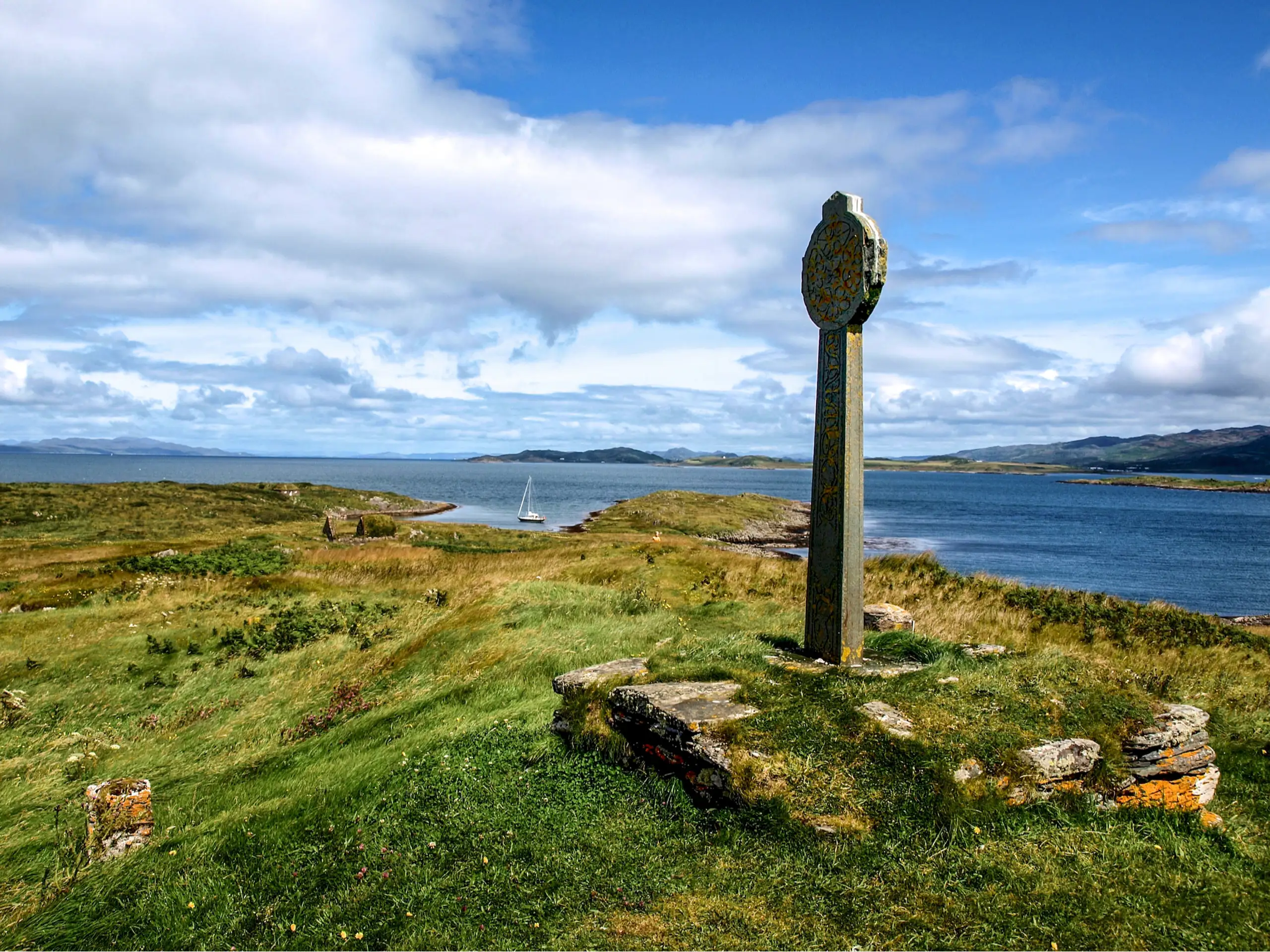
Half way up to the summit is the fairly well preserved ruin of St Cormaigh's Chapel, a 13th century structure with the later addition of the chancel vaulting in the 14th century, and even later a fireplace for some kind of domestic conversion. Eventually it was said to have been used as an illicit still. Be all that as it may, it's a serene spot with the view of the Paps of Jura across the sound of Jura, and in the south just a glimpse of Ireland from where the early Christian monks came. A recumbent and decaying monument is tucked into the south wall of the chancel, perhaps listening to the seagull cries and sparrow chirpings as there is nothing much else than the birdsong to break the silence of this holy and ancient place. And in the early summer, if you stand and listen carefully, you may hear the characteristic squeaky sound of the corncrake, one of our rarest birds. The crumbling remains of a cross in the graveyard is said to be 10th century. The cross on the summit of the island is a replica of a 14th century cross now in the National Museum of Scotland, but it is striking nonetheless.
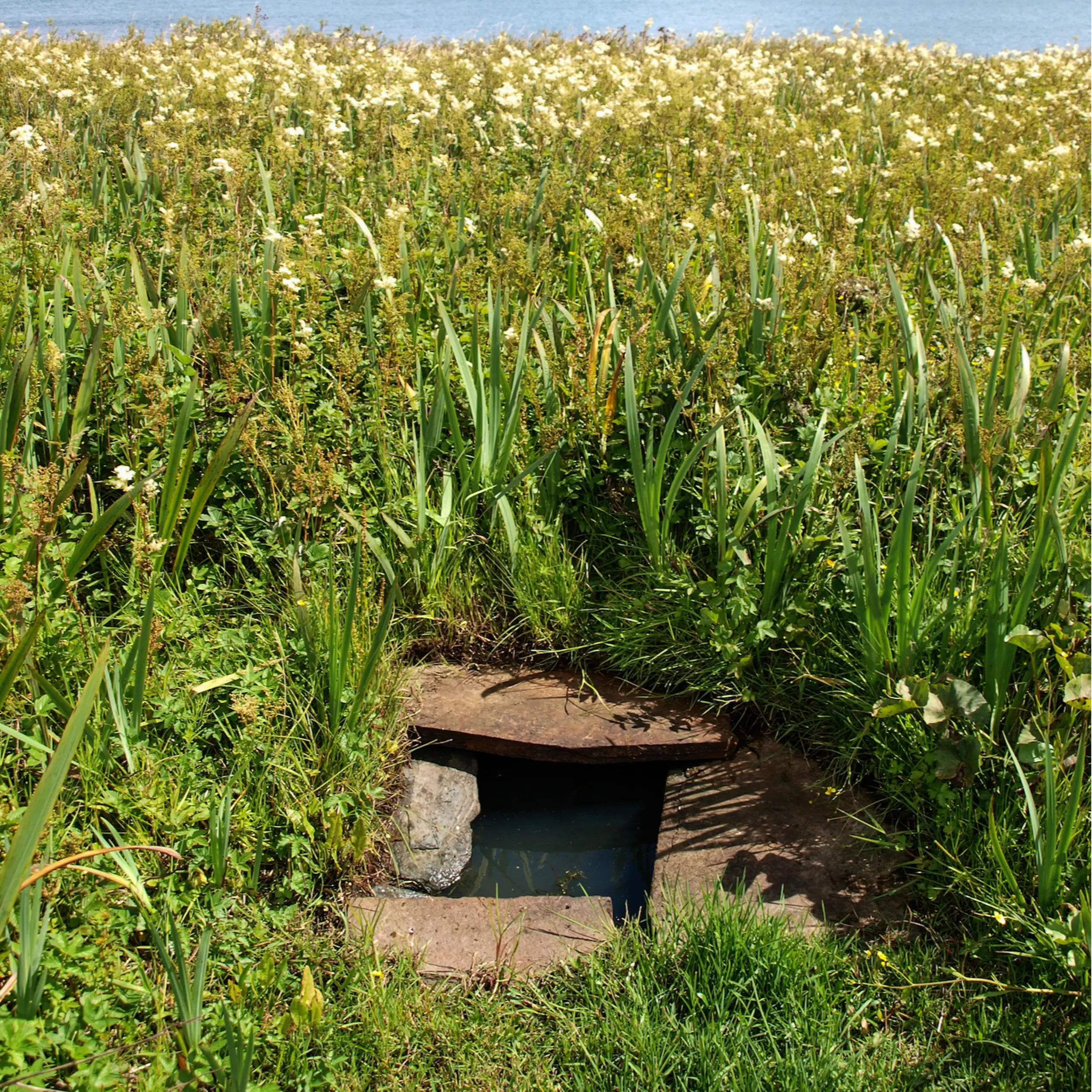
Just to the east of the chapel, about 50 metres, is a well which is presumably why this particular island was colonised in the first place. Now it's a useful place to get the salt out of your hair.
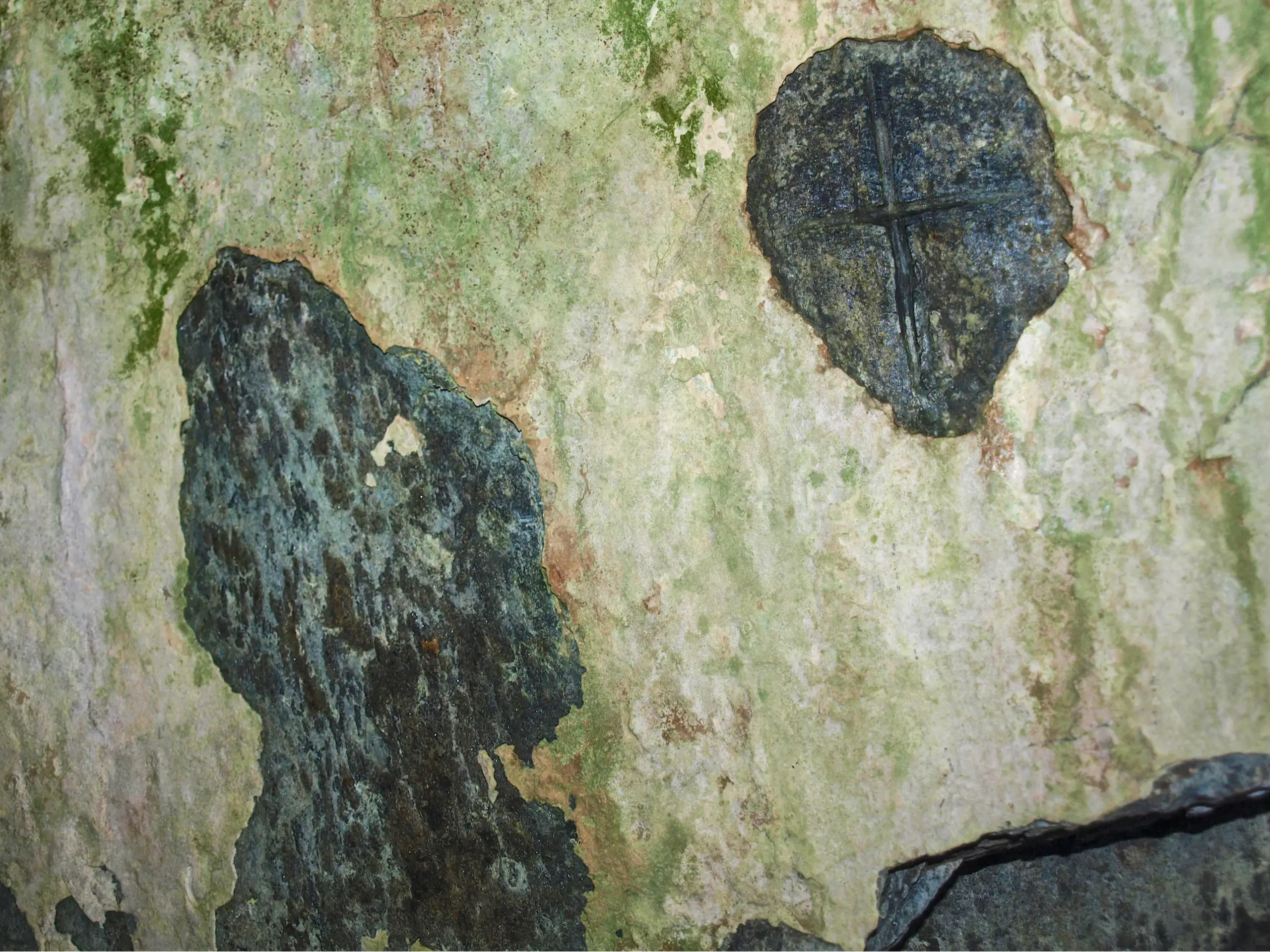
On the east-facing slope of the highest point you will find a rather dank cave which is difficult to get into, and even more difficult to get out of. Take a rope and torch! This is apparently where 8th century monks liked to meditate away from it all. The two crudely carved crosses on the wall are said to be from the same period. Perhaps even St Cormac himself meditated here, an Irish contemporary of St Columba, but this is a bit unlikely.